


x

Impressão giclée ou em tela de qualidade de museu, com produção rápida e opções flexíveis de acabamento. ( Encomendar reprodução pintada à mão Comprar imagem em alta resolução)





























Escolha entre os nossos tamanhos pré-definidos que respeitam as proporções originais da obra de arte.

Você pode inserir suas próprias dimensões para se ajustar a uma moldura ou espaço específico. Se o tamanho selecionado não corresponder às proporções da imagem original, iremos recortar a obra de arte ou estender a imagem com uma borda espelhada ou preenchimento sólido. Um mockup digital será enviado para sua aprovação antes do início da produção.
Por favor, observe que a visualização na tela não reflete o recorte ou a extensão real. Apenas o mockup mostrará com precisão a composição final.
Embora tamanhos personalizados estejam disponíveis, recomendamos selecionar uma dimensão da lista predefinida para preservar as proporções originais.
Entrega mundial () em 2 semanas, em vez das 4/5 semanas padrão. (22 Agosto)


A Ponte de Maincy
Dimensões da Reprodução
Paul Cézanne's *Pont de Maincy*, painted between 1879 and 1880, isn’t merely a depiction of a bridge; it’s a distillation of light, space, and the very essence of a fleeting moment. Preserved within the hallowed halls of the Musée d'Orsay in Paris, this unassuming landscape holds an extraordinary power—a testament to Cézanne’s revolutionary approach to painting and his profound influence on the course of modern art. The work captures a simple scene – a wooden bridge spanning the Almont River in the commune of Maincy, France – yet through Cézanne's masterful brushwork and astute observation, it transcends its humble subject matter to become an exploration of perception itself.
Cézanne’s decision to paint this particular view was rooted in his residence near Maincy during a period of intense artistic experimentation. He wasn’t simply recording the scene before him; he was actively dissecting and rebuilding it, employing a technique that would later become central to Cubism. The painting's composition is deliberately asymmetrical, with the bridge acting as a strong diagonal element bisecting the canvas. This creates an immediate sense of dynamism and movement, drawing the eye across the landscape and inviting contemplation. Notice how Cézanne doesn’t attempt to render every detail with photographic accuracy; instead, he simplifies forms, reducing them to their essential geometric shapes – cylinders, cones, and planes—a key element in his pursuit of a more fundamental understanding of visual reality.
*Pont de Maincy* firmly establishes Cézanne as a pivotal figure bridging the gap between Impressionism and Cubism. While retaining some of the Impressionists’ focus on capturing fleeting light and color, Cézanne moves beyond mere optical representation to explore the underlying structure of objects. The brushstrokes are not blended smoothly; they are distinct, visible marks that build up layers of color and texture. This technique, known as “impasto,” adds a tactile quality to the painting, inviting the viewer to almost feel the roughness of the wood and the warmth of the sun on the water.
The use of color is equally significant. Cézanne employs a palette of muted earth tones – ochres, browns, greens, and blues—to create a sense of atmospheric depth. He doesn’t rely on bright, vibrant hues; instead, he uses subtle variations in tone to suggest distance and form. The light itself seems to emanate from within the painting, bathing the scene in a warm, golden glow. The two birds perched on the bridge are not merely decorative elements; they inject a vital sense of life and movement into the otherwise tranquil landscape, acting as silent witnesses to this moment in time.
Cézanne’s *Pont de Maincy* wasn't immediately embraced by the art world. However, its innovative approach quickly gained recognition among a select group of artists, including Herman Braun-Vega, who created a striking, inverted still life titled *Papaye à la guitare (Cézanne)*. This piece, featuring a guitar and papaya, serves as a fascinating dialogue with Cézanne’s work—a visual echo of his fragmented forms and emphasis on underlying structure. The influence of *Pont de Maincy* extends far beyond Braun-Vega's painting; it can be seen in the works of Picasso, Matisse, and countless other artists who followed in Cézanne’s footsteps.
The painting has been exhibited extensively throughout history, including notable showings in London, Paris, Beijing, and New York. Its enduring appeal lies not only in its aesthetic beauty but also in its profound exploration of the nature of perception and representation. For those seeking a piece that embodies both artistic innovation and timeless elegance, a high-quality reproduction of *Pont de Maincy* offers a remarkable opportunity to connect with one of the most influential figures in modern art.


1839 - 1906 , França
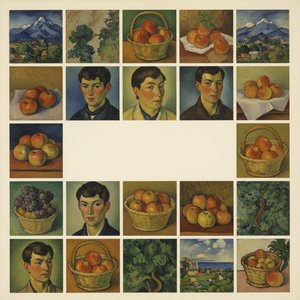
Descubra as 25 obras-primas de Paul Cézanne, o mestre do pós-impressionismo! Explore a história, técnica e cores vibrantes por trás de quadros icônicos como 'Les Baigneurs' e 'Mont Sainte-Victoire'. Encontre reproduções de arte exclusivas para decorar sua casa com elegância em Most-Famous-Paintings.com.
Descubra as 25 obras-primas de Francisco Goya, o mestre espanhol do Romantismo. Explore retratos icônicos, gravuras impactantes e a história por trás de 'Saturno Devorando seu Filho' e 'A Majas'. Encontre reproduções de arte exclusivas para decorar sua casa com Most-Famous-Paintings.com.

Descubra os 10 quadros impressionistas que revolucionaram a arte! Explore Monet, Renoir e outros mestres da paisagem francesa. Encontre reproduções de alta qualidade para decorar sua casa com beleza e história em Most-Famous-Paintings.com.

Explore the profound emotional depth & innovative techniques of Post-Impressionism with Most-Famous-Paintings. Discover Cézanne, Van Gogh, Gauguin & more – and their lasting impact on modern art.

Descubra os 10 quadros impressionistas mais icônicos de Monet, Renoir e Degas! Explore a história, cores vibrantes e técnicas revolucionárias do Impressionismo. Encontre reproduções de arte exclusivas para inspirar sua decoração em Most-Famous-Paintings.com.


Fique por dentro das últimas notícias de arte, ofertas exclusivas e ideias de decoração.
Conte-nos sobre o seu projeto e os nossos especialistas em arte fornecerão 3 sugestões de arte personalizadas.
Deixe que selecionamos 3 opções especialmente para você – Grátis!


 Visualizar em escala
 Enviar
 Compartilhar
 Ver detalhes

 Baixar
 Semelhantes
 Raio X
 Apresentação de slides


 Ver mais







 A opção de vidro está disponível apenas para tamanhos inferiores a 110 cm


