x


 Comprar impressão Comprar imagem em alta resolução
 Enviar
 Detalhes da obra
 Adicionar aos favoritos
 Baixar
 Semelhantes
 Raio X
 Slideshow
 Oil On CanvasWallArtBaroque Interior Scene
 1663
1663 58.0 x 69.0 cm
 Museu Metropolitano de Arte
Óleo sobre tela pintado à mão no seu tamanho e moldura, feito sob encomenda pelos nossos artistas.





























Escolha entre os nossos tamanhos pré-definidos que respeitam as proporções originais da obra de arte.

Pode inserir as suas próprias dimensões para se adequar a uma moldura ou espaço específico. Se o tamanho selecionado não corresponder às proporções da imagem original, iremos cortar a obra de arte ou estender a pintura com elementos adicionais pintados à mão. Um esboço digital será enviado para sua aprovação antes do início da produção.
Tenha em atenção que a pré-visualização no ecrã não reflete o corte ou extensão real. Apenas o esboço mostrará com precisão a composição final.
Embora tamanhos personalizados estejam disponíveis, recomendamos selecionar uma dimensão da lista predefinida para preservar as proporções originais.
Entrega Mundial () em 3 a 4 semanas, em vez das 5 semanas padrão. (18 Julho). Sem comprometer a qualidade.


Interior with Figures
Dimensões da Reprodução
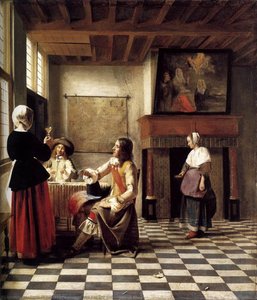
Pieter de Hooch’s “Interior with Figures,” painted in 1663, stands as a quintessential emblem of Dutch Baroque interior genre painting—a captivating snapshot of domestic life rendered with unparalleled sensitivity to light and atmosphere. This artwork resides within the Rijksmuseum Amsterdam's collection, where it continues to inspire admiration for its masterful depiction of everyday moments.
Further enriching our appreciation for this masterpiece is its presence in WikiArt's database (WikiArt), where it’s recognized as a cornerstone of genre painting and celebrated for its luminous quality.
Moreover, the Metropolitan Museum of Art (Metropolitan Museum) acknowledges De Hooch's pioneering role in shaping interior portraiture during his era—highlighting his ability to convey emotion and atmosphere with remarkable precision.
A detailed examination of “Woman Reading a Letter” (Woman Reading a Letter) reveals the artist’s dedication to capturing intimate moments and conveying subtle psychological nuances—a testament to De Hooch's enduring legacy as one of Holland’s most influential painters.

Pieter Hendricksz de Hooch stands as one of the most revered figures in Dutch Golden Age painting, a master whose canvases capture not merely scenes of everyday life but an elusive sense of serenity and contemplation. Born in Rotterdam on December 20, 1629, into a family of bricklayers—a profession that instilled in him a meticulous attention to detail—De Hooch’s artistic journey unfolded amidst the burgeoning intellectual ferment of his era, establishing him as a pivotal voice within the Delft School alongside luminaries like Johannes Vermeer.
De Hooch’s enduring legacy resides not merely in his technical prowess but in his ability to distill the essence of human experience into exquisitely rendered images—images that continue to captivate audiences centuries later with their quiet contemplation and profound emotional resonance.

1629 - 1694 , Países Baixos

APS oferece reproduções de belas artes e encomendas personalizadas desde 2004. Corporações, hotéis e colecionadores selecionados confiam em nós para obras de arte com qualidade de museu, serviço discreto e soluções artísticas completas. Entre em contato conosco para um orçamento personalizado!
Descubra as 25 obras-primas de Francisco Goya, o mestre espanhol do Romantismo. Explore retratos icônicos, gravuras impactantes e a história por trás de 'Saturno Devorando seu Filho' e 'A Majas'. Encontre reproduções de arte exclusivas para decorar sua casa com Most-Famous-Paintings.com.

Descubra as 25 obras-primas do Metropolitan Museum of Art em Nova York! Explore a história de Van Gogh, Monet e outros artistas renomados. Encontre reproduções de arte exclusivas para decorar sua casa com elegância. Most-Famous-Paintings.com – Sua fonte de inspiração artística.

Descubra a nossa história! Levamos arte de classe mundial à sua vida através de uma seleção especializada, criações personalizadas e prévias gratuitas. Aprovado por particulares e empresas desde 2000.
Descubra as 25 obras mais emblemáticas do MoMA, de Van Gogh a Warhol! Explore a história da arte moderna, movimentos como Cubismo e Expressionismo, e encontre reproduções de alta qualidade para decorar sua casa. Inspire-se em Monet, Picasso e Kandinsky. Explore a coleção completa na Most-Famous-Paintings.com


Fique por dentro das últimas notícias de arte, ofertas exclusivas e ideias de decoração.
Conte-nos sobre o seu projeto e os nossos especialistas em arte fornecerão 3 sugestões de arte personalizadas.
Deixe-nos selecionar 3 opções especialmente para você – Grátis!


 Compartilhar

 Ver mais







 A opção de vidro está disponível apenas para tamanhos inferiores a 110 cm