Wishlist Carrinho de compras Cart
Comprar impressão Comprar impressãoComprar imagem em alta resolução Comprar imagem em alta resolução EnviarEnviar
Detalhes da obraDetalhes da obra Adicionar aos favoritos Adicionar aos favoritos BaixarBaixar SemelhantesSemelhantes Raio XRaio X SlideshowSlideshow

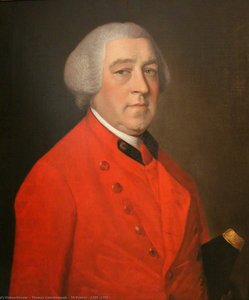
The Right Honourable William Pitt the Younger (1759–1806)

Experience Thomas Gainsborough's masterful portrait of William Pitt the Younger from 1790, capturing late Georgian elegance; discover this iconic piece for your collection.

Thomas Gainsborough (1727-1788): Um mestre britânico da pintura, conhecido por retratos elegantes e paisagens encantadoras. Sua obra influenciou gerações de artistas.

Reprodução em Óleo Feita à Mão

Óleo sobre tela pintado à mão no seu tamanho e moldura, feito sob encomenda pelos nossos artistas.


P118B $10
P118H $10
P118W $10
P438Z $10
P508JH $12
P508YH $12
P805H $10
P805Z $10
P919BZ $10
P919G $10
P919XJ $10
P959ZH $10
P968JZ $12
W106C $8
W218G $10
W218JH $8
W218Y $10
W307PJ $10
W316G $10
W316PJ $8
W316Y $10
W398PJ $8
W4111J $10
W500HY $15
W500JH $15
W692G $12
W849H $8
W940BG $15
W953PJ $8

Standard
custom
CM
INCH

Escolha entre os nossos tamanhos pré-definidos que respeitam as proporções originais da obra de arte.

largura
altura

Pode inserir as suas próprias dimensões para se adequar a uma moldura ou espaço específico. Se o tamanho selecionado não corresponder às proporções da imagem original, iremos cortar a obra de arte ou estender a pintura com elementos adicionais pintados à mão. Um esboço digital será enviado para sua aprovação antes do início da produção.
Tenha em atenção que a pré-visualização no ecrã não reflete o corte ou extensão real. Apenas o esboço mostrará com precisão a composição final.
Embora tamanhos personalizados estejam disponíveis, recomendamos selecionar uma dimensão da lista predefinida para preservar as proporções originais.

Exemplos do que pode ser alterado: Substituir o rosto pela foto do cliente; Adicionar um animal de estimação (ex: substituir gato por cão); Incluir uma mensagem oculta no fundo; Alterar a paisagem ou elementos do fundo.
Após o pedido, a equipa Most-Famous-Paintings.com enviará um e-mail ao cliente para solicitar instruções e fornecer uma prévia do esboço.

Entrega Mundial () em 3 a 4 semanas, em vez das 5 semanas padrão. (18 Julho). Sem comprometer a qualidade.

why_choose_icon
Envio Expresso Gratuito para todo o Mundo
why_choose_icon
Tela de Linho Premium
why_choose_icon
Seguro de envio completo
why_choose_icon
Garantia de Reembolso de Impostos Alfandegários
why_choose_icon
Garantia de Fidelidade de Cores
why_choose_icon
Política de Devolução de 60 Dias (Apenas para Defeitos)
why_choose_icon
Garantia de 100% de Reembolso
why_choose_icon
Desconto para múltiplas unidades

Preço Total

-

reproduction

The Right Honourable William Pitt the Younger (1759–1806)

Técnica de Reprodução

Dimensões da Reprodução

-

Preço Total Final

-

Dados Rápidos

  • Movement: British Rococo
  • Location: Kenwood House
  • Artistic style: Portraiture
  • Influences: Rococo
  • Dimensions: 127 x 101.6 cm
  • Medium: Oil on canvas
  • Artist: Thomas Gainsborough

Teste de Arte

Cada pergunta possui apenas uma resposta correta.

Pergunta 1:
What is the primary subject matter of this painting?
Pergunta 2:
In what year was Thomas Gainsborough's portrait of William Pitt the Younger completed?
Pergunta 3:
What artistic technique did Gainsborough employ in this painting?
Pergunta 4:
Where is the portrait currently housed?
Pergunta 5:
What role did William Pitt the Younger play in British history during Gainsborough's lifetime?

Descrição da Obra

A Portrait of Power and Enlightenment

To gaze upon this portrait of The Right Honourable William Pitt the Younger is to encounter not merely a likeness, but an embodiment of late eighteenth-century British political gravity. Painted around 1790, this work captures the formidable presence of one of history's most consequential statesmen. Thomas Gainsborough, the master painter whose brushstrokes seemed capable of capturing the very spirit of Georgian England, has rendered Pitt in a moment of thoughtful repose. The sitter is depicted seated, his gaze directed just off-camera, suggesting a mind perpetually engaged with matters beyond the immediate view of the viewer. His attire—the crisp white shirt contrasting sharply with the black jacket and tie—speaks to the disciplined elegance expected of men of his stature during this era of burgeoning industrial and political might.

The Artistry of Gainsborough's Hand

Gainsborough’s technique here is a masterful display of portraiture, blending formal representation with an almost spontaneous vitality. While the subject matter is inherently weighty—the weight of governance and public life—the execution retains a certain airy grace characteristic of the artist. Observe the handling of the fabric; it possesses a luminous quality that suggests both expense and meticulous care. The background elements are thoughtfully composed to support, rather than distract from, the central figure. The visible books, placed near the left and right flanks, serve as subtle signifiers of intellect and erudition, anchoring Pitt within an environment conducive to deep thought and scholarly pursuit. These details transform a simple portrait into a narrative tableau.

Symbolism and Setting: A Study in Intellect

The inclusion of these carefully placed props—the books and the substantial chair—is key to understanding the painting's symbolic language. They do not merely decorate; they contextualize. The books speak to Pitt’s profound engagement with law, history, and philosophy, suggesting that his political acumen was rooted in deep study. The composition itself balances formality with a sense of private contemplation. It invites the viewer to consider the man behind the title—the intellect wrestling with the demands of empire. This duality between public duty and private thought is what gives the portrait its enduring emotional resonance.

Bringing History Home: Decorating with Legacy

For the discerning collector or interior designer, this reproduction offers an unparalleled opportunity to infuse a space with historical gravitas and artistic pedigree. Imagine this piece gracing a library, a formal study, or a drawing-room where conversation is expected to be as rich as the art itself. The scale of 127 x 102 cm ensures it commands attention without overwhelming a sophisticated setting. Owning a reproduction allows one to connect tangibly with the golden age of British portraiture, bringing home not just paint on canvas, but a palpable echo of Enlightenment ambition and enduring political drama.


Biografia do Artista

A Suffolk Beginning: The Early Life and Artistic Awakening

The story of Thomas Gainsborough, one of Britain’s most celebrated artists, unfolds not within the confines of a grand academy or bustling metropolis, but in the tranquil market town of Sudbury, Suffolk. Born in 1727, the youngest son of John Gainsborough, a weaver and wool merchant, young Thomas displayed an innate artistic sensibility from a remarkably early age. While his siblings pursued more conventional paths, Thomas’s world rapidly became consumed by drawing and painting – miniature self-portraits and delicate landscapes blossoming from his hand even before he reached ten years old. This precocious talent wasn't merely a childhood pastime; it was the burgeoning of a vision that would reshape British art. His father, recognizing this unique gift, encouraged its development, setting young Thomas on a path diverging sharply from the family trade. The Suffolk countryside itself became his first studio, imbuing his later works with a deep and abiding love for the natural world – a characteristic that would distinguish him throughout his career. This early immersion in landscape wasn’t simply about replicating what he saw; it was about *feeling* the essence of the English countryside, an emotional resonance that would permeate his canvases for decades to come.

London and the Shaping of a Style: Influences and Early Commissions

In 1740, at the age of thirteen, Gainsborough journeyed to London, embarking on formal artistic training under Hubert Gravelot, a French engraver renowned for his elegant rococo style. This exposure proved pivotal, introducing him to refined techniques and fashionable aesthetics. However, it was his association with William Hogarth and the St Martin’s Lane Academy that truly began to mold his artistic identity. Initially influenced by Hogarth's narrative approach – often depicting moral tales through crowded scenes – Gainsborough soon charted his own course, developing a distinctive style characterized by its lightness of touch, fluid brushwork, and subtle color palettes. He absorbed lessons from various masters, including the Dutch landscape painters whose atmospheric effects he admired, yet resisted strict adherence to any single school, forging a path that blended observation with imagination. Returning to Sudbury after marrying Margaret Burr in 1746, Gainsborough established himself as a portraitist for the local gentry. This period honed his skills in capturing likenesses and character, but it was during his subsequent move to Ipswich, and later Bath, that he began attracting a more sophisticated clientele – individuals who appreciated not just accurate representation, but also artistic flair and emotional depth.

Bath and Beyond: Portraiture, Landscape, and Royal Patronage

The years spent in Bath (1759-1774) marked a significant turning point in Gainsborough’s career. The city was a hub of fashionable society, providing him with ample opportunities to paint portraits of the wealthy and influential. He quickly gained renown for his ability to capture not only physical resemblance but also the personality and social standing of his sitters. His portraits weren't merely depictions; they were statements about identity and status. He experimented with new techniques, incorporating looser brushwork and brighter colors – a departure from the more formal style favored by his rival, Sir Joshua Reynolds. However, even amidst the demands of portraiture, Gainsborough never abandoned his passion for landscape painting. In fact, he often seamlessly integrated landscapes into his portraits, creating compositions that celebrated both human subjects and the beauty of the natural world. This innovative approach – a hallmark of his style – set him apart from many of his contemporaries. The culmination of his success came with his move to London in 1774, where he established a studio on Pall Mall and became a founding member of the Royal Academy. He also secured royal patronage, becoming a favorite painter of King George III and Queen Charlotte, further solidifying his position as one of Britain’s leading artists. *Mrs. Thomas Gainsborough*, painted in 1785, exemplifies this period – an elegant portrait showcasing rococo style and muted tones.

A Legacy of Innovation: Enduring Appeal and Influence

Thomas Gainsborough died in 1788, leaving behind a body of work that continues to captivate audiences today. His influence on subsequent generations of British artists is undeniable. He liberated portraiture from rigid formality, infusing it with spontaneity and emotional resonance. His loose brushwork and atmospheric effects paved the way for the Impressionists, while his lyrical landscapes inspired artists like John Constable, who deeply admired Gainsborough’s ability to capture the spirit of the English countryside. Gainsborough's legacy extends beyond technique; it lies in his profound understanding of human character and his unwavering commitment to artistic expression. He wasn’t simply a painter of portraits or landscapes; he was a storyteller, a poet of light and color, and a visionary who transformed British art. His paintings are a testament to the power of observation, imagination, and the enduring allure of the English landscape.

Exploring Gainsborough's World Today

Fortunately, the opportunity to experience Gainsborough’s genius firsthand remains readily available. Gainsborough’s House, in his birthplace of Sudbury, stands as a testament to his life and work, offering visitors an intimate glimpse into his early influences and artistic development. Christchurch Mansion in Ipswich houses a significant collection of Gainsborough paintings alongside works by Constable and other masters. Numerous museums across the United Kingdom and internationally display his masterpieces, including the National Gallery in London and the Metropolitan Museum of Art in New York. His work continues to be studied, analyzed, and celebrated, ensuring that his artistic vision will endure for generations to come. The enduring appeal of Gainsborough’s art lies not only in its technical brilliance but also in its timeless beauty and emotional depth – qualities that resonate with viewers across centuries.
Thomas Gainsborough

Thomas Gainsborough

1727 - 1788 , Reino Unido

Informações Rápidas

  • Artistic Movement Or Style: Rococó, Retrato
  • Artists Or Movements Influenced By This Artist:
    • John Constable
    • Impressionistas
  • Artists Who Influenced This Artist:
    • Hubert Gravelot
    • William Hogarth
  • Date Of Birth: 1727
  • Date Of Death: 1788
  • Full Name: Thomas Gainsborough
  • Nationality: Britânico
  • Notable Artworks:
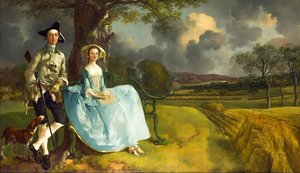
    • Retrato da Sra. Andrews
    • Retrato do rapaz azul
  • Place Of Birth (City And Country): Sudbury, Reino Unido
Explore obras de arte organizadas por temas, estilos e características.