Venda sua arte
Lista de desejos Carrinho de compras Cart
Visualizar em escalaVisualizar em escala Visualizar em RAVisualizar em RA Encomendar reprodução pintada à mão Encomendar reprodução pintada à mãoComprar imagem em alta resolução Comprar imagem em alta resolução EnviarEnviar
Ver detalhesVer detalhes Adicionar aos favoritos Adicionar aos favoritos BaixarBaixar SemelhantesSemelhantes Raio XRaio X Apresentação de slidesApresentação de slides

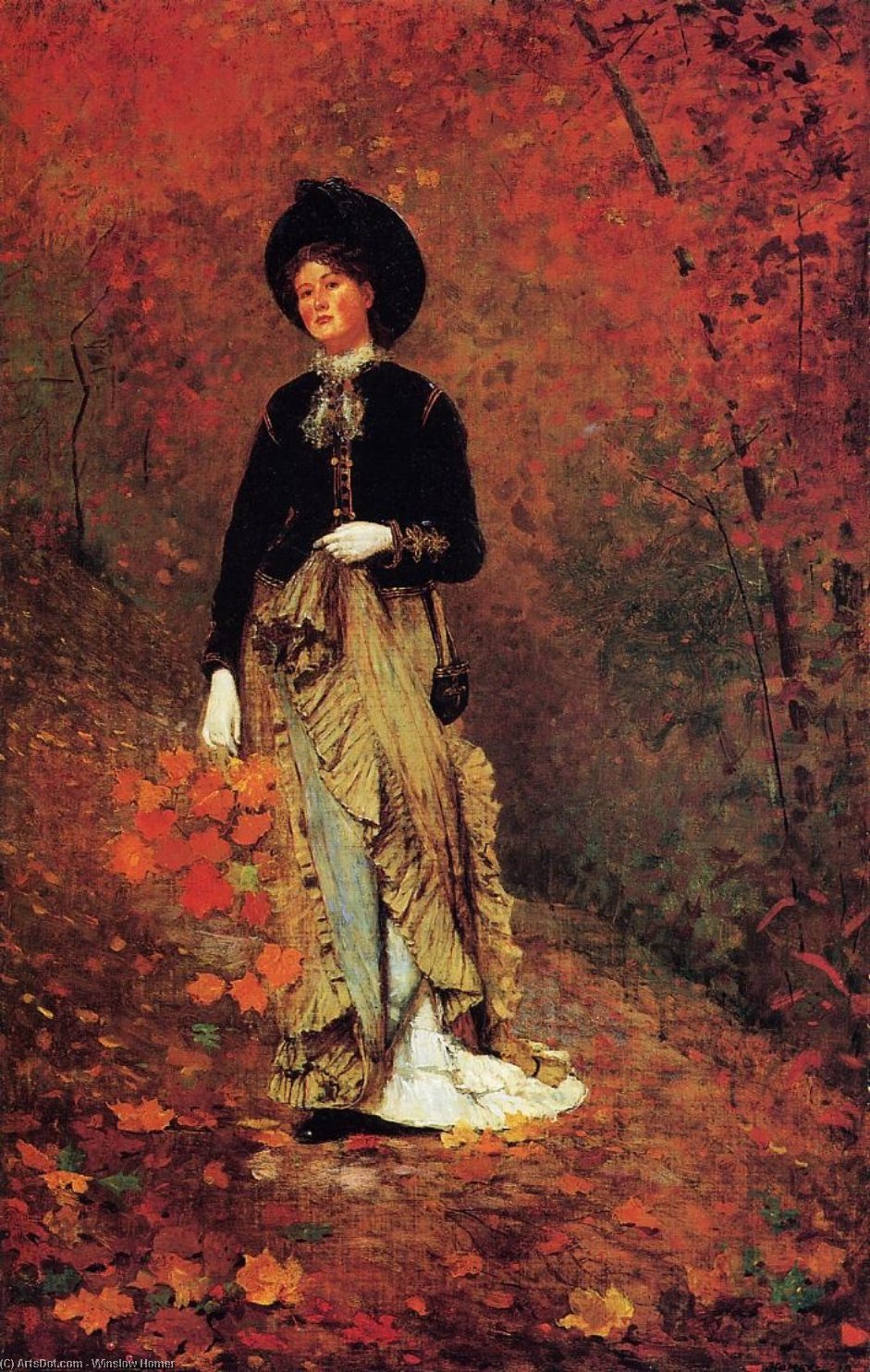
Autumn

Experience Winslow Homer’s ‘In Autumn Woods,’ a breathtaking watercolor capturing the serene beauty of fall. Vibrant colors and masterful composition evoke nature’s tranquility. Own a stunning reproduction today!

Winslow Homer (1836-1910): Pintor americano renomado por paisagens marcantes e obras sobre o mar. Descubra suas pinturas icônicas como 'O Fluxo' e 'Ventilando o Mar'.

Giclée / Impressão de Arte

Impressão giclée ou em tela de qualidade de museu, com produção rápida e opções flexíveis de acabamento. (Encomendar reprodução pintada à mão Encomendar reprodução pintada à mãoComprar imagem em alta resolução Comprar imagem em alta resolução)

P118B $10
P118H $10
P118W $10
P438Z $10
P508JH $12
P508YH $12
P805H $10
P805Z $10
P919BZ $10
P919G $10
P919XJ $10
P959ZH $10
P968JZ $12
W106C $8
W218G $10
W218JH $8
W218Y $10
W307PJ $10
W316G $10
W316PJ $8
W316Y $10
W398PJ $8
W4111J $10
W500HY $15
W500JH $15
W692G $12
W849H $8
W940BG $15
W953PJ $8

Standard
custom
CM
INCH

Escolha entre os nossos tamanhos pré-definidos que respeitam as proporções originais da obra de arte.

largura
altura

Você pode inserir suas próprias dimensões para se ajustar a uma moldura ou espaço específico. Se o tamanho selecionado não corresponder às proporções da imagem original, iremos recortar a obra de arte ou estender a imagem com uma borda espelhada ou preenchimento sólido. Um mockup digital será enviado para sua aprovação antes do início da produção.
Por favor, observe que a visualização na tela não reflete o recorte ou a extensão real. Apenas o mockup mostrará com precisão a composição final.
Embora tamanhos personalizados estejam disponíveis, recomendamos selecionar uma dimensão da lista predefinida para preservar as proporções originais.

Entrega mundial () em 2 semanas, em vez das 4/5 semanas padrão. (21 Agosto)

why_choose_icon
Envio Expresso Gratuito para todo o Mundo
why_choose_icon
Tela de Linho Premium
why_choose_icon
Seguro de transporte total
why_choose_icon
Garantia de Reembolso de Impostos Alfandegários
why_choose_icon
Garantia de Fidelidade de Cor
why_choose_icon
Política de Devolução de 60 Dias (Apenas para Defeitos)
why_choose_icon
Garantia de reembolso de 100%
why_choose_icon
Desconto para múltiplas unidades

Preço Total

$ 68

reproduction

Autumn

Giclée / Impressão de Arte

Dimensões da Reprodução

-

Preço Total

$ 68

Detalhes Rápidos

  • Medium: Oil on canvas
  • Influences: Hudson River School
  • Subject or theme: Fall season; Pastoral scene
  • Location: Private Collection
  • Year: 1877
  • Notable elements or techniques: Detailed depiction of autumnal foliage and landscape.
  • Title: Autumn

Teste de Conhecimentos Artísticos

Cada pergunta possui apenas uma resposta correta.

Questão 1:
What artistic movement is Winslow Homer’s ‘Autumn’ primarily associated with?
Questão 2:
The painting depicts a woman walking through what type of landscape?
Questão 3:
What is notable about Winslow Homer’s early artistic training?
Questão 4:
The image description highlights the presence of what element that contributes to the overall atmosphere?
Questão 5:
Winslow Homer is celebrated for his depictions of which subjects?

Descrição do Item

A Moment Frozen in Autumn’s Embrace

Winslow Homer’s “Autumn,” painted in 1877, is far more than a mere depiction of seasonal change; it is an evocative embodiment of the American spirit. In this masterful oil on canvas, Homer invites us into a quiet contemplation of rural life, where every brushstroke serves to capture a fleeting moment of tranquility. The scene unfolds with a deliberate, graceful rhythm: a woman, dressed in an elegant black gown and a thoughtful hat, wanders along a path lined with trees ablaze in crimson and gold. As she moves through the woods, her presence acts as a bridge between the viewer and the natural world, turning a simple landscape into a profound narrative of observation and connection.

The painting’s power lies in its ability to distill complex emotions into a carefully crafted composition. While the primary focus remains on the solitary figure, Homer subtly weaves in a broader social tapestry. In the distance, other figures can be glimpsed, suggesting a family or a community enjoying the season’s bounty. This layering of depth ensures that the painting is never static; it breathes with the life of a living, breathing landscape. For the collector or interior designer, this piece offers a sense of serene movement, making it an ideal centerpiece for spaces designed for reflection and peace.

The Mastery of American Realism

At its core, “Autumn” is a triumph of the Realist movement. During a period when many artists were still enamored with Romantic idealism and grand, sweeping myths, Homer chose a different path. He sought the unvarnified truth of the everyday. His technique is rooted in an exceptional ability to document the tangible textures of existence—the rough bark of ancient trees, the delicate decay of fallen leaves, and the subtle play of light through a thinning canopy. This commitment to realism is reflected in his muted yet rich palette, dominated by earthy browns, deep reds, and warm yellows that mirror the natural cycle of life and dormancy.

Homer’s background as a commercial illustrator for Harper's Weekly provided him with a unique advantage: a trained eye for clarity and detail. He did not need the grand stages of European academies to learn how to see; he learned by observing the bustling streets of Boston and the quiet dignity of New England. In “Autumn,” this precision is evident in the way the light catches the woman's pale skin and the way the shadows pool beneath the vibrant foliage. This level of detail ensures that a high-quality reproduction retains the tactile gravity and "weight" that Homer intended, allowing the artwork to command attention in any sophisticated setting.

Symbolism and Emotional Resonance

Beyond its visual splendor, “Autumn” carries a deep symbolic resonance. The season of autumn is inherently transitional—a period of both beauty and inevitable decline. The vibrant red leaves represent the peak of life's brilliance just before the onset of winter's slumber. By placing a solitary woman at the heart of this transition, Homer touches upon themes of introspection and the passage of time. There is a certain nostalgia embedded in the scene, a longing for the simplicity of a world that feels both grounded and ephemeral.

For those seeking to infuse their homes with art that inspires emotion, this piece offers a unique emotional spectrum. It can evoke feelings of warmth and coziness through its autumnal hues, or a sense of quiet solitude through its composition. Whether displayed in a sunlit library or a moody study, the painting serves as a window into a bygone era of American history, offering a timeless connection to the beauty found in the most humble of moments. It is an investment not just in a beautiful image, but in a piece of cultural heritage that continues to resonate with the soul.

Biografia do Artista

A Brush with the American Spirit: The Life and Art of Winslow Homer

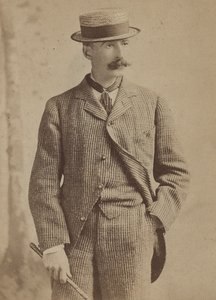
Winslow Homer, born in Boston in 1836, wasn’t sculpted by the traditional European art academies that shaped so many of his contemporaries. Instead, he emerged from a distinctly American experience, one rooted in practicality and observation. His journey began not with grand historical canvases, but as a commercial illustrator at the tender age of twelve for Harper's Weekly. This early apprenticeship was formative, honing an exceptional ability to capture scenes with clarity and detail – skills that would become hallmarks of his mature work. He wasn’t learning perspective in Paris; he was learning to *see* America, its people, and its unfolding story. The bustling streets of Boston, the quiet dignity of rural New England life, these were his first subjects, rendered with a precision born of necessity for the demands of print media. This foundation allowed him to transition into painting, initially in watercolor, before fully embracing the expressive potential of oil paints.

Early Life and Artistic Beginnings

Winslow Homer’s childhood was marked by a profound connection to nature—a formative influence that would permeate his entire artistic career. Born Charles Savage Homer Jr., he descended from Captain John Homer, the Englishman who arrived in Boston in 1630 aboard the *Anne Dorcas*, establishing one of the earliest English settlements in Massachusetts Bay Colony. His father, Charles Savage Homer Sr., was a merchant and instilled in Winslow a strong work ethic and an appreciation for craftsmanship. Henrietta Maria Benson, his mother, possessed artistic talent herself—a passion for painting flowers that nurtured Winslow’s early fascination with visual representation. From a young age, he demonstrated remarkable drawing skills, sketching landscapes and portraits with astonishing accuracy. This innate aptitude was further cultivated by his brother, Charles S. Homer Jr., who worked as a chemist and encouraged Winslow's artistic pursuits. By 19, Homer secured an apprenticeship with John Bufford’s lithographic firm in Boston—a crucial step toward developing his skills as an illustrator and gaining experience in the burgeoning print media industry.

The Influence of Harper’s Weekly and Commercial Illustration

Winslow Homer’s initial professional endeavors centered around Harper's Weekly, where he began illustrating scenes from daily life and capturing the spirit of American society. This early engagement with printmaking instilled in him a meticulous attention to detail—a characteristic that would define his artistic style throughout his career. Unlike many artists of his time who pursued formal training abroad, Homer honed his observational skills through direct experience, immersing himself in the landscapes and communities of New England. His illustrations for Harper’s showcased his ability to convey emotion and narrative effectively—skills he would later translate into equally compelling paintings. The firm's demand for precise renderings solidified his technique and established a foundation for his future artistic endeavors. Homer’s early works depicted Boston’s elite, capturing the elegance and sophistication of Victorian society with remarkable realism. He quickly gained recognition as a talented illustrator, securing commissions from prominent publishers and establishing himself as a respected figure in the American art world.

The Civil War Years: Witnessing History Through Art

The outbreak of the American Civil War profoundly impacted Winslow Homer’s artistic vision—transforming his focus from idyllic landscapes to confronting the brutal realities of conflict. Recognizing Harper's Weekly's need for visual documentation, Homer volunteered as a war correspondent, traveling extensively throughout Virginia and documenting the experiences of soldiers and civilians alike. Unlike many artists who glorified warfare, Homer eschewed heroic narratives and grand strategies—instead, he sought to portray the human cost of the war with unflinching honesty. His sketches from Camp Douglas and Richmond captured the grim conditions endured by Union prisoners—a poignant reminder of the suffering inflicted upon ordinary people during wartime. Homer’s depictions of battle scenes were notable for their lack of romanticism—he eschewed heroic poses and idealized imagery, opting instead for gritty realism that conveyed the psychological impact of combat. His photographs from Gettysburg and Petersburg powerfully documented the devastation wrought by the war—capturing the solemnity of remembrance and conveying the profound grief experienced by those who had lost loved ones. Homer’s Civil War illustrations stand as testament to his commitment to portraying history with compassion and accuracy—a legacy that continues to inspire artists today.

A Master of Landscape Painting and Symbolism

Winslow Homer's artistic style evolved dramatically after the Civil War, embracing a bolder approach characterized by textured surfaces and expressive brushstrokes. He moved from Boston to Gloucester, Massachusetts, establishing a studio overlooking Cape Ann—a location that would serve as his home for decades and inspire countless paintings depicting the rugged beauty of the Maine coast. Homer’s landscapes are imbued with a palpable sense of atmosphere—capturing the shifting moods of sea and sky with remarkable sensitivity. He skillfully employed color to convey emotion—using vibrant hues to depict sunsets ablaze with glory or muted tones to evoke feelings of melancholy and solitude. Homer's technique involved layering paint thickly onto canvas—creating tactile surfaces that mirrored the textures of the natural world. His paintings often explored themes of isolation, resilience, and humanity’s relationship with nature—reflecting his own contemplative spirit and conveying profound philosophical insights. Breezing Up (A Fair Wind) exemplifies Homer's masterful command of light and color—a celebration of maritime life that captures the exhilaration of sailing under a brilliant summer sun. Similarly, *The Gulf Stream*, painted in 1899, portrays a lone fisherman battling the forces of nature—a powerful metaphor for human struggle against overwhelming odds. Homer’s enduring legacy rests on his ability to transform observation into art—creating images that resonate with viewers across generations and capturing the essence of American identity.
  • His paintings are celebrated for their emotional depth and psychological insight
  • Homer's technique—thick impasto—became synonymous with American Realism
Winslow Homer

Winslow Homer

1836 - 1910 , Estados Unidos da América

Informações Rápidas

  • Artistic Movement Or Style: Realismo americano
  • Artists Or Movements Influenced By This Artist: ['American painters']
  • Artists Who Influenced This Artist:
    • Escola Barbizon
    • Courbet
    • Millet
  • Date Of Birth: 24 de fevereiro de 1836
  • Date Of Death: 29 de setembro de 1910
  • Full Name: Winslow Homer
  • Nationality: Americano
  • Notable Artworks:
    • Breezing Up (A Fair Wind)
    • O Fluxo Marinho
    • Inocência
  • Place Of Birth: Boston, Estados Unidos
Explore obras de arte organizadas por temas, estilos e características.