x

Printuri giclée sau pe canvas de calitate muzeală, cu proces de producție rapid și opțiuni flexibile de finisare. ( Comandă pictură lucrată manual Cumpără imaginea)
Alegeți dintre dimensiunile noastre prestabilite, care respectă proporțiile originale ale operei de artă.

Puteți introduce propriile dimensiuni pentru a se potrivi unui anumit cadru sau spațiu. Dacă dimensiunea selectată nu corespunde proporțiilor imaginii originale, vom decupa lucrarea de artă sau vom extinde imaginea cu margini oglindite sau cu o culoare uniformă. Un mockup digital va fi trimis pentru aprobarea dumneavoastră înainte de începerea producției.
Vă rugăm să rețineți că previzualizarea de pe ecran nu reflectă decuparea sau extinderea reală. Doar mockup-ul va arăta cu exactitate compoziția finală.
Deși dimensiunile personalizate sunt disponibile, vă recomandăm să selectați o dimensiune din lista predefinită pentru a păstra proporțiile originale.
Livrare în întreaga lume () în 2 săptămâni, în loc de cele 4/5 săptămâni standard. (14 August)


Involute II
Dimensiune reproducere
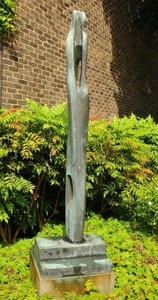
“Involute II,” sculpted by Dame Barbara Hepworth in 1956, isn’t merely a bronze form; it's an invitation to contemplate the relationship between space, movement, and the very essence of being. This remarkable piece, a cornerstone of modern sculpture, transcends simple representation, instead offering a profound sensory experience rooted in abstraction and a deep engagement with material. The photograph reveals a substantial metal sphere, meticulously hollowed out, presenting a dramatic interplay of solid mass and negative space – a deliberate disruption of traditional sculptural conventions that immediately draws the viewer into its enigmatic embrace.
Hepworth’s genius lay in her ability to capture not just the *appearance* of form but also its inherent dynamism. The title itself, derived from a mathematical term describing a spiral curve, hints at the underlying geometry and movement embedded within the sculpture's design. The smooth, polished surface of the bronze invites touch, while the carefully considered void suggests an openness, a suggestion of something beyond what is immediately visible. This duality—the tangible solidity of the metal against the implied emptiness—is central to the work’s power.
Born in Wakefield, Yorkshire, in 1903, Barbara Hepworth emerged as a pivotal figure in British modern art. Her early training at Leeds School of Art and the Royal College of Art laid the foundation for her distinctive style, which drew heavily from Surrealism and Abstraction-Création – movements she actively participated in during the 1930s. Hepworth’s work reflected a profound shift away from representational art, embracing instead the exploration of pure form, texture, and spatial relationships. She sought to create sculptures that engaged with the viewer on an emotional level, bypassing literal depiction and tapping into universal human experiences.
During World War II, Hepworth and her husband, Ben Nicholson, found refuge in St Ives, Cornwall, a location that profoundly influenced their artistic practice. The rugged coastline, the shifting light, and the vibrant community of artists fostered an environment of experimentation and innovation. It was here that she developed many of her most iconic works, including “Involute II,” demonstrating a mastery of both carving and casting techniques.
The creation of "Involute II" exemplifies Hepworth’s innovative approach to bronze sculpture. She began by creating detailed plaster models, meticulously refining the form before transferring it to the metal. This process allowed her to control every aspect of the final piece, from its overall shape to the subtle nuances of texture and surface detail. The use of a rough, unpolished surface—a deliberate contrast to the smooth interior—adds another layer of complexity, suggesting both vulnerability and resilience.
Hepworth’s mastery of bronze casting was exceptional. She employed a technique known as “lost-wax casting,” where a wax model is created, covered in plaster, and then heated until the wax melts away, leaving a hollow mold. Molten bronze is poured into this mold, and once cooled, the resulting cast is removed. This method allowed her to create complex forms with incredible precision and detail, while also retaining the inherent qualities of the material – its weight, texture, and reflectivity.
While Hepworth herself resisted definitive interpretations of her work, “Involute II” is widely understood as a meditation on themes of containment, release, and transformation. The hollow sphere can be seen as representing the human psyche—a space of potentiality, vulnerability, and inner conflict. The opening suggests a yearning for openness, a desire to break free from constraints, while the solid bronze embodies strength and resilience.
Ultimately, “Involute II” is not simply an object; it’s an experience—a silent dialogue between form and void, inviting contemplation and sparking individual emotional responses. Reproductions of this iconic sculpture offer a remarkable opportunity to bring Hepworth's profound vision into any space, fostering a sense of serenity, introspection, and artistic appreciation.


1903 - 1975 , Regatul Unit

Discover the enduring elegance of bronze sculpture. Our expert guide explores lost-wax casting, patina mastery, and professional tips for collecting and commissioning museum-quality bronze art to create a lasting legacy in your private collection.

Explore the profound history of sculpture, from classical realism to modern abstraction. Discover the mastery of form, texture, and medium through an expert art-historical lens designed for discerning collectors and enthusiasts.
Elevate your collection with our expert guide to bronze sculpture. Discover the mastery of lost-wax casting, the artistry of patination, and professional insights for acquiring timeless metal masterpieces that define sophisticated interiors.


Rămâneți la curent cu cele mai recente știri din lumea artei, ofertele noastre exclusive și ideile de decor.
Spuneți-ne despre proiectul dumneavoastră, iar experții noștri în artă vă vor oferi 3 sugestii personalizate.
Vom selecta 3 opțiuni special pentru tine – Gratuit!


 Trimite
 Distribuie
 Detalii despre lucrare

 Descarcă
 Produse similare
 Diapozitive automate


 Vezi mai mult




































 Opțiunea cu sticlă este disponibilă doar pentru dimensiuni de sub 110 cm