


x

Pictură în ulei pe pânză, realizată manual de artiștii noștri la dimensiunea și ramele dorite de dumneavoastră, pe comandă. ( Comandă printul Cumpără imaginea)
Alegeți dintre dimensiunile noastre prestabilite, care respectă proporțiile originale ale operei de artă.

Puteți introduce propriile dimensiuni pentru a se potrivi unui anumit cadru sau spațiu. Dacă dimensiunea selectată nu corespunde proporțiilor imaginii originale, vom decupa opera de artă sau vom extinde pictura cu elemente suplimentare pictate manual. O simulare digitală vă va fi trimisă pentru aprobare înainte de începerea producției.
Vă rugăm să rețineți că previzualizarea de pe ecran nu reflectă decuparea sau extinderea reală. Doar macheta va arăta cu exactitate compoziția finală.
Deși sunt disponibile dimensiuni personalizate, vă recomandăm să selectați o dimensiune din lista predefinită pentru a păstra proporțiile originale.
Livrare în întreaga lume () în 3-4 săptămâni, în loc de cele 5 săptămâni standard. (22 August). Fără compromisuri în ceea ce privește calitatea.


Now
Dimensiune reproducere

To watch a film by Chantal Akerman is to enter a space where time itself becomes a tangible, heavy presence. Born in Brussels in 1950 to a Polish-Jewish family, Akerman’s early life was shaped by the quiet, profound shadows of history. Her father, Jacques, had lived in hiding during the Second World War, and her mother, Natalia, was a survivor of Auschwitz. This ancestral weight—a legacy of absence and survival—did not manifest in her work through overt historical drama, but rather through a meticulous, observant gaze that found the profound within the repetitive and the overlooked. Akerman did not merely direct films; she constructed temporal landscapes where the simple act of peeling a potato or cleaning a room could carry the weight of existential solitude.
Her artistic journey was ignited by the radical energy of the French New Wave, specifically the works of Jean-Luc Godard. Yet, while Godard sought to disrupt narrative through stylistic flair, Akerman sought to dismantle it through duration. Influenced by the experimental rigor of Michael Snow, she embraced a technique that favored the long take and the static camera, forcing the viewer to inhabit the same rhythmic pulse as her characters. This approach transformed the screen into a site of meditation, where the boundaries between the domestic sphere and the psychological interior began to dissolve.
The zenith of Akerman’s contribution to the moving image arrived with the 1975 masterpiece, Jeanne Dielman, 23 quai du Commerce, 1080 Bruxelles. In this monumental work, she achieved what many critics now consider a feminist breakthrough in cinematic language. By documenting the rhythmic, almost ritualistic daily chores of a widowed mother with unrelenting precision, Akerman elevated domestic labor to the level of high drama. The film’s structure—a slow accumulation of minute actions that eventually leads to an inevitable rupture—challenged the traditional pacing of cinema and centered the female experience in a way that was both radical and deeply intimate.
Her filmography continued to explore these intersections of identity, memory, and displacement. Through works such as News from Home, she utilized the layering of voiceover and urban imagery to bridge the distance between her life in New York and her roots in Belgium, creating a poetic dialogue between presence and absence. Her ability to weave together themes of sexuality, loneliness, and the immigrant experience allowed her to transcend the label of "experimental filmmaker" and become a vital voice in the global contemporary art canon.
Beyond the silver screen, Akerman’s influence extended into the realms of installation art and writing, proving that her "observant, steady gaze" was not limited by the frame of a movie theater. Her work has been celebrated in the world's most prestigious institutions, from the Centre Pompidou to MoMA, where retrospectives continue to reveal new layers of her complex oeuvre. She taught audiences how to look—not just at what is happening, but at the space between actions, and the profound significance of the moments we often choose to ignore.
The historical significance of Chantal Akerman lies in her refusal to look away. Her achievements can be summarized through several defining pillars of her career:
Though she passed away in Paris in 2015, Akerman’s cinematic architecture remains standing, inviting every new generation to find beauty and terror in the quietest corners of existence.

1950 - 2015 , Belgium
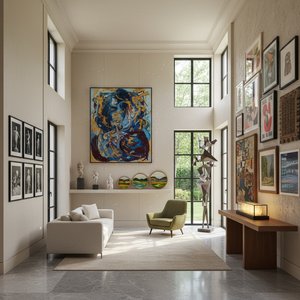
Descoperă cele mai iconice 25 de opere de artă de la La Biennale di Venezia! Explorează poveștile artiștilor, tehnicile și stilurile (impresionism, modernism). Reproduceri tablouri de colecție & decorațiuni interioare pe Most-Famous-Paintings.com.

Explorați interferențele fascinante dintre universurile jocurilor video și tradițiile finei arte! Analize, istorie, tendințe și ghiduri pentru colecționari pasionați. Descoperiți cum arta inspiră gaming-ul și invers.

Explorează ascensiunea fascinantă a lumilor video în arta contemporană! Analize exclusive despre pixel art, Pop Art 2.0 și impactul jocurilor asupra esteticii vizuale. Ghid pentru colecționari pasionați.

Transformă hotelul într-o destinație unică! Consultanță expertă în artă strategică pentru a crește implicarea oaspeților și marketingul organic. Design interior de lux & branding personalizat.

Explore the compelling work of Ukrainian artist Pavlo Makov, renowned for his conceptual photography deconstructing Soviet legacy. Discover his unique artistic process and investment potential.


Rămâneți la curent cu cele mai recente știri din lumea artei, ofertele noastre exclusive și ideile de decor.
Spuneți-ne despre proiectul dumneavoastră, iar experții noștri în artă vă vor oferi 3 sugestii personalizate.
Vom selecta 3 opțiuni special pentru tine – Gratuit!


 Trimite
 Distribuie
 Detalii despre lucrare

 Descarcă
 Produse similare
 Diapozitive automate


 Vezi mai mult




































 Opțiunea cu sticlă este disponibilă doar pentru dimensiuni de sub 110 cm


