


x

 Ulei pe pânzăArtă de pereteDutch Baroque
 1670
1670 24.0 x 30.0 cm
 Muzeul Hermitaj
Printuri giclée sau pe canvas de calitate muzeală, cu proces de producție rapid și opțiuni flexibile de finisare. ( Comandă pictură lucrată manual Cumpără imaginea)





























Alegeți dintre dimensiunile noastre prestabilite, care respectă proporțiile originale ale operei de artă.

Puteți introduce propriile dimensiuni pentru a se potrivi unui anumit cadru sau spațiu. Dacă dimensiunea selectată nu corespunde proporțiilor imaginii originale, vom decupa lucrarea de artă sau vom extinde imaginea cu margini oglindite sau cu o culoare uniformă. Un mockup digital va fi trimis pentru aprobarea dumneavoastră înainte de începerea producției.
Vă rugăm să rețineți că previzualizarea de pe ecran nu reflectă decuparea sau extinderea reală. Doar mockup-ul va arăta cu exactitate compoziția finală.
Deși dimensiunile personalizate sunt disponibile, vă recomandăm să selectați o dimensiune din lista predefinită pentru a păstra proporțiile originale.
Livrare în întreaga lume () în 2 săptămâni, în loc de cele 4/5 săptămâni standard. (22 August)


Peisaj
Dimensiune reproducere
Dirk van Bergen (c. 1645 – Haarlem, ca. 1700) stands as a cornerstone of the Dutch Golden Age landscape tradition, revered for his ability to capture the serene beauty and subtle mythological resonance characteristic of his era. Unlike many contemporaries preoccupied with dramatic narratives or grandiose vistas, Van Bergen dedicated himself to portraying landscapes imbued with an understated elegance—scenes that invite contemplation and evoke a profound connection with the natural world.
Born in Haarlem around 1645, Dirk van Bergen’s artistic journey commenced under the tutelage of Adriaen van de Velde in Amsterdam. This formative influence instilled within him a foundational understanding of atmospheric perspective and compositional balance—skills that would become hallmarks of his prolific output. Van de Velde's teachings emphasized realism combined with careful consideration for light and shadow, shaping Van Bergen’s approach to landscape painting from its inception.
Van Bergen’s distinctive style is immediately recognizable by his meticulous attention to detail—particularly in rendering the textures of foliage and animal fur. He eschewed flamboyant palettes, favoring muted hues dominated by greens, browns, and blues that coalesce into landscapes reminiscent of misty mornings or dappled sunlight filtering through ancient trees. His brushstrokes are deliberate and controlled, conveying a palpable sense of stillness and inviting viewers to immerse themselves in the tranquility of his compositions.
Beyond mere visual representation, Van Bergen’s landscapes carry subtle mythological undertones—a testament to the intellectual currents of the time. Recurring motifs such as Mercury (Hermes), Battus (Apollo), and various animals – notably cows, sheep, and horses – are frequently incorporated into his paintings. These figures symbolize virtues like wisdom, harmony, and fertility, reflecting humanist ideals prevalent during the Baroque period and subtly enriching the narrative conveyed by each scene.
Van Bergen’s enduring appeal lies in his ability to distill the essence of Dutch rural life into exquisitely rendered images—works that transcend time and continue to inspire admiration for their understated grandeur. His landscapes are not merely depictions of scenery; they are invitations to experience a moment of profound peace and contemplation, cementing his place as one of the most influential artists of the Dutch Baroque.
Further exploration of Dirk van Bergen’s oeuvre can be found at Landscape by BERGEN, Dirk van and Landscape.

In the golden twilight of the Dutch Golden Age, few artists captured the quiet pulse of the countryside with as much tenderness as Dirk van Bergen. Born in the vibrant artistic hub of Haarlem around 1645, Van Bergen emerged during an era when the Netherlands was redefining the boundaries of landscape painting. His work does not shout with the dramatic turbulence found in some of his contemporaries; instead, it whispers of pastoral peace, inviting the viewer into a world where time seems to slow beneath a soft, atmospheric sky. Through his eyes, the Dutch landscape became more than mere topography—it became a sanctuary of light and tranquility.
Van Bergen’s artistic foundation was laid in Amsterdam under the watchful eye of Adria rien van de Velde, one of the most esteemed masters of the era. This apprenticeship was transformative, gifting him a profound understanding of atmospheric perspective and the delicate balance required to compose a scene that feels both expansive and intimate. From Van de Velde, he inherited a mastery of light that allowed him to render the subtle shifts in a midday sun or the hazy glow of an approaching dusk. As his style matured, he began to weave subtle threads of classical mythology into his rural settings, creating a unique dialogue between the humble reality of Dutch farming life and the lofty ideals of humanist tradition.
To observe a Van Bergen landscape is to embark on a journey of discovery through texture and tone. He possessed an extraordinary ability to render the tactile world, from the coarse hair of a resting bull to the delicate, translucent leaves of a summer canopy. His palette was intentionally restrained, favoring a harmonious blend of earthy browns, deep forest greens, and soft, ethereal blues. This muted color scheme served a higher purpose: it prevented any single element from overwhelming the composition, ensuring that the viewer’s eye could wander freely across the canvas, discovering small wonders in every corner.
While his brushwork was deliberate and precise, there remained an underlying fluidity that breathed life into his subjects. He avoided the harsh, jagged edges of dramatic chiaroscuro, opting instead for soft tonal gradations that mimicked the natural diffusion of light through moisture-laden air. This technique allowed him to create a sense of depth that felt almost palpable, as if one could step directly into the meadow. His ability to capture the weight of livestock and the gentle posture of a shepherdess contributed to a sense of profound realism, grounded in an unwavering commitment to natural harmony.
The significance of Dirk van Bergen lies in his role as a custodian of the pastoral idyll. While the art world often gravitates toward the revolutionary and the chaotic, Van Bergen’s oeuvre stands as a testament to the enduring power of the serene. His works, such as “Landscape with Mercury and Battus”, demonstrate how he could elevate a simple scene of cattle and shepherds into something timeless by infusing it with classical narrative. He bridged the gap between the everyday and the eternal, making the local Dutch landscape feel part of a much larger, universal story.
Though many of his paintings remain in small, intimate formats, their impact is monumental. His influence can be traced through the way he balanced the realism of the Dutch tradition with a poetic sensibility that would inspire later generations of landscape painters. Today, his legacy survives in the quiet majesty of his compositions, reminding us that there is profound beauty to be found in the stillness of a sun-drenched field and the rhythmic, peaceful existence of the natural world.

1645 - 1700 , Netherlands

Discover the breathtaking beauty of Dutch Golden Age landscapes. Explore the mastery of light, chiaroscuro, and 17th-century realism through an expert art history lens, celebrating the enduring legacy of the Dutch Masters for discerning collectors and art lovers.

Descoperiți Epoca de Aur Olandeză prin 10 capodopere Rembrandt, Vermeer și alți pictori olandezi. Aflați poveștile din spatele acestor tablouri baroce iconice și inspirați-vă pentru decorațiuni interioare unice. Explorează colecția completă pe Most-Famous-Paintings.com!
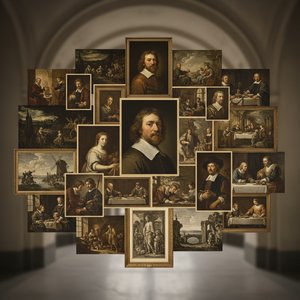
Descoperă cele mai frumoase 25 de picturi ale lui Rembrandt van Rijn! Explorează capodopere baroce, portrete emoționante și peisaje iconice. Reproduceri de artă de calitate muzeală pentru un design interior rafinat. Descoperă toate operele pe Most-Famous-Paintings.com!

Transform your home with the breathtaking light of Dutch Golden Age landscapes. Discover how hand-painted oil reproductions of masterworks like Ruisdael and Vermeer bring timeless elegance, atmosphere, and soulful texture to modern interiors. Elevate your space with museum-quality art.

Explore the captivating winter landscapes of Charles Leickert, a master of Dutch Golden Age light & atmosphere. Discover his techniques, symbolism, and lasting legacy – a comprehensive study for art enthusiasts and collectors.


Rămâneți la curent cu cele mai recente știri din lumea artei, ofertele noastre exclusive și ideile de decor.
Spuneți-ne despre proiectul dumneavoastră, iar experții noștri în artă vă vor oferi 3 sugestii personalizate.
Vom selecta 3 opțiuni special pentru tine – Gratuit!


 Previzualizare
 Trimite
 Distribuie
 Detalii despre lucrare

 Descarcă
 Produse similare
 Radiografie
 Diapozitive automate
 Vezi mai mult







 Opțiunea cu sticlă este disponibilă doar pentru dimensiuni de sub 110 cm


