x
Printuri giclée sau pe canvas de calitate muzeală, cu proces de producție rapid și opțiuni flexibile de finisare. ( Comandă pictură realizată manual Comută la imagine)





























Alegeți dintre dimensiunile noastre prestabilite, care respectă proporțiile originale ale operei de artă.

Puteți introduce propriile dimensiuni pentru a se potrivi unui anumit cadru sau spațiu. Dacă dimensiunea selectată nu corespunde proporțiilor imaginii originale, vom decupa lucrarea de artă sau vom extinde imaginea cu margini oglindite sau cu o culoare uniformă. Un mockup digital va fi trimis pentru aprobarea dumneavoastră înainte de începerea producției.
Vă rugăm să rețineți că previzualizarea de pe ecran nu reflectă decuparea sau extinderea reală. Doar mockup-ul va arăta cu exactitate compoziția finală.
Deși dimensiunile personalizate sunt disponibile, vă recomandăm să selectați o dimensiune din lista predefinită pentru a păstra proporțiile originale.
Livrare în întreaga lume () în 2 săptămâni, în loc de cele 4/5 săptămâni standard. (11 August)


untitled (161)
Dimensiune reproducere
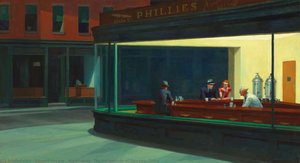
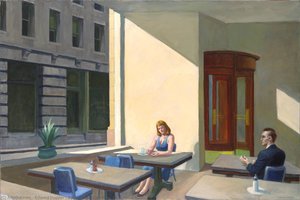
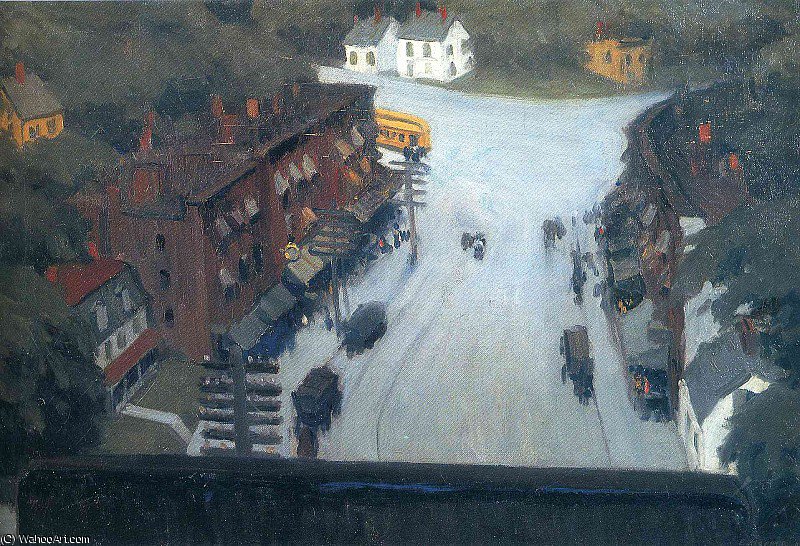
Edward Hopper's "Untitled (161)" – a deceptively simple black and white depiction of a Greenwich Village diner at night – transcends mere representation; it embodies the very essence of American modernism. Completed in 1942, amidst the anxieties of wartime America, this painting isn’t merely about what is seen but profoundly communicates what is felt—a palpable sense of solitude, longing, and unspoken connection.
The genesis of “Untitled (161)” lies in Hopper’s fascination with Ernest Hemingway's literary explorations of loneliness and disillusionment, notably "The Killers" and "A Clean, Well-Lighted Place." As Hopper himself recounted, he was drawn to the pervasive feeling of isolation present in these narratives. The painting emerged during a period marked by significant social upheaval—the Second World War casting its long shadow over American society—and Hopper’s work reflects this mood of quiet apprehension and introspection.
"Untitled (161)" is laden with symbolic significance. The diner itself represents a transient space, a momentary pause in the relentless flow of urban life—a place where individuals exist alongside each other yet remain fundamentally alone. Hopper’s masterful use of light and shadow amplifies this emotional core, highlighting the stark contrast between illumination and darkness, mirroring the internal struggles inherent in human existence.
Jo Hopper's Detailed Observations:Josephine Hopper meticulously documented her husband’s artistic process, adding invaluable insights into the painting’s conception. Her handwritten notes reveal a profound appreciation for Hopper’s technical prowess and his deliberate choices regarding composition and color palette. Notably, she emphasized that Hopper sought to capture “the loneliness of a large city,” reflecting Hemingway's thematic concerns.
"Untitled (161)" remains one of Edward Hopper’s most iconic works, celebrated for its ability to evoke profound feelings of solitude and contemplation. Its enduring appeal stems from its universality—a depiction of human experience that transcends time and place. Most-Famous-Paintings offers high-quality reproductions of this masterpiece, allowing collectors and enthusiasts alike to immerse themselves in the beauty and emotional depth of Hopper’s vision.


1931 - 1967 , Statele Unite ale Americii

Explore the evolution of cityscape painting from historical maps to Impressionist masterpieces. Discover artists like Caillebotte, Utrillo & Matsumoto Shunsuke. Find museum-quality reproductions at Most-Famous-Paintings.

Explore the powerful social commentary & artistic representation of American Realism. Discover key artists like Bellows & Sloan, and understand the movement's lasting impact on 20th-century art history.

Explore the life & legacy of Robert Henri, a pivotal figure in American Realism. Discover his captivating portraits, influence on the Ashcan School, and enduring impact on art history. Learn more at Most-Famous-Paintings.

Explore the life & art of William Glackens, a pioneer of American Realism and founding member of the Ashcan School. Discover his vibrant depictions of early 20th-century New York & Paris. Learn about his influences & lasting legacy.

Explore the life & work of Thomas Pollock Anshutz, a key figure in American Realism. Discover his powerful paintings, influence on art education, and commitment to portraying everyday life with honesty and social awareness.


Rămâneți la curent cu cele mai recente știri din lumea artei, ofertele noastre exclusive și ideile de decor.
Spuneți-ne despre proiectul dumneavoastră, iar experții noștri în artă vă vor oferi 3 sugestii personalizate.
Vom selecta 3 opțiuni special pentru tine – Gratuit!


 Previzualizare
 Trimite
 Distribuie
 Detalii despre lucrare

 Descarcă
 Produse similare
 Radiografie
 Diapozitive automate
 Vezi mai mult







 Opțiunea cu sticlă este disponibilă doar pentru dimensiuni de sub 110 cm