x


 Comandă reproducere pictată Cumpără imaginea
 Trimite
 Detalii despre lucrare
 Adaugă la favorite
 Descarcă
 Similare
 Radiografie
 Diaporama
Print giclée sau pe canvas de calitate muzeală, cu producție rapidă și opțiuni flexibile de finisare.
Alegeți dintre dimensiunile noastre prestabilite, care respectă proporțiile originale ale operei de artă.

Puteți introduce propriile dimensiuni pentru a se potrivi unui anumit cadru sau spațiu. Dacă dimensiunea selectată nu corespunde proporțiilor imaginii originale, vom decupa lucrarea de artă sau vom extinde imaginea cu margini oglindite sau cu o culoare uniformă. Un mockup digital va fi trimis pentru aprobarea dumneavoastră înainte de începerea producției.
Vă rugăm să rețineți că previzualizarea de pe ecran nu reflectă decuparea sau extinderea reală. Doar mockup-ul va arăta cu exactitate compoziția finală.
Deși dimensiunile personalizate sunt disponibile, vă recomandăm să selectați o dimensiune din lista predefinită pentru a păstra proporțiile originale.
Livrare în întreaga lume () în 2 săptămâni, în loc de cele 4/5 săptămâni standard. (22 Iulie)


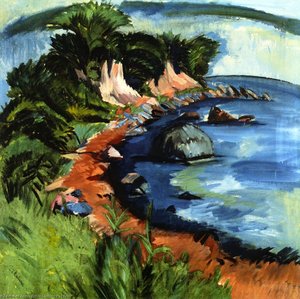
Five cocottes
Dimensiune reproducere
Ernst Ludwig Kirchner’s “Five Cocottes” is not merely a depiction of five figures; it's a visceral plunge into the turbulent heart of German Expressionism. Executed around 1908, this woodcut print, born from Kirchner’s profound engagement with the anxieties of his era, immediately confronts the viewer with an unsettling dynamism. The composition, deliberately chaotic and crowded, eschews traditional notions of perspective and spatial harmony, opting instead for a flattened, almost claustrophobic space where the figures – likely women – are locked in a silent, palpable struggle. Kirchner’s masterful manipulation of line is central to this effect; thick, jagged lines dominate, not to delineate form with precision, but to convey raw emotion and an underlying sense of unease. The stark contrast between black and white amplifies the drama, creating areas of intense shadow that seem to press in on the figures, mirroring perhaps a psychological state of confinement or distress.
Kirchner's use of line is far more than a stylistic choice; it’s the very language through which he communicates his subject’s emotional state. The angular, almost violent lines that define the figures’ bodies suggest a fractured sense of self, reflecting the anxieties of a society undergoing rapid industrialization and social upheaval. The geometric shapes – triangles, rectangles, sharp angles – are not decorative elements but rather structural components contributing to the overall feeling of agitation. They reinforce the impression of instability and disrupt any attempt at harmonious composition. The deliberate lack of smooth curves or flowing lines further intensifies this sense of unease, mirroring a world perceived as fragmented and chaotic.
Created during a period of significant social and political change in Germany, “Five Cocottes” reflects the anxieties of a nation grappling with modernity. Kirchner, like many artists of his time, was deeply concerned about the dehumanizing effects of industrialization and the erosion of traditional values. His work is often seen as a response to these concerns, offering a bleak yet profoundly honest portrayal of the psychological toll of modern life. Born in Aschaffenburg in 1880, Kirchner’s early life was marked by instability and displacement, experiences that undoubtedly shaped his artistic vision. He initially studied architecture but quickly gravitated towards painting, finding in it a means to express his innermost thoughts and feelings. His association with other Expressionist artists like Fritz Bleyl further solidified his commitment to this radical approach to artmaking.
“Five Cocottes” is more than just an artwork; it’s a powerful statement about the human condition. Its raw emotional intensity and innovative technique make it a compelling addition to any collection, offering a unique glimpse into the mind of one of Germany's most important Expressionist artists. A hand-painted reproduction allows you to bring this evocative piece into your own space, transforming your interior with its haunting beauty and profound psychological depth. Consider this artwork not just as decoration, but as an investment in artistic legacy – a tangible connection to a pivotal moment in the history of modern art.

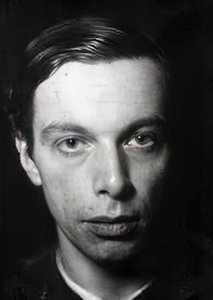
1880 - 1938 , Germania

Descoperă arta subtilă a designului interior modern cu alb, negru și gri! Ghid complet cu inspirație, istorie artistică & sfaturi de la experți pentru interioare elegante și rafinate. Most-Famous-Paintings.
Descoperă cele mai importante 25 de opere ale lui Kazimir Malevich, pionierul Suprematismului! Explorează istoria picturilor abstracte iconice precum 'Black Square' și 'White on White'. Găsește reproduceri artă de calitate muzeală pentru un decor rafinat pe Most-Famous-Paintings.com.

Explore the powerful world of Ernst Ludwig Kirchner and German Expressionism. Discover his iconic paintings, Die Brücke group, and the movement's exploration of urban anxiety & modern identity. Expert analysis for collectors & enthusiasts.
Descoperă top 10 picturi celebre dominate de tonuri 'Mars Black', de la Rembrandt la Picasso. Explorează istoria, tehnicile și emoțiile din spatele acestor capodopere artistice. Reproduceri tablouri de calitate muzeală pe Most-Famous-Paintings.com!
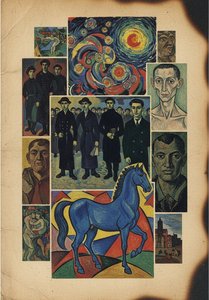
Descoperă cele mai importante 10 capodopere ale Expresionismului German! Explorează poveștile din spatele picturilor Kandinsky, Munch și Kirchner. Reproduceri de artă premium pentru un decor unic pe Most-Famous-Paintings.com


Rămâneți la curent cu cele mai recente știri din lumea artei, ofertele noastre exclusive și ideile de decor.
Spuneți-ne despre proiectul dumneavoastră, iar experții noștri în artă vă vor oferi 3 sugestii personalizate.
Vom selecta 3 opțiuni special pentru tine – Gratuit!


 Distribuie


 Vezi mai mult




































 Opțiunea cu sticlă este disponibilă doar pentru dimensiuni de sub 110 cm