x

Printuri giclée sau pe canvas de calitate muzeală, cu proces de producție rapid și opțiuni flexibile de finisare. ( Comandă pictură lucrată manual Cumpără imaginea)





























Alegeți dintre dimensiunile noastre prestabilite, care respectă proporțiile originale ale operei de artă.

Puteți introduce propriile dimensiuni pentru a se potrivi unui anumit cadru sau spațiu. Dacă dimensiunea selectată nu corespunde proporțiilor imaginii originale, vom decupa lucrarea de artă sau vom extinde imaginea cu margini oglindite sau cu o culoare uniformă. Un mockup digital va fi trimis pentru aprobarea dumneavoastră înainte de începerea producției.
Vă rugăm să rețineți că previzualizarea de pe ecran nu reflectă decuparea sau extinderea reală. Doar mockup-ul va arăta cu exactitate compoziția finală.
Deși dimensiunile personalizate sunt disponibile, vă recomandăm să selectați o dimensiune din lista predefinită pentru a păstra proporțiile originale.
Livrare în întreaga lume () în 2 săptămâni, în loc de cele 4/5 săptămâni standard. (23 August)


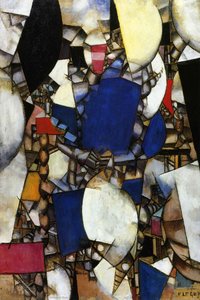
Contrast of Forms
Dimensiune reproducere
The canvas breathes with an energy that defies stillness—a palpable pulse emanating from Fernand Léger’s 1918 masterpiece, "Contrast of Forms." More than just a depiction of a man playing guitar amidst abstract shapes, it serves as a profound meditation on the relationship between humanity and technology. In this work, Léger does not merely react to the burgeoning industrial revolution; he actively attempts to translate its rhythmic, metallic heartbeat into visual terms, forging a new aesthetic born from observation and intellectual curiosity. To gaze upon this piece is to witness the moment where the organic human spirit meets the uncompromising precision of the machine age.
The composition presents a captivating visual dialogue between the figure and his environment. A man, cradling his guitar, stands anchored amidst a whirlwind of geometric patterns and fragmented objects. Scattered throughout this structured chaos are recognizable elements—a clock positioned toward the upper left, a bowl near the center, a chair in the lower right, and a bottle on the far edge. These objects are not merely still life subjects; they are deconstructed into their essential components, stripped of their traditional weight to become part of a larger, dynamic architecture of shapes. This interplay creates an experience that is both intellectually stimulating for the collector and visually arresting for anyone seeking a focal point of modern energy.
Léger's approach firmly establishes itself within the Constructivist movement, a period characterized by a rejection of fleeting Impressionist light in favor of geometric abstraction. Utilizing straight lines, squares, circles, and triangles, Léger employs a visual language of crystalline precision. This style, often referred to as "Tubism"—a distinctive offshoot of Cubism—celebrates the beauty of industrial forms through bold, cylindrical shapes that mirror the strength of modern machinery. There is no hint of organic softness or illusionistic depth here; instead, there is an unapologetic embrace of the flat, powerful plane.
The technique employed in "Contrast of Forms" reveals a masterful command over texture and light. Léger utilized a layered approach, applying thin washes of color over thicker impasto to create a surface that captures both luminosity and physical weight. His palette is striking and unapologetic, dominated by primary reds, yellows, and blues—hues often associated with the vitality of industrial signaling and the raw energy of urban life. These colors do not seek a quiet harmony; rather, they collide, creating a chromatic tension that keeps the viewer's eye in constant motion across the canvas.
For the discerning art lover or interior designer, "Contrast of Forms" offers much more than mere decoration. It is an invitation to bring the dynamism of the early 20th-century avant-garde into a contemporary living space. The painting’s ability to balance heavy, structural forms with vibrant, energetic color makes it a versatile masterpiece for high-end curation. Whether placed in a minimalist gallery setting or as a bold statement piece in a sophisticated study, the work commands attention through its rhythmic complexity.
Owning a high-quality reproduction of this work allows one to inhabit the same world of progress and structural beauty that Léger envisioned. It serves as a reminder of a time when art sought to bridge the gap between the human hand and the mechanical gear, offering a timeless aesthetic that remains as relevant in today's digital age as it was during the height of the industrial revolution. To display this piece is to celebrate the enduring power of form, color, and the relentless march of human innovation.

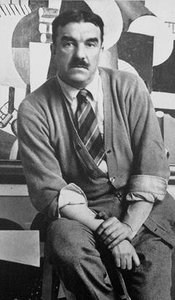
1881 - 1955 , Franța

Explore the profound impact of Minimalism and Geometric Abstraction. From Mondrian to Malevich, discover how stripping art to its essential forms revolutionized modern aesthetics through our expert-led historical guide.

Master the complexities of Geometric Abstraction. Our expert guide explores the evolution from Cubist deconstruction to Bauhaus precision, decoding the power of shape and form. Perfect for art students seeking deep historical context and academic insight into modern masterpieces.
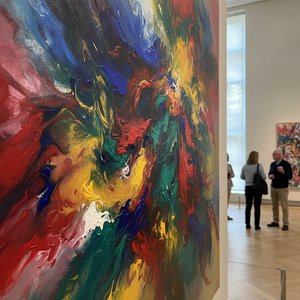
Explore the profound emotional depth of Lyrical Abstraction. Discover how masters like Raymond Parker used color and form to bridge Impressionism and Abstract Expressionism. Learn about this pivotal movement through our expert-led art history guide.

Discover the profound intersection of geometry and emotion in Cubist Expressionism. Explore art history through our expert analysis of modern masters and find museum-quality, hand-painted oil reproductions of iconic masterpieces for your collection.


Rămâneți la curent cu cele mai recente știri din lumea artei, ofertele noastre exclusive și ideile de decor.
Spuneți-ne despre proiectul dumneavoastră, iar experții noștri în artă vă vor oferi 3 sugestii personalizate.
Vom selecta 3 opțiuni special pentru tine – Gratuit!


 Previzualizare
 Trimite
 Distribuie
 Detalii despre lucrare

 Descarcă
 Produse similare
 Radiografie
 Diapozitive automate

 Vezi mai mult







 Opțiunea cu sticlă este disponibilă doar pentru dimensiuni de sub 110 cm