x


 Preview
 Comandă reproducere pictată Cumpără imaginea
 Trimite
 Detalii despre lucrare
 Adaugă la favorite
 Descarcă
 Similare
 Radiografie
 Diaporama
 Oil On CanvasWallArtNeoclassicism
 1780
1780 76.0 x 64.0 cm
 English Heritage
Print giclée sau pe canvas de calitate muzeală, cu producție rapidă și opțiuni flexibile de finisare.





























Alegeți dintre dimensiunile noastre prestabilite, care respectă proporțiile originale ale operei de artă.

Puteți introduce propriile dimensiuni pentru a se potrivi unui anumit cadru sau spațiu. Dacă dimensiunea selectată nu corespunde proporțiilor imaginii originale, vom decupa lucrarea de artă sau vom extinde imaginea cu margini oglindite sau cu o culoare uniformă. Un mockup digital va fi trimis pentru aprobarea dumneavoastră înainte de începerea producției.
Vă rugăm să rețineți că previzualizarea de pe ecran nu reflectă decuparea sau extinderea reală. Doar mockup-ul va arăta cu exactitate compoziția finală.
Deși dimensiunile personalizate sunt disponibile, vă recomandăm să selectați o dimensiune din lista predefinită pentru a păstra proporțiile originale.
Livrare în întreaga lume () în 2 săptămâni, în loc de cele 4/5 săptămâni standard. (27 Iulie)


Mrs Musters
Dimensiune reproducere
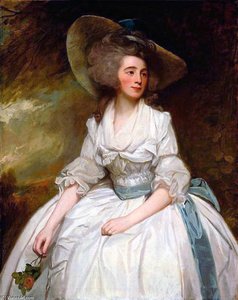
George Romney's “Mrs. Musters,” painted in 1780, is more than just a portrait; it’s a meticulously crafted window into the elegance and social intricacies of Georgian England. This captivating half-length depiction of Sophia Catherine Heywood, later Mrs. Brisby from C.S. Lewis’s beloved novel, embodies the refined sensibilities of the era while simultaneously hinting at the quiet dignity beneath a carefully constructed facade. Romney, one of the most sought-after portrait painters of his time, masterfully captures not just her likeness but also a sense of poised composure and subtle vulnerability – qualities that have ensured its enduring appeal.
The painting’s style firmly anchors it within the Rococo tradition, though with a distinctly English sensibility. Romney skillfully employs soft lighting, diffused across Mrs. Musters' face and gown, creating an atmosphere of gentle intimacy. The composition is centered around her, drawing the viewer’s eye to her expressive eyes and delicately arched eyebrows. Notice how he uses lines – precise yet fluid – to define her facial structure, the folds of her luxurious dress, and even the intricate details of her elaborate hat. These carefully rendered elements contribute to a sense of depth and realism that was highly valued in portraiture during this period.
Romney's technical prowess is immediately apparent in the smooth blending of colors and the subtle variations in texture throughout “Mrs. Musters.” The painting is executed in oil paint on canvas, a medium that allowed for both rich color saturation and nuanced tonal shifts. Observe how he’s achieved the sheen of silk and velvet through layering and glazing – techniques that create an almost tactile quality. The background landscape, rendered with atmospheric perspective, recedes into a hazy blue distance, subtly emphasizing Mrs. Musters' presence without overwhelming her. The use of muted tones—primarily blues, whites, and creams—is characteristic of the period, reflecting a preference for understated elegance over flamboyant display.
Beyond its aesthetic qualities, “Mrs. Musters” is rich in symbolic meaning. Her attire – the elaborate gown, the towering hat adorned with feathers and jewels – speaks volumes about her social standing and wealth. The hat, a particularly prominent feature, was not merely decorative; it served as a visual shorthand for status and fashion trends of the time. It’s a symbol of belonging to the upper echelons of Georgian society. The gentle expression on Mrs. Musters' face suggests a quiet confidence and self-possession – qualities admired in women of her station. The painting, therefore, offers a glimpse into the carefully constructed world of the English aristocracy, where appearances were paramount.
Reproductions of “Mrs. Musters” offer an exceptional opportunity to bring this exquisite portrait into your home or office. Available in a range of sizes and mediums – from fine art prints on archival-quality canvas to watercolor reproductions, each option faithfully captures Romney’s masterful technique and the painting's captivating atmosphere. Whether you are an art collector, an interior designer seeking to infuse a room with timeless elegance, or simply someone who appreciates the beauty of Georgian portraiture, this piece provides a stunning focal point for any space. Consider framing it in a classic style to further enhance its historical charm.


1734 - 1802 , Regatul Unit al Marii Britanii și Irlandei
Descoperă cele mai importante 25 de opere ale lui Georges Braque, pionier al cubismului! Explorează istoria, tehnicile și semnificația fiecărei picturi. Reproduceri artă de calitate muzeală pentru decorul tău pe Most-Famous-Paintings.com.
Descoperă cele mai frumoase 25 de picturi ale lui Georges Seurat! Explorează arta Pointillismului, culorile vibrante și stilul unic al acestui maestru impresionist. Reproduceri de calitate superioară pentru decor interior rafinat pe Most-Famous-Paintings.com.
Descoperă cele mai frumoase 25 de picturi ale lui Sir Joshua Reynolds! Portrete clasice, stil neoclasic și capodopere romantice. Găsește inspirație pentru decorul tău și achiziționează reproduceri de artă de calitate muzeală pe Most-Famous-Paintings.com.
Descoperă cele mai frumoase 25 de capodopere Paul Cézanne! Explorează istoria, tehnicile și semnificația picturilor impresioniste iconice. Reproduceri artă de calitate muzeală & inspirație decor interioară pe Most-Famous-Paintings.com.

Descoperă cele mai frumoase lucrări Claude Monet – o călătorie prin impresionism, nufăr și peisaje iconice. Află povestea fiecărui tablou și adu atmosfera artistică în casa ta cu reproduceri de calitate superioară pe Most-Famous-Paintings.com!


Rămâneți la curent cu cele mai recente știri din lumea artei, ofertele noastre exclusive și ideile de decor.
Spuneți-ne despre proiectul dumneavoastră, iar experții noștri în artă vă vor oferi 3 sugestii personalizate.
Vom selecta 3 opțiuni special pentru tine – Gratuit!


 Distribuie

 Vezi mai mult







 Opțiunea cu sticlă este disponibilă doar pentru dimensiuni de sub 110 cm