


x

 OilWallArtDutch Golden Age
 1660
1660 76.0 x 62.0 cm
 Muzeul Metropolitan de Artă
Pictură în ulei pe pânză, realizată manual de artiștii noștri la dimensiunea și ramele dorite de dumneavoastră, pe comandă. ( Comandă printul Cumpără imaginea)





























Alegeți dintre dimensiunile noastre prestabilite, care respectă proporțiile originale ale operei de artă.

Puteți introduce propriile dimensiuni pentru a se potrivi unui anumit cadru sau spațiu. Dacă dimensiunea selectată nu corespunde proporțiilor imaginii originale, vom decupa opera de artă sau vom extinde pictura cu elemente suplimentare pictate manual. O simulare digitală vă va fi trimisă pentru aprobare înainte de începerea producției.
Vă rugăm să rețineți că previzualizarea de pe ecran nu reflectă decuparea sau extinderea reală. Doar macheta va arăta cu exactitate compoziția finală.
Deși sunt disponibile dimensiuni personalizate, vă recomandăm să selectați o dimensiune din lista predefinită pentru a păstra proporțiile originale.
Livrare în întreaga lume () în 3-4 săptămâni, în loc de cele 5 săptămâni standard. (22 August). Fără compromisuri în ceea ce privește calitatea.


Curiosity
Dimensiune reproducere
Gerard ter Borch's “Curiosity,” painted around 1660-62, isn’t a grand historical scene or a dramatic portrait; instead, it offers a profoundly intimate glimpse into the quiet domesticity of the Dutch Golden Age. This remarkable work, measuring just 76 x 62 cm, immediately draws the viewer in with its masterful use of light and shadow, creating an atmosphere of subtle tension and unspoken connection. The painting depicts three women – a seamstress meticulously working at her needle, a lady absorbed in a book, and a third figure observing them from a distance – within a modestly furnished room. It’s a scene brimming with understated observation, capturing the nuances of human interaction with remarkable psychological depth.
Ter Borch was a pioneer of Dutch genre painting, renowned for his ability to portray everyday life with an unparalleled level of realism and emotional sensitivity. Unlike many of his contemporaries who favored heroic subjects or elaborate compositions, Ter Borch focused on the ordinary – the moments of quiet contemplation, the subtle gestures, and the unspoken relationships that define human experience. “Curiosity” exemplifies this approach perfectly; it’s not about showcasing wealth or status but rather exploring the complexities of female companionship and the quiet drama of domestic life.
The painting's power lies in Ter Borch’s extraordinary technical skill. He employs a technique known as ‘chiaroscuro,’ dramatically contrasting areas of light and shadow to create a sense of depth and volume. Notice how the soft, diffused light illuminates the women’s faces and hands, while the background remains shrouded in darkness, drawing our attention to their immediate presence. The textures are equally compelling – the delicate weave of the seamstress's dress, the smooth surface of the book, the rough fabric of the chair—all rendered with painstaking detail.
Ter Borch’s meticulous approach is evident in his rendering of fabrics and drapery. He doesn’t simply depict them; he captures their tactile quality, allowing us to almost feel the weight and texture of each garment. This attention to detail extends to every element of the scene, creating a remarkably immersive experience for the viewer. The subtle variations in tone and shading contribute significantly to the painting's overall sense of realism and immediacy.
The composition itself is laden with symbolic meaning. The seamstress, focused on her work, represents diligence and industry – a valued trait in 17th-century Dutch society. The lady reading suggests intellectual pursuits and a connection to the wider world beyond the domestic sphere. And the woman observing them from afar—a figure often interpreted as the artist’s wife, Gesina ter Borch—hints at a subtle power dynamic and perhaps a hint of melancholy. Her averted gaze invites speculation about her thoughts and feelings.
The inclusion of the dog adds another layer of complexity to the scene. It represents loyalty, companionship, and the simple pleasures of domestic life. The dog’s presence further emphasizes the intimacy of the setting and the close-knit relationships between the women. “Curiosity” isn't merely a portrait; it’s a carefully constructed tableau that invites us to contemplate the mysteries of human connection and the quiet beauty of everyday moments.
Most-Famous-Paintings offers exquisite, hand-painted reproductions of Gerard ter Borch’s “Curiosity,” meticulously crafted by our team of skilled artists using traditional techniques. Each reproduction captures the original painting's luminous quality and psychological depth, allowing you to bring this remarkable work into your home or office. Available in a range of sizes, our high-quality prints are perfect for collectors, interior designers, and anyone who appreciates the beauty and artistry of Dutch Golden Age painting. Explore our selection today and experience the timeless allure of “Curiosity.”

Gerard ter Borch (Dutch: Gerard Terburg; December 1617 – 8 December 1681), also known as Gerard Terborch, was a Dutch Golden Age painter who profoundly shaped the artistic landscape of his era. Born in Zwolle, Netherlands, he ascended to fame through meticulous observation and masterful execution—characteristics that cemented his place as one of the foremost figures in genre painting.
His early life remains shrouded in obscurity, yet records indicate a privileged upbringing fostered by his father, Gerard ter Borch the Elder, also a respected artist. This familial influence instilled within him an unwavering dedication to artistic pursuits from a young age. Ter Borch’s formal education encompassed classical studies and artistic training, equipping him with the foundational knowledge necessary for his subsequent endeavors.
Ter Borch's artistic journey commenced in Amsterdam around 1632 where he studied under Willem Cornelisz Duyster or Pieter Codde. This formative period exposed him to influential stylistic currents prevalent at the time—particularly Duyster’s emphasis on luminous realism and meticulous detail. Subsequently, he honed his skills further under Pieter de Molijn in Haarlem, absorbing techniques that would contribute to his distinctive artistic vision.
Ter Borch's oeuvre comprises approximately 150 paintings—a remarkable testament to his prolific output during the Golden Age. Among his most celebrated masterpieces are ‘The Letter,’ an exquisite depiction of domestic intimacy rendered with unparalleled sensitivity to light and texture; ‘The Gallant Conversation,’ a captivating tableau capturing a moment of refined social interaction; ‘Man on Horseback’ (1634), showcasing Ter Borch's burgeoning talent for portraying dynamic movement; and ‘Adrian Pauw’s Arrival in Münster’ (1646), demonstrating his narrative prowess and ability to convey complex emotions.
His influence extended far beyond his immediate contemporaries. Artists such as Gabriel Metsu, Gerrit Dou, Eglon van der Neer, and Johannes Vermeer acknowledged Ter Borch's pioneering role in redefining genre painting—a genre previously dominated by idealized portraits and mythological subjects. Ter Borch’s innovative approach championed the depiction of everyday life with unflinching honesty and psychological depth.
Ter Borch’s paintings reside in prestigious museums across Europe, reflecting their enduring artistic merit and historical significance. The Hermitage Museum in St. Petersburg boasts six canvases attributed to Ter Borch—a remarkable collection that underscores his international renown. Similarly, Berlin Museum houses six pieces showcasing Ter Borch's distinctive style.
The Getty Center in Los Angeles proudly displays three paintings by Ter Borch—a testament to the artist’s enduring appeal and contribution to Western art history. Visiting these institutions offers invaluable opportunities for appreciating Ter Borch’s artistic legacy firsthand.
Gerard ter Borch stands as a cornerstone of Dutch Golden Age painting, shaping the trajectory of subsequent generations of artists. His unwavering commitment to realism—combined with his profound understanding of human psychology—established him as a singular voice within his time. Ter Borch’s influence can be discerned in the works of Vermeer and other masters who embraced his innovative techniques and stylistic sensibilities.
He fundamentally altered perceptions of genre painting, elevating it from mere decorative representation to a vehicle for exploring complex emotional landscapes—a distinction that continues to resonate within contemporary artistic discourse. Ter Borch’s legacy persists as an inspiration for artists striving to capture the nuances of human experience with unwavering precision and evocative artistry.

1617 - 1681 , Olanda

Explore the captivating world of Gerard ter Borch, a master of Dutch Golden Age genre painting. Discover his intimate scenes, masterful light, and lasting influence on art history. Learn more at Most-Famous-Paintings.
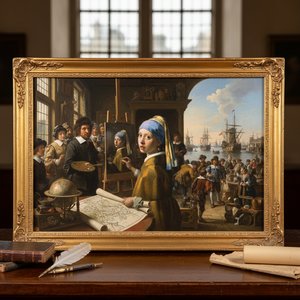
Explore the Dutch Golden Age of painting! Discover key artists like Vermeer & ter Borch, their innovative techniques, and the rich cultural context behind these Baroque masterpieces. Learn about collecting & appreciating this iconic art period.

Explore the Dutch Golden Age of painting (1600-1700) with Most-Famous-Paintings. Discover Rembrandt, Vermeer & other masters. Learn about techniques, history & find museum-quality reproductions.

Explore the captivating world of Dutch Golden Age genre painting! Discover realistic depictions of daily life, masterful artists like Ostade & Metsu, and hidden symbolism. Learn about this influential art movement with Most-Famous-Paintings.

Explore the rich history of genre painting! Discover Dutch Masters & European artists who captured everyday life with stunning realism. Learn about symbolism, techniques & lasting influence.


Rămâneți la curent cu cele mai recente știri din lumea artei, ofertele noastre exclusive și ideile de decor.
Spuneți-ne despre proiectul dumneavoastră, iar experții noștri în artă vă vor oferi 3 sugestii personalizate.
Vom selecta 3 opțiuni special pentru tine – Gratuit!


 Previzualizare
 Trimite
 Distribuie
 Detalii despre lucrare

 Descarcă
 Produse similare
 Radiografie
 Diapozitive automate
 Vezi mai mult







 Opțiunea cu sticlă este disponibilă doar pentru dimensiuni de sub 110 cm


