


x
 Acrylic On CanvasWallArtBaroque
 1615
1615 129.0 x 94.0 cm
 Muzeul de Artă din Cleveland
Achiziționați o imagine digitală de înaltă rezoluție, îmbunătățită, mult superioară previzualizării online.
Fiecare fișier este pregătit cu meticulozitate de specialiștii noștri interni, utilizând instrumente avansate și retușare manuală expertă. Ne asigurăm că fiecare imagine beneficiază de o claritate excepțională, o acuratețe precisă a culorilor și detalii fine.
Fișierul final este livrat prin e-mail în termen de 72 de ore, optimizat pentru utilizare imediată în medii profesionale, editoriale și de imprimare. Aceasta este aceeași calitate în care au încredere studiouri de design, edituri și galerii de top.
Descărcați un fișier la rezoluție înaltă pentru afișare personală, imprimare și proiecte creative. ( Comandă printul Comandă pictură lucrată manual)
Când alegeți Most-Famous-Paintings.com, nu primiți doar o simplă imagine – primiți o operă de artă digitală îmbunătățită profesional, creată cu precizie și susținută de o garanție de satisfacție. Iată tot ceea ce primești odată cu comanda ta, în mod automat:

Fișierul imaginii digitale la rezoluție înaltă vă va fi trimis prin e-mail în termen de 72 de ore de la finalizarea comenzii – gata pentru utilizare imediată.

Opera ta de artă este optimizată profesional prin intermediul unor instrumente AI avansate și al editării manuale, asigurând un nivel maxim de detalii, claritate și acuratețe a culorilor.

Ai șters sau ai pierdut din greșeală fișierul? Nu îți face griji – ți-l vom retrimite oricând, gratuit.

Bucură-te instant de noua ta operă de artă, fără taxe vamale, taxe de import sau costuri de livrare – descărcările digitale sunt întotdeauna fără taxe.

Asigurăm o reflectare cât mai fidelă a culorilor originale în imaginea ta digitală, prin utilizarea unor instrumente profesionale și a proceselor de gestionare a culorii.

Dacă nu sunteți mulțumit de imaginea digitală achiziționată, o vom revizui sau vă vom returna 100% în termen de 60 de zile – fără nicio explicație necesară.

Nu ești mulțumit? Obține o rambursare completă în termen de 60 de zile de la primirea fișierului tău digital – fără întrebări.

Cumpără 3 imagini, economisește 10% - Cumpără 5, economisește 15% - Cumpără 10+, economisește 20%. Ideal pentru proiecte creative, galerii și agenții.
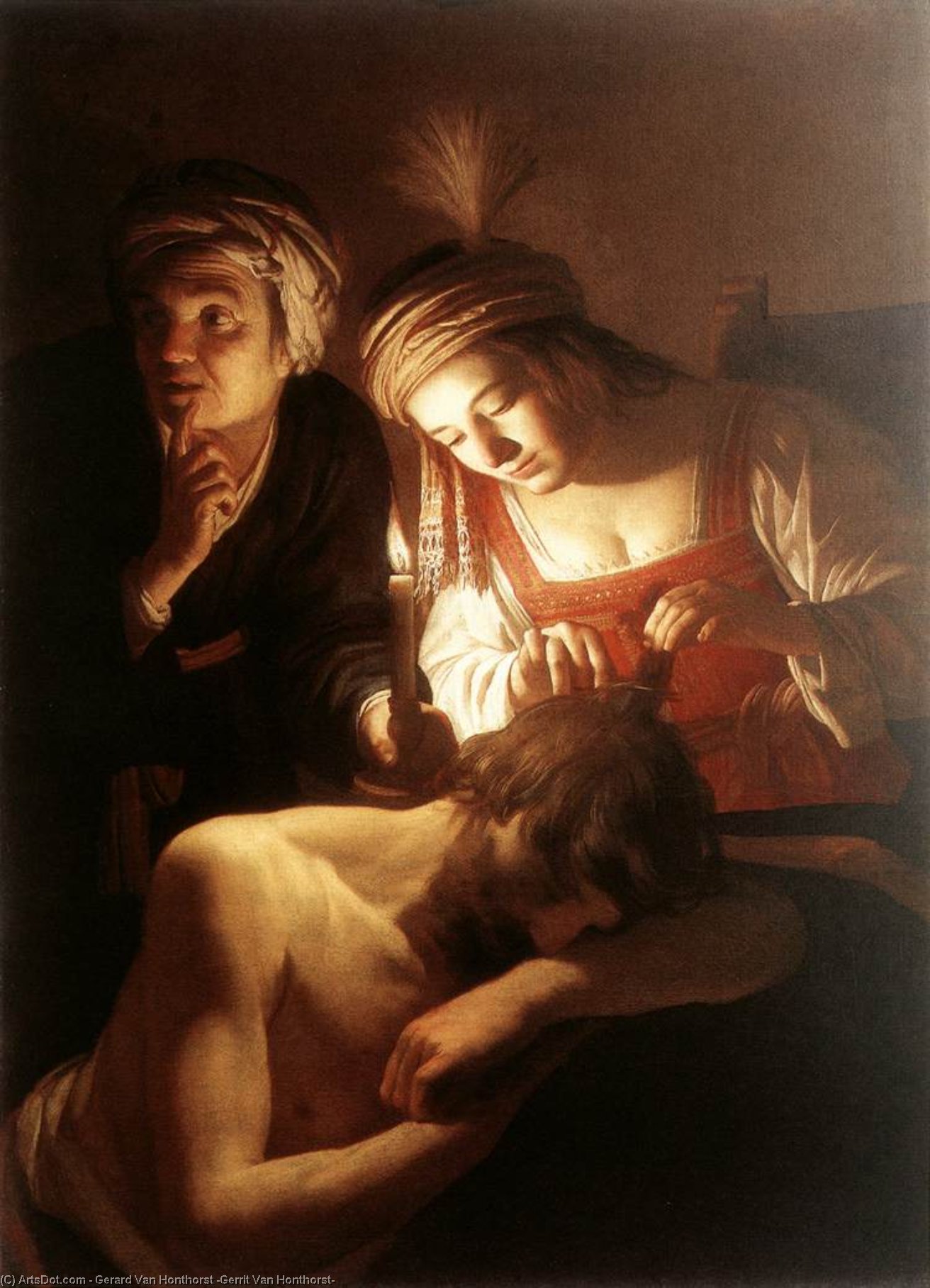
Gerard van Honthorst's "Samson and Delilah," painted in 1615, isn’t merely a depiction of a biblical tale; it’s a meticulously crafted tableau vivant—a stage set frozen in time. The painting immediately commands attention with its intensely focused composition, drawing the viewer into a small, intimate chamber dominated by a sprawling dining table. Three figures occupy this space: Samson, lying prone and vulnerable on the table, his body partially draped with a cloth; Delilah, her hand raised to her face in a gesture of both anguish and calculated seduction; and the enigmatic woman beside her, seemingly observing the unfolding drama with a mixture of concern and perhaps even complicity. The lighting, characteristic of Honthorst’s signature style—tenebrism—is masterful, plunging much of the scene into deep shadow while bathing the central figures in a dramatic, almost theatrical light source. This stark contrast amplifies the emotional intensity, creating an atmosphere thick with suspense and impending doom.
Van Honthorst’s artistic journey profoundly shaped this work, mirroring his encounter with the revolutionary techniques of Caravaggio in Rome. Like Caravaggio, Honthorst employed tenebrism to create a heightened sense of drama and psychological intensity. However, while Caravaggio often used stark, almost brutal contrasts of light and dark, Honthorst softens the effect slightly, creating a more nuanced and emotionally complex atmosphere. The careful placement of the light source—a single candle illuminating the central figures—is crucial, directing our attention to the key elements of the narrative and emphasizing the vulnerability of Samson. This technique wasn’t simply an aesthetic choice; it was a deliberate strategy for conveying the story's emotional core – the slow unraveling of strength and trust.
The painting is deeply rooted in the Baroque period, characterized by its dramatic intensity, theatricality, and focus on emotion and storytelling. Honthorst’s work exemplifies these qualities perfectly, showcasing his mastery of light, composition, and psychological realism.The story of Samson and Delilah is a potent allegory of betrayal, temptation, and the loss of innocence. The painting doesn't simply recount the biblical narrative; it delves into its emotional heart. Samson’s vulnerability as he lies exposed on the table speaks to his diminished strength—both physical and spiritual—while Delilah’s seductive gaze embodies the allure of deceit and the destructive power of manipulation. The woman beside her, often interpreted as Semadar, represents a silent witness to this tragic exchange, perhaps reflecting the wider community's complicity in Samson’s downfall. The act of shaving his hair, traditionally a symbol of strength and divine protection, becomes an emblem of utter defeat.
Historical Context:** The painting was created during a period of significant artistic innovation in the Netherlands, marked by a renewed interest in classical art and a growing emphasis on realism and emotional expression. Honthorst’s work reflects these trends, while also incorporating his own distinctive style and influences.Further research reveals that this painting is part of a larger collection of biblical scenes created by Honthorst during his time in Rome. The Cleveland Museum of Art holds a remarkably similar version, offering valuable insights into the artist’s technique and compositional choices. The Web Gallery of Art provides detailed images and historical information about Honthorst's life and work, while WikiArt offers a comprehensive overview of the painting itself. These resources highlight the enduring fascination with this dramatic narrative and the skill of the artist who brought it to life on canvas. High-quality reproductions capture the richness of color and detail, allowing viewers to appreciate the artistry of this Baroque masterpiece for generations to come.


1590 - 1656 , Olanda


Rămâneți la curent cu cele mai recente știri din lumea artei, ofertele noastre exclusive și ideile de decor.
Spuneți-ne despre proiectul dumneavoastră, iar experții noștri în artă vă vor oferi 3 sugestii personalizate.
Vom selecta 3 opțiuni special pentru tine – Gratuit!


 Previzualizare
 Trimite
 Distribuie
 Detalii despre lucrare

 Descarcă
 Produse similare
 Radiografie
 Diapozitive automate
 Vezi mai mult


