x

 Acrylic On CanvasWallArtAbstract Expressionism
 1969Contemporary
 70.0 x 70.0 cm
Printuri giclée sau pe canvas de calitate muzeală, cu proces de producție rapid și opțiuni flexibile de finisare. ( Comandă pictură lucrată manual Cumpără imaginea)





























Alegeți dintre dimensiunile noastre prestabilite, care respectă proporțiile originale ale operei de artă.

Puteți introduce propriile dimensiuni pentru a se potrivi unui anumit cadru sau spațiu. Dacă dimensiunea selectată nu corespunde proporțiilor imaginii originale, vom decupa lucrarea de artă sau vom extinde imaginea cu margini oglindite sau cu o culoare uniformă. Un mockup digital va fi trimis pentru aprobarea dumneavoastră înainte de începerea producției.
Vă rugăm să rețineți că previzualizarea de pe ecran nu reflectă decuparea sau extinderea reală. Doar mockup-ul va arăta cu exactitate compoziția finală.
Deși dimensiunile personalizate sunt disponibile, vă recomandăm să selectați o dimensiune din lista predefinită pentru a păstra proporțiile originale.
Livrare în întreaga lume () în 2 săptămâni, în loc de cele 4/5 săptămâni standard. (17 August)


Star Picture
Dimensiune reproducere
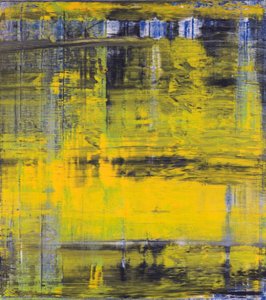
Gerhard Richter's ‘Star Picture,’ created in 1969, is not an invitation to gaze upon the cosmos with romantic wonder, but rather a profound meditation on perception, representation, and the very nature of painting itself. Emerging from a period defined by both technological advancement – the year humanity first walked on the moon – and lingering post-war anxieties, this work embodies Richter’s characteristic blurring of boundaries between abstraction and reality. It isn't a depiction *of* stars, but an exploration of how we see, remember, and translate images into the language of paint. The canvas, measuring 70 x 70 cm, feels surprisingly intimate despite its vast implied subject matter; it’s as if Richter has contained a universe within a manageable frame.
Richter's technique in ‘Star Picture’ is central to understanding its impact. He doesn’t meticulously plan or sketch, but rather embraces chance and gesture. Layers of oil paint are applied, scraped, and blurred, often utilizing a squeegee-like tool to create flattened areas and dynamic streaks. This process isn’t about achieving a precise representation; it's about revealing the inherent qualities of the medium itself – its texture, viscosity, and capacity for both control and accident. The limited palette—predominantly black, grey, and subtle gradations in between—further emphasizes this focus on materiality. These somber tones aren’t depressing, but rather create a sense of quiet contemplation, inviting the viewer to lose themselves within the painting's surface. The absence of distinct forms or focal points encourages a wandering eye, discovering new details with each viewing. It is an artwork that resists easy categorization, existing somewhere between abstract expressionism and photorealism – a hallmark of Richter’s diverse oeuvre.
Born in Dresden in 1932, Gerhard Richter's life was deeply shaped by the tumultuous history of 20th-century Germany. Growing up through war and division instilled a skepticism towards grand narratives and idealized representations. This distrust is palpable in ‘Star Picture.’ While seemingly abstract, the work can be seen as a response to the era’s fascination with space exploration, subtly questioning the utopian promises associated with technological progress. The blurred, indistinct stars might symbolize the elusiveness of truth or the limitations of human perception. Richter's artistic journey was also influenced by movements like Zero, which sought a fresh start after the devastation of war, embracing abstraction and experimentation as pathways to renewal. However, unlike the optimistic fervor of some Zero artists, Richter maintains a critical distance, refusing to offer easy answers or embrace simplistic ideologies.
‘Star Picture’ possesses an enduring quality that transcends its historical context. Its monochromatic palette and abstract composition make it remarkably versatile in contemporary interiors. The painting's subtle textures and dynamic energy can add depth and sophistication to a minimalist space, while its contemplative mood complements more traditional settings. A reproduction of this work isn’t merely a decorative element; it’s an invitation to engage with complex ideas about art, perception, and the human condition. It speaks to those who appreciate intellectual rigor alongside aesthetic beauty—a piece that rewards sustained contemplation and offers new discoveries with each encounter. The artwork's power lies in its ability to evoke emotion without relying on explicit imagery, making it a truly timeless addition to any collection.


1932 - , Germania
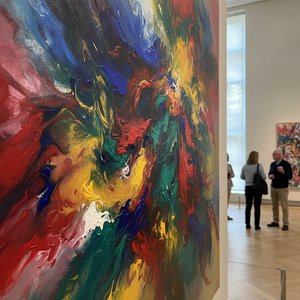
Explore the profound emotional depth of Lyrical Abstraction. Discover how masters like Raymond Parker used color and form to bridge Impressionism and Abstract Expressionism. Learn about this pivotal movement through our expert-led art history guide.

Explore the profound history and emotional depth of Abstract Expressionism. From Jackson Pollock to Mark Rothko, master the nuances of the New York School through our expert art history guide. Discover museum-quality hand-painted reproductions for your collection.

Explore the profound emotional depth of Color Field painting. Discover the history of mid-century abstraction, from Rothko to Newman, and learn how pure color transforms the viewer's experience through our expert art history guide.


Rămâneți la curent cu cele mai recente știri din lumea artei, ofertele noastre exclusive și ideile de decor.
Spuneți-ne despre proiectul dumneavoastră, iar experții noștri în artă vă vor oferi 3 sugestii personalizate.
Vom selecta 3 opțiuni special pentru tine – Gratuit!


 Previzualizare
 Trimite
 Distribuie
 Detalii despre lucrare

 Descarcă
 Produse similare
 Radiografie
 Diapozitive automate
 Vezi mai mult







 Opțiunea cu sticlă este disponibilă doar pentru dimensiuni de sub 110 cm