Vinde opere de artă
Lista de dorințe Coș de cumpărături Cart
PrevizualizarePrevizualizare Previzualizare ARPrevizualizare AR Comandă printul Comandă printulComandă pictură lucrată manual Comandă pictură lucrată manual TrimiteTrimite
Detalii despre lucrareDetalii despre lucrare Adaugă la favorite Adaugă la favorite DescarcăDescarcă Produse similareProduse similare RadiografieRadiografie Diapozitive automateDiapozitive automate

The Quack

Discover Gerrit Dou’s ‘Portrait of an Old Woman Reading.’ A meticulously detailed 1635 oil painting showcasing Baroque light & wisdom. Explore this Dutch Golden Age masterpiece!

Descoperă operele impresionante ale lui Gerrit Dou (1613-1675), maestru al picturii fijnschilder din Aurul Olandez! Admira scene domestice minuțioase și iluminarea atentă în interioruri pentru a te conecta cu atmosfera unei epoci de glorie artistică. Explorează moștenirea lui Dou și operele sale emblematice pe Most-Famous-Paintings.com!

Achiziționați o imagine digitală de înaltă rezoluție, îmbunătățită, mult superioară previzualizării online.

Fiecare fișier este pregătit cu meticulozitate de specialiștii noștri interni, utilizând instrumente avansate și retușare manuală expertă. Ne asigurăm că fiecare imagine beneficiază de o claritate excepțională, o acuratețe precisă a culorilor și detalii fine.

Fișierul final este livrat prin e-mail în termen de 72 de ore, optimizat pentru utilizare imediată în medii profesionale, editoriale și de imprimare. Aceasta este aceeași calitate în care au încredere studiouri de design, edituri și galerii de top.

Imagine Digitală

Descărcați un fișier la rezoluție înaltă pentru afișare personală, imprimare și proiecte creative. (Comandă printul Comandă printulComandă pictură lucrată manual Comandă pictură lucrată manual)

Preț total

$ 24,90

Inclus în fiecare comandă de imagini digitale

Livrare digitală de expertiză, garantată

Când alegeți Most-Famous-Paintings.com, nu primiți doar o simplă imagine – primiți o operă de artă digitală îmbunătățită profesional, creată cu precizie și susținută de o garanție de satisfacție. Iată tot ceea ce primești odată cu comanda ta, în mod automat:

shipping_icon
Livrare rapidă prin e-mail

Fișierul imaginii digitale la rezoluție înaltă vă va fi trimis prin e-mail în termen de 72 de ore de la finalizarea comenzii – gata pentru utilizare imediată.

canvas_icon
Fișier digital optimizat prin IA

Opera ta de artă este optimizată profesional prin intermediul unor instrumente AI avansate și al editării manuale, asigurând un nivel maxim de detalii, claritate și acuratețe a culorilor.

insurance_icon
Retransmitere gratuită pe viață

Ai șters sau ai pierdut din greșeală fișierul? Nu îți face griji – ți-l vom retrimite oricând, gratuit.

tax_icon
Fără taxe de import – Întotdeauna

Bucură-te instant de noua ta operă de artă, fără taxe vamale, taxe de import sau costuri de livrare – descărcările digitale sunt întotdeauna fără taxe.

color_icon
Garanția acurateții culorilor

Asigurăm o reflectare cât mai fidelă a culorilor originale în imaginea ta digitală, prin utilizarea unor instrumente profesionale și a proceselor de gestionare a culorii.

return_icon
Garanție de satisfacție de 60 de zile

Dacă nu sunteți mulțumit de imaginea digitală achiziționată, o vom revizui sau vă vom returna 100% în termen de 60 de zile – fără nicio explicație necesară.

guarantee_icon
Garanție de returnare 100% a banilor

Nu ești mulțumit? Obține o rambursare completă în termen de 60 de zile de la primirea fișierului tău digital – fără întrebări.

discount_icon
Reduceri pentru comenzi în volum

Cumpără 3 imagini, economisește 10% - Cumpără 5, economisește 15% - Cumpără 10+, economisește 20%. Ideal pentru proiecte creative, galerii și agenții.

Informații rapide

  • Title: The Quack
  • Dimensions: 112 x 83 cm
  • Movement: Dutch Golden Age
  • Artistic style: Fijnschilder
  • Location: Museum Boijmans Van Beuningen, Rotterdam
  • Subject or theme: Genre scene
  • Influences: Rembrandt

Descriere obiect de colecție

A Window Into Dutch Golden Age Life: Gerrit Dou’s “The Quack”

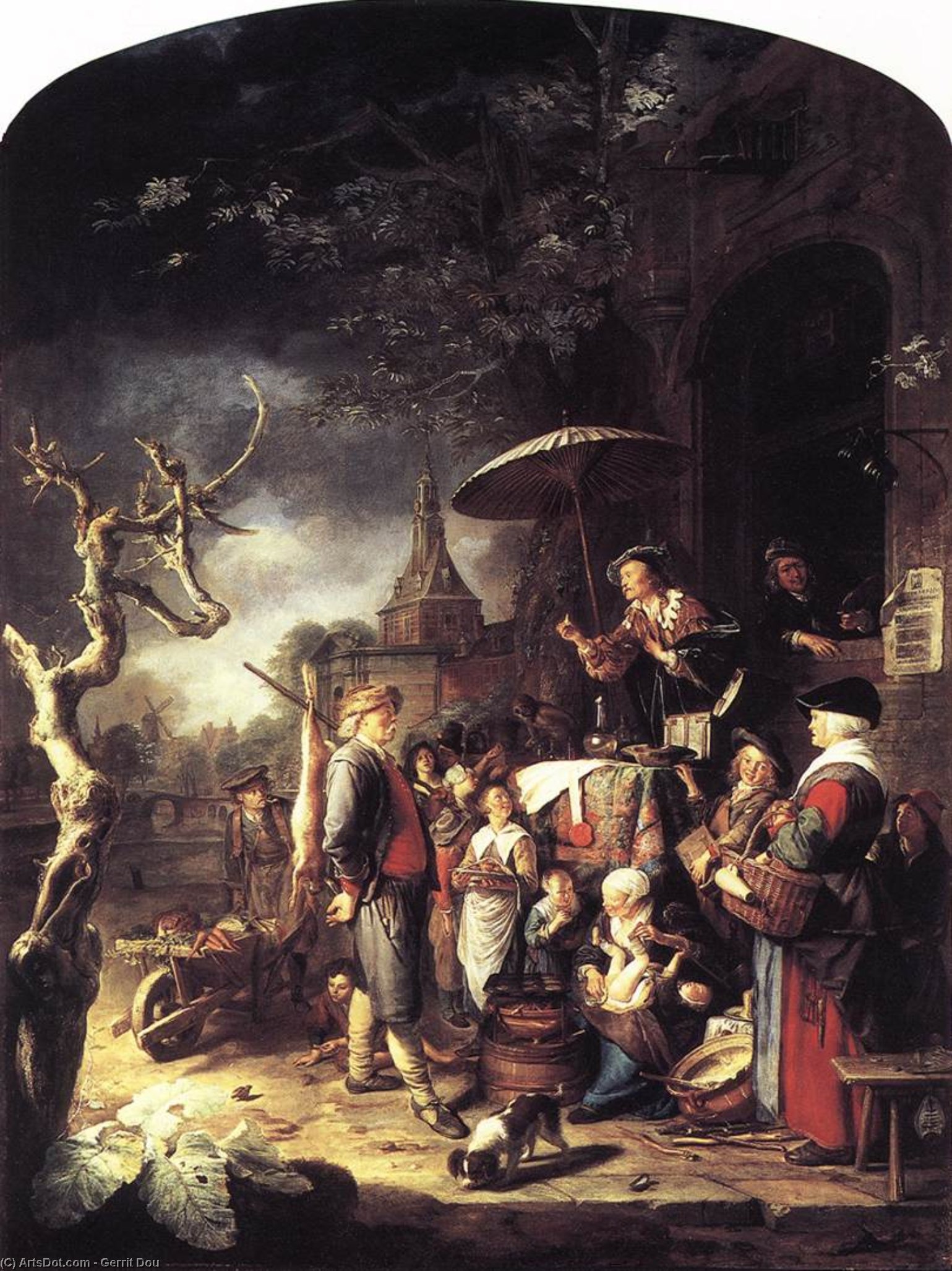
Gerrit Dou's "The Quack," completed in 1652, stands as a quintessential emblem of the Dutch Golden Age—a period characterized by unprecedented artistic flourishing and intellectual curiosity. More than just a depiction of a medical practitioner peddling remedies, this oil on canvas painting delves into the complexities of social life and psychological observation, cementing Dou’s reputation as one of Rembrandt’s most astute pupils and a master of chiaroscuro. Located at the Museum Boijmans Van Beuningen in Rotterdam, Netherlands, “The Quack” offers viewers an immersive glimpse into seventeenth-century Holland—a world striving for realism while simultaneously embracing symbolic representation.

Composition and Technique: Mastering Light and Detail

Dou’s meticulous approach to painting is immediately apparent upon examining the artwork. He employs a masterful technique of chiaroscuro – dramatic contrasts between light and dark – to sculpt the scene with remarkable precision. The artist skillfully directs light onto key figures, highlighting their faces and clothing while casting deep shadows that convey an atmosphere of quiet contemplation. This technique isn’t merely stylistic; it serves to heighten emotional impact and imbue the painting with a palpable sense of realism. Furthermore, Dou's painstaking attention to detail extends beyond illumination. He meticulously renders textures—the rough bark of the ancient tree, the folds of fabric, the sheen on bottles—creating an illusion of tangible presence that draws the eye into the scene.

The Scene Unfolds: A Portrait of Everyday Life

“The Quack” portrays a bustling marketplace square populated by several individuals engaged in various activities. At the center stands a quack doctor, confidently presenting his wares – vials filled with liquids and herbs—to potential customers. Surrounding him are men dressed in formal attire, observing the proceedings with discerning gazes. The inclusion of an elderly woman absorbed in reading adds another layer of narrative complexity, suggesting themes of wisdom, contemplation, and perhaps even skepticism. Dou’s compositional choices deliberately invite viewers to consider not just what is visible but also what lies beneath the surface—the unspoken anxieties and aspirations inherent in human interaction.

Symbolism: Beyond Mere Representation

The painting transcends a simple depiction of commerce; it carries symbolic weight that speaks to broader societal concerns. The ancient tree dominating the background represents resilience, longevity, and the passage of time – mirroring the aging process itself. More subtly, the doctor’s gesture—pointing towards his wares—suggests an attempt to persuade or convince, highlighting the dynamics of persuasion and belief within a society grappling with scientific advancements alongside traditional healing practices. The woman reading embodies intellectual curiosity and introspection, representing those who seek knowledge and understanding amidst the uncertainties of life.

A Legacy of Brilliance: Influenced by Rembrandt

Like Rembrandt Van Rijn, Dou was profoundly impacted by his mentor’s artistic vision—particularly his mastery of light and shadow. However, Dou developed a distinctive style characterized by its refined elegance and psychological depth. His ability to capture the nuances of human emotion through subtle facial expressions and gestures distinguishes him from many of his contemporaries. “The Quack” exemplifies this legacy, demonstrating Dou's unwavering commitment to portraying reality with both accuracy and artistic sensitivity. You can find similar paintings by Rembrandt Van Rijn at https://Most-Famous-Paintings.com, including works like Portrait of Nicolaes Ruts and An Old Woman Reading. For more information on Gerrit Dou and his works, visit https://Most-Famous-Paintings.com/@/Gerrit-(Gerard)-Dou. The Museum Boijmans Van Beuningen is a renowned art museum located in Rotterdam, Netherlands, featuring an impressive collection of fine and decorative arts. More information on the museum can be found at /art/list/?Filter=A@D3ARRK-Museum-Boijmans-Van-Beuningen-Rotterdam-Netherlands.

Dimensions & Location

Size: 112 x 83 cm Date: 1652

Further Exploration

Discover more about Gerrit Dou and his artistic achievements at https://Most-Famous-Paintings.com/@/Gerrit-(Gerard)-Dou. Explore the captivating world of ‘after Gerrit Dou’! Discover Dutch Golden Age genre scenes & candlelight nightscapes by this master of chiaroscuro & meticulous detail. Find similar paintings by Rembrandt Van Rijn at https://Most-Famous-Paintings.com, including works like Portrait of Nicolaes Ruts and An Old Woman Reading. Learn more about the Museum Boijmans Van Beuningen: /art/list/?Filter=A@D3ARRK-Museum-Boijmans-Van-Beuningen-Rotterdam-Netherlands. Explore Gerrit Rietveld’s iconic designs at https://Most-Famous-Paintings.com/@/Gerrit-(Gerard)-Rietveld/.

Biografie artist

Gerrit Dou: A Master of Subtle Light and Intricate Detail

Gerrit Dou, a name synonymous with the Dutch Golden Age, was more than just a painter; he was a meticulous craftsman, a subtle magician who coaxed extraordinary realism from seemingly simple scenes. Born in Leiden on April 7th, 1613, into a family involved in glassmaking, his early life instilled within him an appreciation for detail and precision – qualities that would profoundly shape his artistic vision. Dou’s legacy rests not upon grand gestures or dramatic narratives, but rather on the quiet beauty of everyday moments rendered with astonishing skill and sensitivity. He passed away peacefully on February 9th, 1675, leaving behind a body of work that continues to fascinate and delight art lovers worldwide.

The Leiden Fijnschilder School and Artistic Influences

Dou’s artistic journey began under the tutelage of Bartholomeus Dolendo, an engraver, before he transitioned to the workshop of Pieter Couwenhorn, a master glass painter. This early training provided him with invaluable experience in rendering textures, capturing light, and working with intricate details – skills that would become hallmarks of his distinctive style. Crucially, Dou’s time spent studying under Rembrandt van Rijn proved transformative. While he never formally became Rembrandt's pupil, the influence is undeniable; Dou absorbed Rembrandt’s mastery of chiaroscuro—the dramatic interplay of light and shadow—and his ability to imbue scenes with a sense of psychological depth. However, unlike Rembrandt’s often turbulent and emotionally charged compositions, Dou favored a more restrained and polished approach, developing what became known as the *fijnschilder* style – “fine painting” – characterized by its meticulous detail, subtle color gradations, and an almost photographic realism. He was part of the Leiden Fijnschilders, a group of artists who shared a commitment to technical excellence and a focus on capturing the nuances of everyday life.

A Distinctive Style: Niche Paintings and Candlelit Scenes

Dou’s artistic signature lies in his innovative use of “niche” paintings – small, self-contained scenes often framed as if they were part of an architectural feature, such as a recessed alcove or a window frame. These niches created a sense of intimacy and immediacy, drawing the viewer into the depicted world. He was particularly renowned for his candlelit night-scenes, where he masterfully captured the flickering light reflecting off surfaces, creating a mesmerizing effect of depth and atmosphere. His technique involved using a concave lens combined with a convex mirror to achieve an accurate representation of the scene, ensuring that every detail – from the texture of fabric to the glint in a person’s eye – was rendered with astonishing precision. His paintings weren't merely representations; they were carefully constructed illusions designed to engage the viewer's senses and invite contemplation.

Notable Works and Lasting Legacy

Among Dou’s most celebrated works is *The Astronomer by Candlelight*, a painting that exemplifies his mastery of light and shadow, capturing the intense glow of candlelight illuminating a man engrossed in his observations. His *Portrait of an Old Woman* showcases his ability to convey character and emotion through subtle details – the wrinkles on her face, the expression in her eyes. The Leiden Collection in New York holds a significant number of Dou’s paintings, offering visitors a chance to experience the breadth and depth of his artistic talent. Furthermore, his influence extended beyond his own lifetime; artists such as Frans van Mieris the Elder and Gabriel Metsu were inspired by his meticulous technique and refined style. Gerrit Dou's legacy continues to resonate today, reminding us of the power of observation, precision, and a deep appreciation for the beauty of the everyday world.

Further Exploration

For more information about Gerrit Dou’s life and work, consider visiting these resources:
Gerrit Dou

Gerrit Dou

1613 - 1675 , Olanda

Detalii rapide

  • Artistic Movement Or Style: Fijnschilder (Fine Painting)
  • Artists Or Movements Influenced By This Artist: ['Leiden Fijnschilders']
  • Artists Who Influenced This Artist: ['Rembrandt van Rijn']
  • Date Of Birth: April 7, 1613
  • Date Of Death: February 9, 1675
  • Full Name: Gerrit Dou
  • Nationality: Dutch
  • Notable Artworks:
    • The Astronomer by Candlelight
    • Portrait of an Old Woman
  • Place Of Birth: Leiden, Netherlands