x

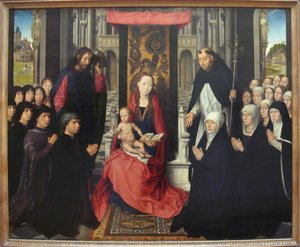
 1463
1463 154.0 x 43.0 cm
 Pinacoteca di Brera
Achiziționați o imagine digitală de înaltă rezoluție, îmbunătățită, mult superioară previzualizării online.
Fiecare fișier este pregătit cu meticulozitate de specialiștii noștri interni, utilizând instrumente avansate și retușare manuală expertă. Ne asigurăm că fiecare imagine beneficiază de o claritate excepțională, o acuratețe precisă a culorilor și detalii fine.
Fișierul final este livrat prin e-mail în termen de 72 de ore, optimizat pentru utilizare imediată în medii profesionale, editoriale și de imprimare. Aceasta este aceeași calitate în care au încredere studiouri de design, edituri și galerii de top.
Descărcați un fișier la rezoluție înaltă pentru afișare personală, imprimare și proiecte creative. ( Comandă printul Comandă pictură lucrată manual)
Când alegeți Most-Famous-Paintings.com, nu primiți doar o simplă imagine – primiți o operă de artă digitală îmbunătățită profesional, creată cu precizie și susținută de o garanție de satisfacție. Iată tot ceea ce primești odată cu comanda ta, în mod automat:

Fișierul imaginii digitale la rezoluție înaltă vă va fi trimis prin e-mail în termen de 72 de ore de la finalizarea comenzii – gata pentru utilizare imediată.

Opera ta de artă este optimizată profesional prin intermediul unor instrumente AI avansate și al editării manuale, asigurând un nivel maxim de detalii, claritate și acuratețe a culorilor.

Ai șters sau ai pierdut din greșeală fișierul? Nu îți face griji – ți-l vom retrimite oricând, gratuit.

Bucură-te instant de noua ta operă de artă, fără taxe vamale, taxe de import sau costuri de livrare – descărcările digitale sunt întotdeauna fără taxe.

Asigurăm o reflectare cât mai fidelă a culorilor originale în imaginea ta digitală, prin utilizarea unor instrumente profesionale și a proceselor de gestionare a culorii.

Dacă nu sunteți mulțumit de imaginea digitală achiziționată, o vom revizui sau vă vom returna 100% în termen de 60 de zile – fără nicio explicație necesară.

Nu ești mulțumit? Obține o rambursare completă în termen de 60 de zile de la primirea fișierului tău digital – fără întrebări.

Cumpără 3 imagini, economisește 10% - Cumpără 5, economisește 15% - Cumpără 10+, economisește 20%. Ideal pentru proiecte creative, galerii și agenții.

John Michael Wright, a name often relegated to the footnotes of 17th-century English art history, emerges as a remarkably sophisticated and subtly powerful portraitist. Born in London around 1617 – though his precise origins remain tantalizingly debated – Wright’s life was a tapestry woven with threads of Scottish heritage, Roman artistic influence, and a complex engagement with the volatile political landscape of Restoration England. His work, characterized by an intimate realism and a profound understanding of human psychology, deserves renewed attention as a significant voice within a period dominated by the flamboyant style of Sir Peter Lely.
Wright’s early training unfolded in Edinburgh under the tutelage of George Jamesone, a Scottish painter who instilled in him a foundational knowledge of composition and technique. However, it was his extended sojourn in Rome that truly shaped his artistic vision. Admitted to the prestigious Accademia di San Luca in 1648, Wright immersed himself in the vibrant art scene of the Italian capital, absorbing the techniques of masters like Caravaggio and studying the classical ideals of Renaissance portraiture. This Roman period wasn’t merely a vacation; it was a deliberate investment in his artistic development, providing him with a critical understanding of light, shadow, and the nuances of human expression – elements he would later masterfully employ in his English portraits.
Returning to England in 1656, Wright quickly established himself as a sought-after portraitist, attracting patronage from both Protestant and Catholic circles. This period coincided with the tumultuous years of the Interregnum and the subsequent Restoration, creating a uniquely challenging environment for an artist navigating religious and political divisions. Wright’s ability to secure commissions from figures across the spectrum – including prominent Catholics like Charles II and James II – speaks volumes about his diplomatic skill and his capacity to transcend sectarian boundaries through his art.
His style diverged subtly from Lely's more overtly polished aesthetic. While Lely favored a glamorous, idealized representation of his subjects, Wright’s portraits possessed a greater sense of introspection and psychological depth. His sitters often appear thoughtful, engaged in private contemplation – a marked contrast to the carefully constructed smiles prevalent in many contemporary portraits. This subtle shift reflects a growing interest in capturing not just outward appearances but also the inner lives of his subjects.
Wright’s artistic development was profoundly influenced by the principles of Baroque painting, particularly as he encountered them during his time in Rome. The dramatic use of chiaroscuro – the interplay of light and shadow – became a defining characteristic of his work, lending depth and intensity to his portraits. He skillfully employed tenebrism, creating strong contrasts between illuminated areas and deep shadows, which heightened the drama and focused attention on key features of the subject’s face and expression. Furthermore, Wright's compositions often featured dynamic arrangements of figures and objects, reflecting a Baroque emphasis on movement and theatricality.
His engagement with the Accademia di San Luca also exposed him to contemporary Italian artists, including Rubens and Van Dyck, whose techniques he subtly incorporated into his own style. This cross-cultural fertilization resulted in a portraiture that was both distinctly English and infused with the sophistication of European artistic trends.
Despite facing periods of relative obscurity following his death in 1681, John Michael Wright’s work has been increasingly recognized for its remarkable realism and psychological insight. His portraits offer a rare glimpse into the inner lives of his subjects, revealing their thoughts, emotions, and personalities with subtle yet profound accuracy. Works like “Portrait of Mrs. Salesbury with her Grandchildren” exemplify this ability to capture not just physical likeness but also the complex relationships between individuals.
Today, Wright’s paintings are treasured within collections worldwide, serving as a testament to his artistic skill and his enduring contribution to the history of English portraiture. Further research continues to shed light on the complexities of his life and career, solidifying his place as a significant, though often overlooked, figure in the art world.

1617 - 1666 , Italy


Rămâneți la curent cu cele mai recente știri din lumea artei, ofertele noastre exclusive și ideile de decor.
Spuneți-ne despre proiectul dumneavoastră, iar experții noștri în artă vă vor oferi 3 sugestii personalizate.
Vom selecta 3 opțiuni special pentru tine – Gratuit!


 Previzualizare
 Trimite
 Distribuie
 Detalii despre lucrare

 Descarcă
 Produse similare
 Radiografie
 Diapozitive automate
 Vezi mai mult