x

Printuri giclée sau pe canvas de calitate muzeală, cu proces de producție rapid și opțiuni flexibile de finisare. ( Comandă pictură lucrată manual Cumpără imaginea)





























Alegeți dintre dimensiunile noastre prestabilite, care respectă proporțiile originale ale operei de artă.

Puteți introduce propriile dimensiuni pentru a se potrivi unui anumit cadru sau spațiu. Dacă dimensiunea selectată nu corespunde proporțiilor imaginii originale, vom decupa lucrarea de artă sau vom extinde imaginea cu margini oglindite sau cu o culoare uniformă. Un mockup digital va fi trimis pentru aprobarea dumneavoastră înainte de începerea producției.
Vă rugăm să rețineți că previzualizarea de pe ecran nu reflectă decuparea sau extinderea reală. Doar mockup-ul va arăta cu exactitate compoziția finală.
Deși dimensiunile personalizate sunt disponibile, vă recomandăm să selectați o dimensiune din lista predefinită pentru a păstra proporțiile originale.
Livrare în întreaga lume () în 2 săptămâni, în loc de cele 4/5 săptămâni standard. (18 August)


untitled (4246)
Dimensiune reproducere
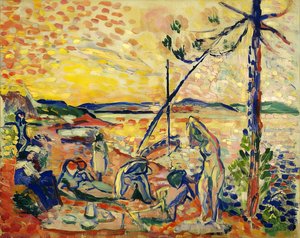
Henri Matisse, a titan amongst Fauvist painters and arguably one of the most influential artists of the 20th century, gifted us with “Untitled (4246),” a landscape that transcends mere depiction—it embodies an ethos of joyful spontaneity and profound artistic vision. Painted sometime between 1937 and 1941 during Matisse’s prolific period in Antibes, France, this artwork isn't simply observed; it’s felt.
The painting presents a hillside vista bathed in the warm hues of Provençal sunlight. Dominating the composition are stylized trees—their trunks rendered in bold strokes of ochre and burnt umber—reaching upwards towards a cerulean sky punctuated by patches of azure and lemon yellow. Beneath this luminous expanse unfolds a tranquil village scene, populated with figures engaged in everyday activities; their forms simplified yet imbued with palpable presence.
Matisse’s stylistic approach—Fauvism—represents a radical departure from Impressionistic conventions. Rejecting the subtle gradations of light and shadow favored by his predecessors, Matisse championed an uncompromising embrace of pure color. He believed that color possessed inherent expressive power, capable of conveying emotion directly to the viewer without mediation.
"Untitled (4246)" exemplifies this principle perfectly. The artist eschews naturalistic pigments, opting instead for vibrant shades—crimson, tangerine, emerald green—that pulsate with energy and vitality. These colors aren’t blended harmoniously; they are juxtaposed boldly against each other, creating a visual dynamism that mirrors the emotional intensity of Matisse's artistic intent.
Matisse meticulously crafted his canvases using tempera paint on canvas—a technique known for its luminosity and durability. He employed a reductive approach to composition, reducing forms to their essential outlines while prioritizing color as the primary vehicle of artistic communication. The deliberate flattening of perspective contributes to the painting’s dreamlike quality, inviting contemplation rather than demanding detailed observation.
Notice how Matisse skillfully uses repetition—the stylized trees appearing multiple times throughout the scene—to reinforce visual rhythm and create a sense of unity. Furthermore, the placement of figures strategically anchors the composition, guiding the viewer's gaze across the landscape and enhancing its overall impact.
"Untitled (4246)" speaks to Matisse’s broader artistic philosophy—a desire to capture not just what is seen but what is felt. The hillside setting symbolizes tranquility and refuge from the anxieties of wartime Europe, mirroring Matisse's own personal experience during World War II.
More profoundly, however, the painting embodies Matisse’s belief in the transformative power of art. By immersing himself in color and form, he sought to liberate his imagination and express joy—a sentiment that radiates outwards from the canvas itself. This artwork remains a testament to Matisse's unwavering conviction that beauty could serve as an antidote to despair.


1869 - 1954 , Franța
Descoperă cele mai emblematice 25 de opere ale lui Henri Matisse! Explorează fauvismul, culorile vibrante și stilul unic al artistului francez. Reproduceri tablouri de calitate muzeală & inspirație pentru decor pe Most-Famous-Paintings.com.

Descoperă Top 10 capodopere fauviste – Matisse, Derain și alți maeștri ai culorii! Explorează istoria, tehnicile și expresivitatea picturilor fauve. Reproduceri de artă de calitate muzeală pe Most-Famous-Paintings.com. Inspiră-te pentru decorul tău!
Descoperă Top 10 capodopere fauviste – Matisse, Derain și alți maeștri ai culorii! Explorează istoria artei moderne, tehnicile îndrăznețe și emoția vibrantă din picturile fauviste. Reproduceri de artă premium pe Most-Famous-Paintings.ro
Descoperă top 10 capodopere artistice cu peisaje, de la Monet și Van Gogh la picturi impresioniste. Află poveștile din spatele fiecărei opere și găsește inspirație pentru decorul casei tale! Reproduceri tablouri de calitate superioară pe Most-Famous-Paintings.com.

Explore the serene landscapes of Henri-Joseph Harpignies, a master of the Barbizon School. Discover his atmospheric paintings, recurring themes & enduring legacy in 19th-century French art. Learn more at Most-Famous-Paintings.


Rămâneți la curent cu cele mai recente știri din lumea artei, ofertele noastre exclusive și ideile de decor.
Spuneți-ne despre proiectul dumneavoastră, iar experții noștri în artă vă vor oferi 3 sugestii personalizate.
Vom selecta 3 opțiuni special pentru tine – Gratuit!


 Previzualizare
 Trimite
 Distribuie
 Detalii despre lucrare

 Descarcă
 Produse similare
 Radiografie
 Diapozitive automate
 Vezi mai mult







 Opțiunea cu sticlă este disponibilă doar pentru dimensiuni de sub 110 cm