Wishlist Coș de cumpărături Cart
Comandă tipăritul Comandă tipăritulCumpără imaginea Cumpără imaginea TrimiteTrimite
Detalii despre lucrareDetalii despre lucrare Adaugă la favorite Adaugă la favorite DescarcăDescarcă SimilareSimilare RadiografieRadiografie DiaporamaDiaporama

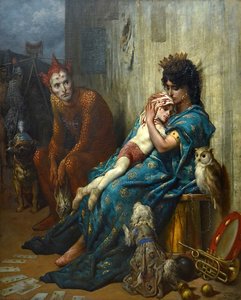
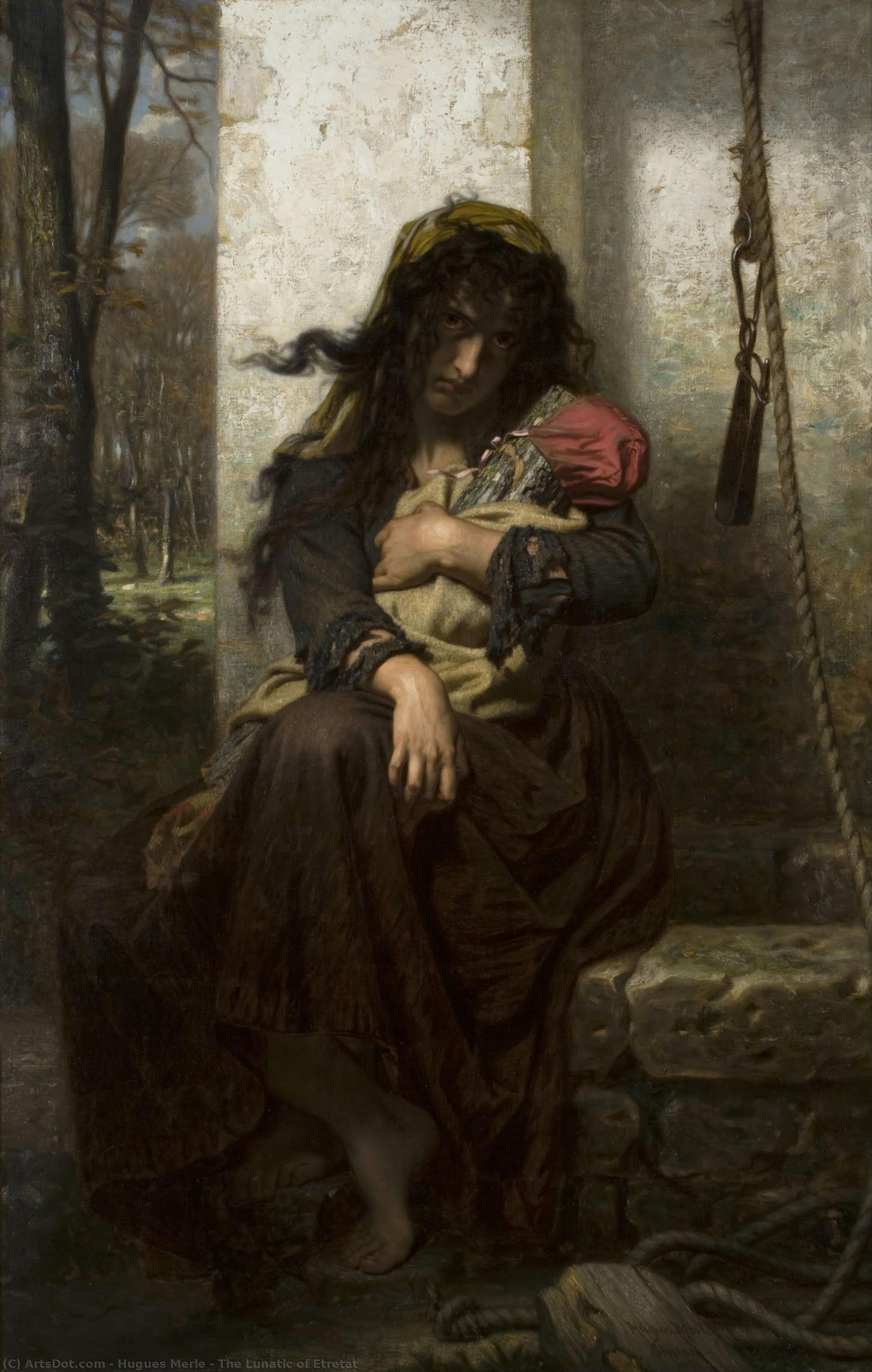
The Lunatic of Etretat

Explore 'The Lunatic of Étretat' by Hugues Merle (1871). A haunting portrait capturing grief, despair, and potential political allegory – a masterpiece of Romanticism.

Hugues Merle (1823-1881): Pictor francez renumit pentru scene sentimentale și morale, rivalizând cu Bouguereau. Descoperi portrete realistici și picturi de gen care reflectă viața din secolul al XIX-lea.

Reproducere manuală în ulei

Pictură în ulei pe pânză, pictată manual, la dimensiunea și ramele dorite de dumneavoastră, realizată la comandă de artiștii noștri.


P118B $10
P118H $10
P118W $10
P438Z $10
P508JH $12
P508YH $12
P805H $10
P805Z $10
P919BZ $10
P919G $10
P919XJ $10
P959ZH $10
P968JZ $12
W106C $8
W218G $10
W218JH $8
W218Y $10
W307PJ $10
W316G $10
W316PJ $8
W316Y $10
W398PJ $8
W4111J $10
W500HY $15
W500JH $15
W692G $12
W849H $8
W940BG $15
W953PJ $8

Standard
custom
CM
INCH

Alegeți dintre dimensiunile noastre prestabilite, care respectă proporțiile originale ale operei de artă.

lățime
înălțime

Puteți introduce propriile dimensiuni pentru a se potrivi unui anumit cadru sau spațiu. Dacă dimensiunea selectată nu corespunde proporțiilor imaginii originale, vom decupa opera de artă sau vom extinde pictura cu elemente suplimentare pictate manual. O simulare digitală vă va fi trimisă pentru aprobare înainte de începerea producției.
Vă rugăm să rețineți că previzualizarea de pe ecran nu reflectă decuparea sau extinderea reală. Doar macheta va arăta cu exactitate compoziția finală.
Deși sunt disponibile dimensiuni personalizate, vă recomandăm să selectați o dimensiune din lista predefinită pentru a păstra proporțiile originale.

Exemple de elemente ce pot fi modificate: Înlocuiți fața cu fotografia clientului; Adăugați un animal de companie (de exemplu, înlocuiți pisica cu un câine); Includeți un mesaj ascuns în fundal; Schimbați peisajul sau elementele din fundal.
După plasarea comenzii, echipa Most-Famous-Paintings.com va trimite clientului instrucțiuni prin e-mail și îi va furniza o previzualizare a machetei

Livrare în întreaga lume () în 3/4 săptămâni, în loc de cele 5 săptămâni standard. (18 Iulie). Fără compromisuri în ceea ce privește calitatea.

why_choose_icon
Livrare expres gratuită la nivel mondial
why_choose_icon
Pânză de in de înaltă calitate
why_choose_icon
Asigurare completă pentru transport
why_choose_icon
Garanție de rambursare a taxelor vamale
why_choose_icon
Garanția fidelității culorilor
why_choose_icon
Politica de retur de 60 de zile (doar pentru defecte)
why_choose_icon
Garanție 100% de rambursare
why_choose_icon
Reducere la comenzi multiple

Preț total

-

reproduction

The Lunatic of Etretat

Tehnică de reproducere

Dimensiune reproducere

-

Preț total calculat

-

Informații rapide

  • Dimensions: 152 x 99 cm
  • Location: Arnot Art Museum
  • Movement: Romanticism
  • Artist: Hugues Merle
  • Title: The Lunatic of Étretat
  • Year: 1871
  • Subject or theme: Suffering, madness

Test de cunoștințe despre artă

Fiecare întrebare are un singur răspuns corect.

Întrebare 1:
What is the primary emotional tone conveyed by Hugues Merle’s ‘The Lunatic of Étretat’?
Întrebare 2:
The wooden log held by the woman in the painting is most likely symbolic of:
Întrebare 3:
Considering the historical context of 1871, when ‘The Lunatic of Étretat’ was painted, what broader societal issue might Merle be alluding to through his work?
Întrebare 4:
What artistic movement does ‘The Lunatic of Étretat’ primarily belong to?
Întrebare 5:
What is the significance of the woman's ‘sanpaku’ eyes (three whites) in the painting?

Descriere operă de artă

The Haunting Beauty of *The Lunatic of Étretat*: A Portrait of Victorian Anguish

Hugues Merle’s 1871 painting, *The Lunatic of Étretat*, is not merely a portrait; it's a visceral exploration of grief, societal anxieties, and the burgeoning Romantic sensibility grappling with the realities of post-war France. The scene unfolds within a stark, almost desolate landscape – a weathered stone wall hints at a crumbling past, while a rough rope suggests both restraint and potential escape. At the heart of this tableau sits a woman whose face is a carefully constructed mask of suffering, yet beneath it lies an undeniable vulnerability. Her gaze, directed just beyond the viewer’s line, speaks volumes without uttering a word – a haunting blend of despair, longing, and perhaps even a touch of defiant sorrow.

Merle, trained under Léon Cogniet in the traditions of Academic realism, skillfully employs a technique that balances meticulous observation with an expressive emotionality. The brushstrokes are deliberate yet fluid, creating a sense of movement within the figure’s posture and the folds of her clothing. Notice how he uses light to sculpt the face – highlighting the hollows of her cheeks and emphasizing the intensity in her eyes. This isn't a cold, clinical depiction; Merle imbues the scene with warmth through subtle color choices and an almost tactile quality to his rendering of fabric and texture.

A Symbol of National Distress?

The painting’s historical context is crucial to understanding its deeper resonance. Completed in 1871, just a year after France's humiliating defeat in the Franco-Prussian War, *The Lunatic of Étretat* can be interpreted as a reflection of the nation’s collective trauma. Merle himself was deeply affected by this period of upheaval, and many art historians believe that the woman’s anguish mirrors the broader sense of loss and disillusionment felt throughout France. The log she cradles – not a sleeping infant, but a piece of wood – has been widely interpreted as a potent symbol: perhaps representing lost territory, shattered dreams, or even the remnants of a broken family. It's a tangible reminder of what was irrevocably lost.

Furthermore, the inclusion of the “sanpaku” eyes—the unsettlingly wide-open sockets – adds another layer of complexity. This traditional Japanese aesthetic, often associated with misfortune and imbalance, suggests a deeper psychological disturbance beyond simple grief. Merle’s use of this element elevates the painting from a straightforward portrait to a study in emotional instability and potential madness, aligning it with the Romantic fascination with the darker aspects of human experience.

Decoding the Woman's Grief

While interpretations abound, *The Lunatic of Étretat* resists easy categorization. Is she truly mad, consumed by delusion? Or is she a carefully constructed representation of female hysteria – a common diagnosis at the time that often pathologized women’s emotional responses? The painting deliberately avoids offering definitive answers, instead inviting viewers to contemplate the complexities of grief and the societal pressures placed upon women in 19th-century France. Her posture suggests both vulnerability and a fierce determination to endure, hinting at a resilience born from profound suffering.

The overall effect is profoundly moving. Merle doesn’t simply depict sadness; he captures its essence – the weight of unspoken sorrow, the yearning for something lost, and the quiet dignity with which one confronts unimaginable pain. *The Lunatic of Étretat* remains a powerful testament to the enduring capacity of art to explore the darkest corners of the human heart and to reflect the anxieties of an era.

Biografie artist

A Life Dedicated to Sentiment: The World of Hugues Merle

Hugues Merle emerged from the artistic landscape of 19th-century France as a painter deeply attuned to the prevailing currents of Academic realism and sentimental narrative. Born in 1823 in Saint Martin, a small corner of French territory nestled within the Caribbean, his early life remains somewhat shrouded in mystery. However, it was upon arriving in Paris that Merle’s artistic journey truly began to unfold. He sought tutelage under Léon Cogniet, a respected figure known for his historical and genre scenes, and this foundational training instilled in him a dedication to precise draftsmanship and compelling storytelling. This period wasn't merely about technical skill; it was an immersion into the core tenets of Academic painting—a world where classical ideals met with meticulous observation of the natural world. Merle’s artistic vision was shaped by the rich cultural heritage of his birthplace, blending elements of Caribbean folklore with the established traditions of French art.

The Salon Years and Rising Recognition

Merle’s entry into the Parisian art scene was marked by his debut at the prestigious Salon in 1847, a pivotal moment for any aspiring artist. This wasn't simply an exhibition; it was a proving ground where reputations were forged and careers launched. He continued to exhibit regularly throughout his career, steadily gaining recognition for his skillful technique and emotionally resonant compositions. His paintings weren’t grand historical epics or revolutionary statements—they were intimate glimpses into domestic life, often portraying women and children engaged in activities that evoked feelings of tenderness, piety, or virtue. This focus on the sentimental resonated with a public eager for art that affirmed traditional values and offered solace amidst a rapidly changing world. His talent didn’t go unnoticed by the Salon's judging panel; he was awarded second-class prizes in both 1861 and 1863, accolades that signaled his growing stature within the artistic community. The ultimate recognition came in 1866 when he was made a Chevalier of the Legion of Honor—a testament to his established reputation and contribution to French art. This honor underscored the widespread appreciation for his work among critics and collectors alike.

Durand-Ruel’s Patronage and Artistic Circles

A crucial turning point in Merle’s career arrived through his connection with Paul Durand-Ruel, one of the most influential art dealers of the 19th century. Beginning around 1862, Durand-Ruel began acquiring paintings by Merle, recognizing the artist’s talent and potential. More than just a commercial relationship, this was a partnership that propelled Merle into the heart of Parisian artistic circles. Durand-Ruel played a key role in introducing him to William-Adolphe Bouguereau, another leading Academic painter whose work shared similar themes and stylistic qualities. This connection solidified Merle’s position within the art world and contributed significantly to his increasing success. The esteem was mutual; Durand-Ruel even commissioned several portraits of himself, his wife, and their son from Merle during the mid-1860s—a clear indication of the trust and admiration he held for the artist. The influence of this relationship extended beyond mere sales; it provided Merle with invaluable exposure to a wider audience and fostered a network of contacts within the Parisian art community.

Themes, Style, and Lasting Legacy

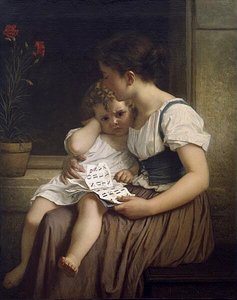
Merle’s paintings are characterized by a profound sensitivity to human emotion and a masterful command of realism. He excelled at depicting scenes of family life, religious devotion, and moral virtue, often choosing subjects that celebrated the bonds between mothers and children or explored themes of innocence and piety. Works like Reading The Bible, The Neapolitan Girl, and Maternal Love exemplify his ability to imbue everyday moments with a sense of grace and emotional depth. His dedication to realistic representation, meticulous attention to detail in rendering figures and textures, frequently drew comparisons to Bouguereau—a testament to the quality and refinement of his technique. While often overshadowed by his more famous contemporary, Merle established himself as a considerable rival in subject matter and treatment. He offered viewers paintings that were both technically accomplished and emotionally engaging, providing valuable insights into 19th-century French society and its values. Furthermore, the artistic legacy continued through his son, Georges Merle, who also became a painter, ensuring that the family’s creative spirit endured beyond Hugues's death in 1881. His work remains as a poignant reminder of an era where art sought to uplift, inspire, and celebrate the beauty found within the ordinary moments of life.

Notable Works

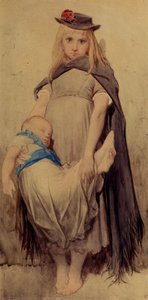
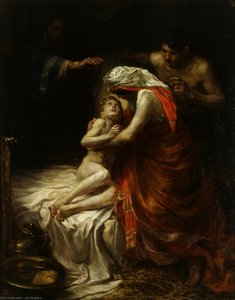
  • Jephtha’s Daughter: A romanticized oil painting showcasing classical beauty and sorrow.
  • Susannah At Her Bath: A stunning Pre-Raphaelite style depiction of a nude figure in serene waters, demonstrating realism and soft lighting.
  • The Neapolitan Girl: An academic-style portrait capturing the essence of a young woman in traditional Italian attire.
  • Reading The Bible: A serene depiction of women engaged in scripture, evoking feelings of piety and tranquility.
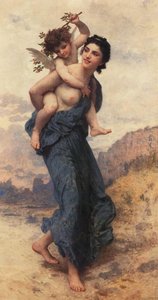
  • Maternal Love: An emotionally resonant scene celebrating the profound bond between mother and child.
  • Les Orphelines: A poignant portrayal of orphaned children, touching upon themes of vulnerability and compassion.
Hugues Merle

Hugues Merle

1822 - 1881 , Franța

Detalii rapide

  • Artistic Movement Or Style: Academică
  • Artists Or Movements Influenced By This Artist: ['William-Adolphe Bouguereau']
  • Artists Who Influenced This Artist: ['Léon Cogniet']
  • Date Of Birth: 1823
  • Date Of Death: 1881
  • Full Name: Hugues Merle
  • Nationality: Francez
  • Notable Artworks:
    • Jephtha's Daughter
    • Susannah At Her Bath
    • The Neapolitan Girl
    • Maternal Love
  • Place Of Birth: Saint Martin, Franța