x


 Comandă reproducere pictată Cumpără imaginea
 Trimite
 Detalii despre lucrare
 Adaugă la favorite
 Descarcă
 Similare
 Radiografie
 Diaporama
Print giclée sau pe canvas de calitate muzeală, cu producție rapidă și opțiuni flexibile de finisare.





























Alegeți dintre dimensiunile noastre prestabilite, care respectă proporțiile originale ale operei de artă.

Puteți introduce propriile dimensiuni pentru a se potrivi unui anumit cadru sau spațiu. Dacă dimensiunea selectată nu corespunde proporțiilor imaginii originale, vom decupa lucrarea de artă sau vom extinde imaginea cu margini oglindite sau cu o culoare uniformă. Un mockup digital va fi trimis pentru aprobarea dumneavoastră înainte de începerea producției.
Vă rugăm să rețineți că previzualizarea de pe ecran nu reflectă decuparea sau extinderea reală. Doar mockup-ul va arăta cu exactitate compoziția finală.
Deși dimensiunile personalizate sunt disponibile, vă recomandăm să selectați o dimensiune din lista predefinită pentru a păstra proporțiile originale.
Livrare în întreaga lume () în 2 săptămâni, în loc de cele 4/5 săptămâni standard. (22 Iulie)


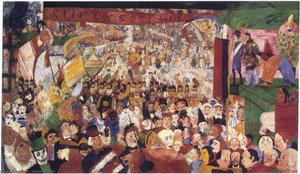
Children Washing
Dimensiune reproducere
James Ensor’s “Children Washing,” completed in 1886, stands as a cornerstone of Belgian Expressionism and a testament to the artist's singular vision. More than just a depiction of two children engaged in morning ablutions—a seemingly simple domestic scene—the painting delves into profound psychological complexities and embodies Ensor’s characteristic preoccupation with unsettling imagery and emotional intensity.
Painted in oil on canvas, “Children Washing” immediately captivates viewers with its bold color palette dominated by yellows and muted greens. These hues aren't merely decorative; they contribute to the painting’s oppressive atmosphere, mirroring the anxieties of the era and reflecting Ensor’s masterful manipulation of tonal values.
Ensor employs a deliberately distorted perspective—a technique prevalent in Expressionist art—to heighten the emotional impact. The figures are rendered with simplified forms, emphasizing their vulnerability and stripping away any semblance of idealized beauty. Notably, the mirror reflects the children’s faces, creating a disconcerting symmetry that underscores the painting's thematic concerns about identity and perception.
Comparing “Children Washing” to works by Walt Kuhn—another influential Expressionist artist known for his use of jarring color combinations and fractured compositions—reveals Ensor’s kinship with fellow innovators who sought to convey inner turmoil through visual representation. Like Kuhn's "Apple Basket," Ensor utilizes distortion not merely as stylistic flourish but as a conduit for expressing psychological unease.
The painting’s interpretation remains open to debate among art historians, sparking discussions about its significance. Some argue that “Children Washing” represents an idealized portrayal of innocence—a fleeting moment of purity amidst the encroaching darkness of adulthood. Others contend that Ensor deliberately confronts viewers with uncomfortable truths about human nature, utilizing nudity as a symbol of vulnerability and exposing the anxieties inherent in confronting mortality.
Ensor’s stylistic choices resonate with broader artistic currents of his time, mirroring the influence of Vincent van Gogh—whose expressive brushstrokes and vibrant colors similarly aimed to capture emotional experience. The Expressionist movement's exploration of subjective feeling aligns perfectly with Ensor’s ambition to communicate profound psychological states through visual language.
To gain a deeper understanding of James Ensor and his artistic legacy, visitors can explore the Mu.ZEE museum in Ostend, Belgium—a repository of Belgian art spanning from 1830 onwards. This institution houses an impressive collection showcasing Ensor's oeuvre alongside other prominent artists of the period.
Furthermore, delving into the history of painting on Wikipedia offers valuable insights into the artistic context surrounding “Children Washing,” illuminating the broader intellectual and cultural landscape that shaped Ensor’s creative endeavors.
Finally, you can acquire a stunning hand-painted reproduction of “Children Washing” through Most-Famous-Paintings—allowing art enthusiasts to experience the beauty and emotional depth of this iconic masterpiece firsthand.


1860 - 1949 , Belgia

Descoperă cele mai frumoase 25 de picturi ale lui Alfred James Munnings! Explorează capodoperele impresionismului britanic, scene rurale vibrante și arta ecvestră. Reproduceri de artă de calitate muzeală pentru decorul casei tale pe Most-Famous-Paintings.com
Descoperă top 25 de picturi James Abbott McNeill Whistler, maeștri ai impresionismului și esteticismului. Explorează nocturnele, portretele și capodoperele sale pline de atmosferă pe Most-Famous-Paintings.com! Reproduceri artă de calitate superioară pentru decorul perfect.

Explore the rich history & enduring techniques of oil painting with Most-Famous-Paintings. Discover masterpieces, learn about art collecting, and find authentic handmade reproductions crafted by skilled artists.

Explore the rich history & techniques of oil painting – from Renaissance masters to Impressionism. Discover pigments, layering methods, and why this timeless medium endures. Expert insights for artists & art enthusiasts.
Descoperă Top 10 capodopere ulei pe lemn care au revoluționat arta! Explorează poveștile lui Van Gogh, Monet și Rembrandt. Inspirație pentru decor interior cu reproduceri de artă clasică de calitate muzeală. Găsește tabloul perfect pe Most-Famous-Paintings.com


Rămâneți la curent cu cele mai recente știri din lumea artei, ofertele noastre exclusive și ideile de decor.
Spuneți-ne despre proiectul dumneavoastră, iar experții noștri în artă vă vor oferi 3 sugestii personalizate.
Vom selecta 3 opțiuni special pentru tine – Gratuit!


 Distribuie


 Vezi mai mult







 Opțiunea cu sticlă este disponibilă doar pentru dimensiuni de sub 110 cm