x


 Comandă reproducere pictată Cumpără imaginea
 Trimite
 Detalii despre lucrare
 Adaugă la favorite
 Descarcă
 Similare
 Radiografie
 Diaporama
 Oil On CanvasWallArtExpressionistic Symbolism
 1883
1883 115.0 x 165.0 cm
Print giclée sau pe canvas de calitate muzeală, cu producție rapidă și opțiuni flexibile de finisare.





























Alegeți dintre dimensiunile noastre prestabilite, care respectă proporțiile originale ale operei de artă.

Puteți introduce propriile dimensiuni pentru a se potrivi unui anumit cadru sau spațiu. Dacă dimensiunea selectată nu corespunde proporțiilor imaginii originale, vom decupa lucrarea de artă sau vom extinde imaginea cu margini oglindite sau cu o culoare uniformă. Un mockup digital va fi trimis pentru aprobarea dumneavoastră înainte de începerea producției.
Vă rugăm să rețineți că previzualizarea de pe ecran nu reflectă decuparea sau extinderea reală. Doar mockup-ul va arăta cu exactitate compoziția finală.
Deși dimensiunile personalizate sunt disponibile, vă recomandăm să selectați o dimensiune din lista predefinită pentru a păstra proporțiile originale.
Livrare în întreaga lume () în 2 săptămâni, în loc de cele 4/5 săptămâni standard. (19 Iulie)


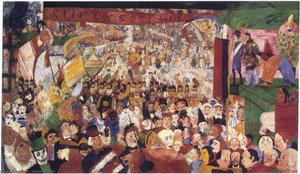
The Drunkards
Dimensiune reproducere
James Ensor's "The Drunkards," painted in 1883, isn’t merely a depiction of two men enjoying wine; it’s a meticulously crafted exploration of human vulnerability and the unsettling beauty found within moments of shared experience. Housed at The Minneapolis Institute of Arts, this oil on canvas offers a glimpse into the artist's uniquely dark and psychologically astute vision – a world saturated with masks, shadows, and an underlying current of melancholy. Ensor, born in Ostend, Belgium, to an English father and Belgian mother, possessed a perspective shaped by his upbringing amidst the vibrant chaos of a seaside resort town, a place brimming with theatricality and the allure of hidden identities. This early exposure undoubtedly fueled his lifelong preoccupation with disguise and the performance inherent in human interaction, themes powerfully realized within this evocative work.
“The Drunkards” is a masterclass in controlled darkness. Ensor’s deliberate choice of a predominantly black and white palette immediately establishes an atmosphere of introspection and quiet unease. The stark contrast amplifies the figures' isolation, drawing our attention to their faces – etched with weariness and perhaps a hint of resignation. The brushstrokes themselves are not smooth or polished; instead, they possess a restless energy, conveying a sense of urgency and emotional turbulence. This expressive technique is particularly evident in the rendering of the seated man’s face, where the paint seems to writhe with unspoken thoughts. The texture of the canvas itself contributes to this effect, inviting us to linger and examine the subtle shifts in tone and form.
Beyond its immediate depiction, “The Drunkards” is rich with symbolic weight. The bottle of wine, positioned centrally between the two men, can be interpreted as a potent symbol of connection – a shared ritual that momentarily bridges the gap between them. However, it also represents an escape, a temporary reprieve from the burdens of existence. The drunken state of one figure speaks to this desire for release, suggesting a yearning for oblivion or perhaps simply a rejection of societal expectations. The other man’s posture, observing his companion with a mixture of concern and perhaps even amusement, hints at the complexities of friendship and the acceptance of flawed humanity. The surrounding chairs and table further reinforce the sense of intimacy, while simultaneously highlighting the precariousness of their shared moment.
James Ensor’s work stands as a pivotal bridge between traditional academic painting and the burgeoning avant-garde movements of the late 19th century. Influenced by artists like Pierre-Auguste Renoir and Edouard Manet, yet forging his own distinct path, Ensor embraced elements of Expressionism and Surrealism – foreshadowing their later developments. His exploration of psychological themes, coupled with his unconventional use of color and composition, positioned him as a visionary artist ahead of his time. “The Drunkards” exemplifies this spirit of innovation, offering a raw and unflinching portrayal of human experience that continues to resonate with viewers today. It’s a piece that invites contemplation, prompting us to consider the hidden depths beneath the surface of everyday life and the enduring power of shared moments, however fleeting or unsettling they may be.


1860 - 1949 , Belgia
Descoperă top 25 de picturi James Abbott McNeill Whistler, maeștri ai impresionismului și esteticismului. Explorează nocturnele, portretele și capodoperele sale pline de atmosferă pe Most-Famous-Paintings.com! Reproduceri artă de calitate superioară pentru decorul perfect.

Descoperă top 10 picturi celebre dominate de alb, de la Monet la Kandinsky! Explorează istoria artei, tehnicile artistice și frumusețea atemporală a capodoperelor clasice. Reproduceri de calitate muzeală pe Most-Famous-Paintings.com – inspiră-ți decorul!

Descoperă cele mai frumoase 25 de picturi ale lui Alfred James Munnings! Explorează capodoperele impresionismului britanic, scene rurale vibrante și arta ecvestră. Reproduceri de artă de calitate muzeală pentru decorul casei tale pe Most-Famous-Paintings.com

Explore the unsettling yet captivating world of James Ensor, a pioneer of Expressionism. Discover his satirical masterpieces, symbolic imagery & lasting influence on modern art. High-quality reproductions available at Most-Famous-Paintings.

Descoperă Top 10 tablouri celebre dominate de negru! Explorează istoria, simbolismul și tehnicile artistice ale unor opere iconice de Rembrandt, Goya și alți maeștri. Reproduceri de artă de calitate muzeală pe Most-Famous-Paintings.com – inspiră-ți decorul!


Rămâneți la curent cu cele mai recente știri din lumea artei, ofertele noastre exclusive și ideile de decor.
Spuneți-ne despre proiectul dumneavoastră, iar experții noștri în artă vă vor oferi 3 sugestii personalizate.
Vom selecta 3 opțiuni special pentru tine – Gratuit!


 Distribuie

 Vezi mai mult







 Opțiunea cu sticlă este disponibilă doar pentru dimensiuni de sub 110 cm