Vinde opere de artă
Lista de dorințe Coș de cumpărături Cart
PrevizualizarePrevizualizare Previzualizare ARPrevizualizare AR Comandă printul Comandă printulCumpără imaginea Cumpără imaginea TrimiteTrimite
Detalii despre lucrareDetalii despre lucrare Adaugă la favorite Adaugă la favorite DescarcăDescarcă Produse similareProduse similare RadiografieRadiografie Diapozitive automateDiapozitive automate

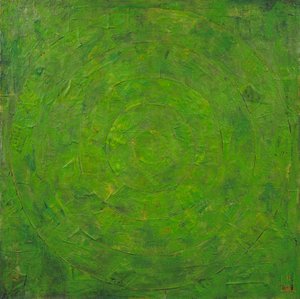
Perilous Night

Three three-dimensional casts of human hands hang from this complex 1982 abstract masterpiece by Jasper Johns, blending Pop Art and Neo-Expressionism in a layered composition that invites you to explore its depth.

Descoperă Jasper Johns (n. 1930), pionier al Pop & Abstract Expressionism! Explore opere iconice precum 'Steagul', hărți și ținte – redefinește arta modernă.

Reproducere pictată manual în ulei

Pictură în ulei pe pânză, realizată manual de artiștii noștri la dimensiunea și ramele dorite de dumneavoastră, pe comandă. (Comandă printul Comandă printulCumpără imaginea Cumpără imaginea)

P118B $10
P118H $10
P118W $10
P438Z $10
P508JH $12
P508YH $12
P805H $10
P805Z $10
P919BZ $10
P919G $10
P919XJ $10
P959ZH $10
P968JZ $12
W106C $8
W218G $10
W218JH $8
W218Y $10
W307PJ $10
W316G $10
W316PJ $8
W316Y $10
W398PJ $8
W4111J $10
W500HY $15
W500JH $15
W692G $12
W849H $8
W940BG $15
W953PJ $8

Standard
custom
CM
INCH

Alegeți dintre dimensiunile noastre prestabilite, care respectă proporțiile originale ale operei de artă.

lățime
înălțime

Puteți introduce propriile dimensiuni pentru a se potrivi unui anumit cadru sau spațiu. Dacă dimensiunea selectată nu corespunde proporțiilor imaginii originale, vom decupa opera de artă sau vom extinde pictura cu elemente suplimentare pictate manual. O simulare digitală vă va fi trimisă pentru aprobare înainte de începerea producției.
Vă rugăm să rețineți că previzualizarea de pe ecran nu reflectă decuparea sau extinderea reală. Doar macheta va arăta cu exactitate compoziția finală.
Deși sunt disponibile dimensiuni personalizate, vă recomandăm să selectați o dimensiune din lista predefinită pentru a păstra proporțiile originale.

Exemple de elemente ce pot fi personalizate: Înlocuiți fața cu fotografia clientului; Adăugați un animal de companie (de exemplu, înlocuiți pisica cu un câine); Includeți un mesaj ascuns în fundal; Schimbați peisajul sau elementele din fundal.
După plasarea comenzii, echipa Most-Famous-Paintings.com va contacta clientul prin e-mail pentru instrucțiuni și îi va furniza o previzualizare a machetei

Livrare în întreaga lume () în 3-4 săptămâni, în loc de cele 5 săptămâni standard. (19 August). Fără compromisuri în ceea ce privește calitatea.

why_choose_icon
Livrare expres gratuită la nivel mondial
why_choose_icon
Pânză de in de înaltă calitate
why_choose_icon
Asigurare completă pentru transport
why_choose_icon
Garanție de rambursare a taxelor vamale
why_choose_icon
Garanția fidelității culorilor
why_choose_icon
Politica de retur în 60 de zile (doar pentru defecte)
why_choose_icon
Garanție de rambursare 100%
why_choose_icon
Ofertă pentru comenzi multiple

Preț total

$ 272

reproduction

Perilous Night

Tehnică de reproducere

Dimensiune reproducere

-

Preț total calculat

$ 272

Informații rapide

  • Year: 1982
  • Dimensions: 171 x 244 cm
  • Artistic style: Abstract, Pop Art, Neo-Expressionism
  • Location: National Gallery of Art, Washington, D.C.
  • Medium: Encaustic on canvas with objects
  • Artist: Jasper Johns
  • Notable elements or techniques: Three-dimensional arm casts, layering

Descriere operă de artă

A Tapestry of Texture and Memory

In the vast landscape of American postmodernism, few works command attention with such visceral complexity as Jasper Johns’ Perilous Night. Created in 1982, this monumental piece serves as a profound meditation on the act of seeing and the layers of meaning embedded within our visual culture. At first glance, the viewer is met with a striking vertical division, a structural duality that splits the canvas into two distinct realms. To the left, an abstract expanse of steel and charcoal grays swirls with streaks of white and amethyst purple, evoking a turbulent, nocturnal sky. This side of the composition feels atmospheric and boundless, yet it is anchored by a heavy, textured presence that suggests the weight of memory itself.

The right side of the painting introduces a more structured, almost architectural element, where the surface mimics the grain of weathered wood in shades of nickel and slate gray. Here, the boundaries between reality and illusion begin to blur. A stylized white cloth, rendered with such precision it appears to hang from a physical nail, invites the eye to question what is truly tactile and what is merely paint. This interplay of trompe l'oeil—the trick of the eye—is a hallmark of Johns’ mastery, transforming a flat canvas into a multidimensional stage where objects and abstractions coexist in a delicate, precarious balance.

The Presence of the Human Form

Perhaps the most arresting feature of Perilous Night is the trio of three-dimensional casts of human hands and forearms that descend from the top edge. These sculptural elements are not merely attached; they are integrated into the very soul of the work. Painted in a camouflage pattern of peach and irregular gray patches, these limbs possess an eerie, lifelike quality. The artist has infused them with vibrant primary colors—cherry red, canary yellow, and royal blue—which drip down the arms like melting wax or fresh pigment, splattering onto the faux wood panel below. This technique creates a sense of kinetic energy, as if the painting is still in the process of being created before our very eyes.

The symbolism of these hands is deeply evocative, suggesting themes of touch, agency, and the vulnerability of the human condition. They hang suspended, caught in a moment of stillness that feels both heavy and fleeting. Behind these limbs, layers of printed imagery—including fragments of sheet music and colorful bands of pine green and pumpkin orange—create a dense thicket of information. This layering reflects Johns’ lifelong fascination with the concept of "decoding," where the viewer must peel back the visual strata to find meaning, much like deciphering a cryptic message or an ancient manuscript.

An Invitation to Contemplation

For the discerning collector or interior designer, Perilous Night offers more than just aesthetic grandeur; it provides a profound emotional resonance. The title itself, inspired by a pivotal musical composition by John Cage, hints at the underlying tension and the "peril" found in the unknown. The artwork evokes a sense of fragmentation and unease, yet there is an undeniable beauty in its chaotic harmony. It is a piece that demands engagement, rewarding those who linger to observe the subtle interplay of encaustic wax, ink, and oil.

Integrating a high-quality reproduction of this masterpiece into a curated space can transform an environment, providing a sophisticated focal point that sparks conversation and intellectual curiosity. Whether placed in a contemporary gallery setting or a refined private study, the work’s complex textures and bold color palette serve as a testament to the enduring power of Jasper Johns' vision. It is an invitation to step into a world where the boundaries between the seen and the unseen are perpetually redefined.


Biografie artist

A Life Painted in Symbols: The World of Jasper Johns

Jasper Johns emerged as a pivotal figure in the landscape of American art, bridging the emotive intensity of Abstract Expressionism with the burgeoning Pop Art movement that would soon redefine artistic boundaries. Born in Augusta, Georgia, in 1930, his early life was marked by a sense of displacement following his parents’ divorce, an experience that perhaps subtly informed his later explorations of identity and belonging within the context of American iconography. His formative years unfolded across various schools before he briefly attended the University of South Carolina, but it wasn't until his move to New York City in 1949 that Johns truly began to forge his artistic path. A period of service during the Korean War further shaped his perspective, exposing him to a world far removed from the burgeoning art scene he was eager to embrace upon his return.

Breaking with Abstraction: The Dawn of a New Visual Language

The post-war American art world was dominated by Abstract Expressionism—a style characterized by spontaneous gesture and deeply personal emotional expression. While initially influenced by this movement, Johns felt compelled to move beyond its purely non-representational approach. He sought a new visual language, one that incorporated recognizable imagery not as illustrations but as vehicles for deeper contemplation. This wasn’t simply about *depicting* the world; it was about questioning how we perceive and interpret symbols within it. Key influences guided his departure: Marcel Duchamp's radical readymades challenged conventional notions of art-making, demonstrating that ordinary objects could be elevated to the status of art through their presentation, while the emphasis on materiality in Abstract Expressionism informed Johns’ early techniques. However, it was the everyday objects and potent symbols of American culture—flags, targets, maps, numbers—that truly became central to his artistic vocabulary. He wasn’t interested in escaping representation; he wanted to dissect it, layer it with meaning, and ultimately reveal its inherent ambiguities. This deliberate shift away from pure abstraction signaled a profound change in the way art was conceived and created.

Iconic Images: Flags, Targets, and the Language of Symbols

Johns' breakthrough works arrived in the mid-1950s, instantly establishing him as a force to be reckoned with. His paintings of flags, most notably *Flag* (1954–55), were not patriotic declarations but rather investigations into the very nature of representation. Rendered in a semi-abstract style, using encaustic—pigment mixed with hot wax—and collage techniques, these flags weren’t simply images; they were textured surfaces laden with symbolic weight. The image of the flag itself became a complex symbol, representing not just American identity but also notions of order, authority, and even the act of painting itself. The target series, beginning in 1958, further explored this fascination with recognizable forms, questioning perception and meaning through the seemingly straightforward image of a bullseye. *Map* (1961), with its fragmented and layered depictions of the United States, delved into themes of geography, identity, and the complexities of national representation. Works like *False Start* (1959) demonstrated his experimentation with language and visual codes, creating complex compositions that challenged viewers to decipher their underlying meanings. Even *White Flag* (1955), a seemingly simple monochrome canvas, prompted profound questions about absence, surrender, and the very act of seeing. These recurring motifs weren’t presented as literal depictions but rather as invitations to engage in a deeper, more critical examination of visual language.

Technique and Materials: Encaustic, Collage, and Layering

Jasper Johns' artistic process was characterized by meticulous attention to detail and a willingness to experiment with various materials and techniques. He frequently employed encaustic—a mixture of pigment and hot wax—to create textured surfaces and layered effects, lending his paintings a tactile quality that contrasted sharply with the smooth surfaces often associated with Abstract Expressionism. Collage played a crucial role in many of his early works, incorporating elements such as newspaper clippings, maps, and photographs to disrupt traditional notions of representation and introduce layers of meaning. Johns’ use of these materials wasn't merely decorative; it was integral to his conceptual approach, forcing viewers to consider the relationship between image, object, and context. He often worked on multiple canvases simultaneously, revisiting and reworking elements over time—a process that reflected his deliberate and contemplative artistic practice. The layering of paint, collage, and other materials created a complex visual tapestry, inviting repeated viewing and encouraging viewers to uncover hidden meanings within each work.

Recognition and Enduring Impact

Jasper Johns has received numerous accolades throughout his illustrious career. He was awarded the Golden Lion at the Venice Biennale in 1988, the National Medal of Arts in 1990, and the Presidential Medal of Freedom in 2011—recognizing his profound contribution to American art. His works are held in major museum collections worldwide—the Museum of Modern Art, the Whitney Museum of American Art, the Metropolitan Museum of Art in New York, and Tate Modern in London, to name just a few. Johns’ influence extends beyond individual artworks; he fundamentally shifted the boundaries of artistic practice, paving the way for subsequent generations of artists who embraced pop culture imagery and challenged traditional notions of representation. His legacy continues to inspire artists today, solidifying his position as one of the most important figures in 20th-century art. He remains an active artist, constantly evolving his approach and solidifying his place within the canon of modern masters.
Jasper Johns

Jasper Johns

1930 - , Statele Unite ale Americii

Detalii rapide

  • Artistic Movement Or Style: Pop Art, Abstract Exp.
  • Artists Or Movements Influenced By This Artist: ['Andy Warhol']
  • Artists Who Influenced This Artist: ['Marcel Duchamp']
  • Date Of Birth: 15 mai 1930
  • Full Name: Jasper Johns
  • Nationality: American
  • Notable Artworks:
    • Flag
    • Target
    • Map
  • Place Of Birth: Augusta, USA
Explorați opere de artă organizate pe teme, stiluri și caracteristici.