x

Printuri giclée sau pe canvas de calitate muzeală, cu proces de producție rapid și opțiuni flexibile de finisare. ( Comandă pictură lucrată manual Cumpără imaginea)





























Alegeți dintre dimensiunile noastre prestabilite, care respectă proporțiile originale ale operei de artă.

Puteți introduce propriile dimensiuni pentru a se potrivi unui anumit cadru sau spațiu. Dacă dimensiunea selectată nu corespunde proporțiilor imaginii originale, vom decupa lucrarea de artă sau vom extinde imaginea cu margini oglindite sau cu o culoare uniformă. Un mockup digital va fi trimis pentru aprobarea dumneavoastră înainte de începerea producției.
Vă rugăm să rețineți că previzualizarea de pe ecran nu reflectă decuparea sau extinderea reală. Doar mockup-ul va arăta cu exactitate compoziția finală.
Deși dimensiunile personalizate sunt disponibile, vă recomandăm să selectați o dimensiune din lista predefinită pentru a păstra proporțiile originale.
Livrare în întreaga lume () în 2 săptămâni, în loc de cele 4/5 săptămâni standard. (19 August)


Studiu de mâini (diverse studii)
Dimensiune reproducere
Leonardo da Vinci’s “Study of Hands,” created around 1474, resides within the Royal Library at Windsor Castle and stands as a testament to the Renaissance artist's unparalleled dedication to anatomical precision. More than just a depiction of human anatomy—though undeniably masterful in that regard—this sketch offers an intimate glimpse into Da Vinci’s creative process, revealing his meticulous observation and scientific approach to art.
The image presents a captivating study of hands in diverse positions. One hand delicately holds what appears to be a pen or pencil, while another gestures towards it, suggesting an act of instruction or demonstration. Two additional hands are visible – one positioned near the upper left corner and the other at the bottom right—each contributing to the overall composition's complexity. A portion of a face is discernible on the left side, set against a backdrop resembling a wall adorned with writing or sketches, likely representing Da Vinci’s notes and preliminary ideas during his creative exploration.
This study transcends mere representation; it’s a cornerstone of Da Vinci’s broader intellectual pursuits—his fascination with the human body and his relentless pursuit of knowledge. Unlike many artists of his time who prioritized idealized beauty, Da Vinci focused on capturing the intricacies of musculature, tendons, and bone structure with astonishing accuracy. He employed techniques like hatching and cross-hatching to create depth and texture, simulating the nuances of skin and underlying structures—a revolutionary departure from prevailing artistic conventions.
Da Vinci’s mastery extended beyond observation; he understood *how* light interacted with form. This understanding is vividly conveyed in “Study of Hands” through the use of metalpoint drawing – a technique that involved applying molten zinc oxide onto prepared paper using a stylus. Unlike charcoal or graphite, metalpoint produced incredibly sharp lines and tonal gradations, allowing Da Vinci to achieve unparalleled realism. The resulting image possesses an ethereal quality, capturing subtle nuances of light and shadow that would have been impossible to replicate with conventional mediums.
The meticulous layering of lines demonstrates Da Vinci’s methodical approach—a deliberate process designed to capture the essence of human anatomy. Each stroke was carefully considered, contributing to the overall impression of solidity and depth. This technique wasn't merely about depicting what he saw; it was about reconstructing the underlying structure of the hand itself, revealing its complex musculature and skeletal framework.
While anatomical precision is undeniably impressive, “Study of Hands” harbors deeper symbolic significance. The sketch’s placement within Da Vinci's notebooks—a repository of scientific observations alongside artistic explorations—highlights his holistic worldview. It underscores the belief that art and science are inextricably linked, informing each other through shared inquiry into the natural world.
Furthermore, scholars debate whether “Study of Hands” served as a preparatory study for Da Vinci’s iconic portrait of Ginevra de' Benci – a commission undertaken during his Florentine period. The delicate gesture of the hand—holding what appears to be a quill—suggests an intention to capture not only physical likeness but also psychological character. This meticulous detail reflects Da Vinci’s conviction that art could illuminate the inner workings of human consciousness.
“Study of Hands” remains a captivating masterpiece, embodying Leonardo da Vinci's genius and cementing his legacy as one of history’s most influential artists. Its enduring appeal lies in its ability to inspire awe—a testament to Da Vinci’s unwavering commitment to observation, experimentation, and the pursuit of artistic excellence.


1452 - 1519 , Italia
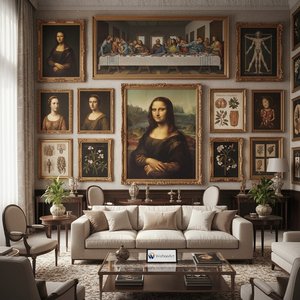
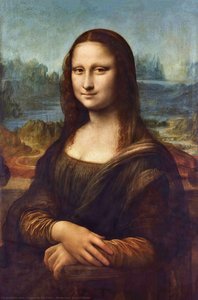
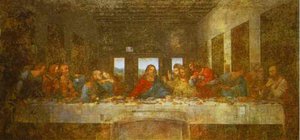
Descoperă cele mai frumoase 25 de capodopere ale lui Leonardo da Vinci! Explorează istoria, tehnicile și semnificația picturilor iconice precum Mona Lisa sau Ultima Cină. Găsește reproduceri de artă de calitate muzeală și idei inspirate pentru decor pe Most-Famous-Paintings.com.

Explore Leonardo da Vinci’s timeless masterpieces with Most-Famous-Paintings. Discover insights into his art, science, and legacy – trusted expertise for discerning collectors seeking authentic reproductions & investment opportunities.

Descoperă 10 capodopere ale Renașterii Umaniste – Leonardo da Vinci, Michelangelo și Rafael prind viață! Explorează istoria artei, tehnicile artistice și culorile vibrante. Reproduceri de tablouri de calitate muzeală pentru un decor rafinat pe Most-Famous-Paintings.com.

Descoperă top 25 de capodopere din Louvre, Paris! Explorează istoria fascinantă a picturilor celebre precum Mona Lisa și Venus din Milo. Reproduceri artă clasică, printuri de calitate superioară pentru decor interior rafinat. Leonardo da Vinci, Rafael & alți maeștri te așteaptă pe Most-Famous-Paintings.com

Descoperă top 25 de capodopere renascentiste din Galleria degli Uffizi, Florența! Explorează poveștile lui Botticelli, Leonardo da Vinci și Rafael. Reproduceri artă de calitate muzeală pentru decorațiuni interioare unice pe Most-Famous-Paintings.com


Rămâneți la curent cu cele mai recente știri din lumea artei, ofertele noastre exclusive și ideile de decor.
Spuneți-ne despre proiectul dumneavoastră, iar experții noștri în artă vă vor oferi 3 sugestii personalizate.
Vom selecta 3 opțiuni special pentru tine – Gratuit!


 Previzualizare
 Trimite
 Distribuie
 Detalii despre lucrare

 Descarcă
 Produse similare
 Radiografie
 Diapozitive automate

 Vezi mai mult







 Opțiunea cu sticlă este disponibilă doar pentru dimensiuni de sub 110 cm