x

Printuri giclée sau pe canvas de calitate muzeală, cu proces de producție rapid și opțiuni flexibile de finisare. ( Comandă pictură lucrată manual Cumpără imaginea)





























Alegeți dintre dimensiunile noastre prestabilite, care respectă proporțiile originale ale operei de artă.

Puteți introduce propriile dimensiuni pentru a se potrivi unui anumit cadru sau spațiu. Dacă dimensiunea selectată nu corespunde proporțiilor imaginii originale, vom decupa lucrarea de artă sau vom extinde imaginea cu margini oglindite sau cu o culoare uniformă. Un mockup digital va fi trimis pentru aprobarea dumneavoastră înainte de începerea producției.
Vă rugăm să rețineți că previzualizarea de pe ecran nu reflectă decuparea sau extinderea reală. Doar mockup-ul va arăta cu exactitate compoziția finală.
Deși dimensiunile personalizate sunt disponibile, vă recomandăm să selectați o dimensiune din lista predefinită pentru a păstra proporțiile originale.
Livrare în întreaga lume () în 2 săptămâni, în loc de cele 4/5 săptămâni standard. (15 August)


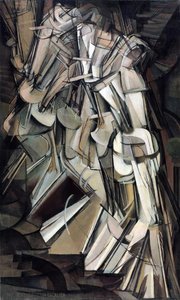
Rotoreliefs (Optical Discs) 2
Dimensiune reproducere
Marcel Duchamp, a name synonymous with artistic rebellion and intellectual provocation, stands as one of the most influential figures of the 20th century. While celebrated for his “readymades” – ordinary manufactured objects elevated to the status of art – his earlier explorations into kinetic art, embodied in the Rotoreliefs, reveal a fascinating precursor to his conceptual concerns and a profound engagement with the nature of perception itself. These weren’t static paintings meant for passive observation; they were designed to be *experienced*, set in motion to challenge our understanding of form, space, and even reality.
Created primarily in 1935, though conceived earlier, the Rotoreliefs (Optical Discs) are a series of optical illusion discs. Duchamp wasn’t interested in traditional painting techniques; instead, he employed lithography to create these circular compositions featuring abstract designs – often concentric circles and spiraling patterns rendered in stark black and white or bold color contrasts. The genius lies not just in the imagery itself, but in its intended function. These discs were designed to be mounted on a turntable (originally a modified phonograph) and spun at approximately 33 revolutions per minute. As they rotated, the designs would morph and distort, creating a mesmerizing optical effect – a sense of depth, movement, and even instability. The experience wasn’t about *seeing* a picture; it was about witnessing an illusion unfold before your eyes.
To understand the Rotoreliefs, one must grasp Duchamp’s evolving artistic philosophy. He increasingly rejected what he termed “retinal” art – works that merely pleased the eye without engaging the intellect. He sought to move beyond aesthetics, aiming instead for a cerebral and conceptual approach. The spinning discs were an attempt to bypass purely visual appreciation and tap into the mechanics of perception itself. Duchamp was fascinated by optics and how our brains interpret what we see. He deliberately created ambiguity and instability, forcing the viewer to actively participate in constructing meaning from the shifting forms. This active engagement foreshadowed his later readymades, where the artist’s choice – rather than skillful execution – became the primary artistic gesture.
The Rotoreliefs weren't simply a fleeting experiment; they represent a pivotal moment in art history. They anticipated Op Art (Optical Art) by decades, influencing artists like Bridget Riley and Victor Vasarely who similarly explored the perceptual effects of geometric abstraction. More broadly, Duchamp’s work paved the way for Conceptual Art, where the idea behind the artwork takes precedence over its physical manifestation. The Rotoreliefs, with their emphasis on process, illusion, and intellectual engagement, embody this shift in artistic priorities. Owning a reproduction of one of these works isn't just acquiring an aesthetically pleasing image; it’s possessing a piece of art history – a testament to Duchamp’s revolutionary spirit and his enduring impact on the way we think about art and perception.


1887 - 1968 , Franța

Explore the profound impact of Minimalism and Geometric Abstraction. From Mondrian to Malevich, discover how stripping art to its essential forms revolutionized modern aesthetics through our expert-led historical guide.


Rămâneți la curent cu cele mai recente știri din lumea artei, ofertele noastre exclusive și ideile de decor.
Spuneți-ne despre proiectul dumneavoastră, iar experții noștri în artă vă vor oferi 3 sugestii personalizate.
Vom selecta 3 opțiuni special pentru tine – Gratuit!


 Previzualizare
 Trimite
 Distribuie
 Detalii despre lucrare

 Descarcă
 Produse similare
 Radiografie
 Diapozitive automate

 Vezi mai mult







 Opțiunea cu sticlă este disponibilă doar pentru dimensiuni de sub 110 cm