x

 Oil On CanvasWallArtAbstract Expressionism
 1949Modern
 112.0 x 137.0 cm
Printuri giclée sau pe canvas de calitate muzeală, cu proces de producție rapid și opțiuni flexibile de finisare. ( Comandă pictură lucrată manual Cumpără imaginea)





























Alegeți dintre dimensiunile noastre prestabilite, care respectă proporțiile originale ale operei de artă.

Puteți introduce propriile dimensiuni pentru a se potrivi unui anumit cadru sau spațiu. Dacă dimensiunea selectată nu corespunde proporțiilor imaginii originale, vom decupa lucrarea de artă sau vom extinde imaginea cu margini oglindite sau cu o culoare uniformă. Un mockup digital va fi trimis pentru aprobarea dumneavoastră înainte de începerea producției.
Vă rugăm să rețineți că previzualizarea de pe ecran nu reflectă decuparea sau extinderea reală. Doar mockup-ul va arăta cu exactitate compoziția finală.
Deși dimensiunile personalizate sunt disponibile, vă recomandăm să selectați o dimensiune din lista predefinită pentru a păstra proporțiile originale.
Livrare în întreaga lume () în 2 săptămâni, în loc de cele 4/5 săptămâni standard. (17 August)


Number 6
Dimensiune reproducere
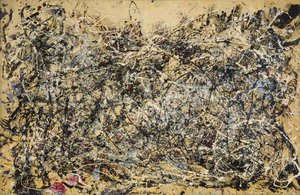
Number 6 stands as a pivotal work within Jackson Pollock's oeuvre and the broader movement of Abstract Expressionism. Emerging in post-World War II America, this style rejected traditional representational art, instead prioritizing spontaneous gesture and emotional expression. Abstract Expressionists sought to convey profound human experiences through non-figurative forms, reflecting a sense of anxiety, liberation, and existential questioning prevalent during that era. Pollock's contribution was particularly revolutionary, moving away from the easel and embracing a radical new technique.
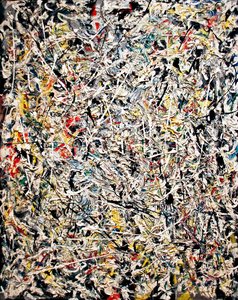
What truly sets Number 6 apart is Pollock’s groundbreaking “drip” or "pouring" technique. Rather than using brushes on an upright canvas, he laid the canvas flat on the floor and dripped, poured, and flung paint from above. This method allowed for a complete immersion in the creative process – Pollock literally moved around the canvas, engaging his entire body in the act of painting. This approach is often referred to as "action painting," emphasizing the physical energy and spontaneity inherent in the creation. The resulting composition isn't planned; it emerges organically from the interaction between paint, gravity, and the artist’s movements. Number 6 exemplifies this perfectly – a complex web of interwoven lines and colors that seem to pulsate with kinetic energy.
While seemingly chaotic at first glance, Number 6 possesses an underlying structure and rhythm. The dense network of lines creates a sense of depth and complexity, drawing the viewer into its intricate details. The colors—ranging from blacks and whites to subtle shades of brown and gray—evoke a mood of introspection and contemplation. Some art historians interpret Pollock’s work as reflecting psychological states – the tangled web representing subconscious thoughts or emotions. Others see it as an exploration of pure form and color, divorced from any representational meaning. Regardless of interpretation, Number 6 evokes a powerful emotional response—a feeling of both exhilaration and unease, mirroring the complexities of the human condition.
Number 6 is more than just a painting; it’s a symbol of artistic innovation and a testament to Pollock's enduring influence. It challenged conventional notions of art-making and paved the way for future generations of artists to explore abstraction and expressive gesture. Its dynamic composition and emotional depth continue to captivate audiences worldwide, making it a highly sought-after artwork and a compelling subject for reproduction.

Paul Jackson Pollock, born in Cody, Wyoming, in 1912, was a restless spirit from the outset. His early life was marked by frequent relocation as his father, Leroy – also known as Roy – pursued work as a land surveyor across the vast landscapes of the American West. This itinerant existence instilled in young Pollock a deep connection to the natural world and an exposure to diverse cultures, particularly through encounters with Native American art during those surveying trips – impressions that would subtly permeate his artistic vision later in life. Though he never explicitly imitated Indigenous styles, the raw energy and spiritual resonance of these early experiences undoubtedly left their mark.
Pollock’s formal artistic training began at the Manual Arts High School in Los Angeles, followed by studies at the Art Students League of New York under the tutelage of Thomas Hart Benton. Benton, a prominent figure in the Regionalist movement, emphasized rhythmic composition and narrative themes rooted in American life. While Pollock initially absorbed these lessons, his inherent inclination leaned toward more abstract explorations. He was also profoundly impacted by Mexican muralists like José Clemente Orozco, whose powerful depictions of social struggle resonated deeply with him. These early influences laid a foundation, but it was the burgeoning world of Surrealism that truly unlocked Pollock’s artistic potential.
The 1930s saw Pollock experimenting with various techniques, seeking alternatives to traditional brushwork. He began pouring paint, exploring its fluidity and unpredictable nature. However, it was around 1947 that his artistic trajectory underwent a radical transformation. Abandoning the easel altogether, Pollock laid canvases directly on the floor, initiating what would become known as his “drip technique.” He then proceeded to drip, splash, and fling paint onto the canvas from above, orchestrating a dynamic dance between artist, medium, and surface.
This wasn’t merely about applying paint; it was about embodying the act of creation itself. Pollock's canvases became arenas for physical expression, capturing the immediacy of his gestures and emotions. The resulting paintings are characterized by their “all-over” composition – a lack of central focus that invites the viewer to explore the entire surface as a unified field of energy. Intricate networks of lines and colors intertwine, creating a visual complexity that is both captivating and challenging. He employed unconventional tools—sticks, knives, even syringes—to manipulate the paint in unpredictable ways, further emphasizing the spontaneous nature of his process.
This innovative approach positioned Pollock as a central figure in the burgeoning Abstract Expressionist movement, which emerged in post-World War II New York City. Abstract Expressionism prioritized spontaneous gesture, large scale, and non-representational imagery, reflecting a broader cultural shift away from traditional artistic conventions. His marriage to fellow artist Lee Krasner was also pivotal; she provided unwavering emotional support and actively encouraged his artistic development, recognizing the groundbreaking nature of his work.
Pollock’s most celebrated works—such as Number 1, 1950 (Lavender Mist), One: Number 31, 1950, Blue Poles: Number 11, 1952, and Convergence—are testaments to his revolutionary technique. These paintings are not simply images; they are records of a performance, imbued with the artist’s physical presence and emotional intensity. The dynamic energy that emanates from these canvases is palpable, drawing viewers into a world of pure abstraction.
His style transcends mere aesthetics; it's an exploration of process over product. Pollock sought to capture the immediacy of his actions and emotions on canvas, rejecting traditional notions of composition and representation. He delved into Jungian psychology, exploring archetypes and the subconscious in his art, seeking to tap into universal symbols and primal energies.
Pollock’s impact on the history of art is immeasurable. He fundamentally altered the way artists approached painting, breaking free from easel-based methods and embracing a more performative approach. His work helped solidify New York City's position as a global center for modern art, shifting the focus away from European dominance. His influence can be seen in the work of countless artists who followed, including those associated with Color Field painting and later forms of abstract expressionism.
Pollock’s life was marked by significant personal challenges, most notably a lifelong struggle with alcoholism. Despite periods of sobriety, he frequently succumbed to his addiction, which profoundly impacted his health and artistic output. This internal turmoil often manifested in the intensity and emotional rawness of his paintings – a reflection of his inner struggles projected onto the canvas.
Despite these difficulties, Pollock continued to push the boundaries of art, experimenting with new materials and techniques. He developed a deep interest in color theory and explored the psychological effects of different hues and tones. His work evolved over time, moving from more representational forms to increasingly abstract compositions. The influence of Surrealism remained a constant presence, informing his use of symbolism and imagery.
His relationship with Lee Krasner was central to his artistic development. She provided him with emotional support, encouragement, and critical feedback – often challenging him to refine his technique and explore new directions. Their shared passion for art and their mutual respect fueled their creative partnership.
Jackson Pollock died tragically in 1956 at the age of 44, following a car accident. His untimely death cut short a brilliant career, but his legacy continues to resonate today. His innovative techniques—particularly the drip painting method—have been widely imitated and adapted by artists across various disciplines. He remains one of the most influential figures in modern art, a pioneer who redefined the possibilities of painting and inspired generations of artists to embrace spontaneity, experimentation, and emotional expression.

1912 - 1956 , Statele Unite ale Americii

Descoperă Top 10 capodopere ale Expresionismului Abstract! Explorează poveștile lui Pollock, Rothko și De Kooning. Reproduceri de artă de lux & inspirație decor pe Most-Famous-Paintings.ro. Găsește pictura perfectă pentru spațiul tău!

Explore the revolutionary art of Jackson Pollock & Abstract Expressionism. Discover his iconic drip paintings, lasting impact, and considerations for collecting this pivotal American artist. Expert insights at Most-Famous-Paintings.
Explore the profound emotional world of Abstract Expressionism with Most-Famous-Paintings. Discover key artists like Pollock & Rothko, learn about collecting, and find museum-quality reproductions to inspire your space.

Explore the profound emotional depth of Abstract Expressionism. From Pollock's dynamic drips to de Kooning's gestural mastery, our expert guide offers art collectors a sophisticated analysis of this transformative movement and its enduring legacy in modern fine art.

Explore the profound emotional depth & formal innovation of Abstract Expressionism. Discover key artists, collecting insights, and investment potential with expert guidance. Learn more now.


Rămâneți la curent cu cele mai recente știri din lumea artei, ofertele noastre exclusive și ideile de decor.
Spuneți-ne despre proiectul dumneavoastră, iar experții noștri în artă vă vor oferi 3 sugestii personalizate.
Vom selecta 3 opțiuni special pentru tine – Gratuit!


 Previzualizare
 Trimite
 Distribuie
 Detalii despre lucrare

 Descarcă
 Produse similare
 Radiografie
 Diapozitive automate
 Vezi mai mult







 Opțiunea cu sticlă este disponibilă doar pentru dimensiuni de sub 110 cm