


x


Pictură în ulei pe pânză, pictată manual, la dimensiunea și ramele dorite de dumneavoastră, realizată la comandă de artiștii noștri. ( Switch to Print Switch to Image)
Alegeți dintre dimensiunile noastre prestabilite, care respectă proporțiile originale ale operei de artă.

Puteți introduce propriile dimensiuni pentru a se potrivi unui anumit cadru sau spațiu. Dacă dimensiunea selectată nu corespunde proporțiilor imaginii originale, vom decupa opera de artă sau vom extinde pictura cu elemente suplimentare pictate manual. O simulare digitală vă va fi trimisă pentru aprobare înainte de începerea producției.
Vă rugăm să rețineți că previzualizarea de pe ecran nu reflectă decuparea sau extinderea reală. Doar macheta va arăta cu exactitate compoziția finală.
Deși sunt disponibile dimensiuni personalizate, vă recomandăm să selectați o dimensiune din lista predefinită pentru a păstra proporțiile originale.
Livrare în întreaga lume () în 3/4 săptămâni, în loc de cele 5 săptămâni standard. (29 Iulie). Fără compromisuri în ceea ce privește calitatea.


Untitled
Dimensiune reproducere

Born in the historic German city of Lübeck on August 18, 1935, Peter Klasen emerged as a profound witness to the transformations of the twentieth century. His early life was steeped in an environment sensitive to the arts; he grew up in a family where creative inclinations were nurtured, boasting an uncle who was a pupil of the legendary expressionist Otto Dix and a grandfather who served as a dedicated patron of art. This rich lineage provided the fertile soil from which his complex artistic vision would grow. Between 1956 and 1959, Klasen refined his technical prowess at the avant-garde Berlin University of the Arts, an experience that laid the groundwork for his later explorations into the friction between humanity and the machine.
Following his studies, a scholarship granted him passage to Paris in 1959, a move that would expand his horizons beyond German borders. It was during the 1960s that Klasen established himself as a pivotal figure in the Nouvelle Figuration, or Narrative Figuration, movement. This era marked the beginning of his lifelong interrogation of the modern landscape. He did not merely paint scenes; he constructed visual metaphors that critiqued the rapid standardization of Western society. His work began to capture the signs of our urban existence, utilizing the language of mass media to condemn the creeping uniformity of a consumer-driven world.
As his career progressed into the 1970s, Klasen achieved international renown through his groundbreaking "binary paintings." These works are characterized by a haunting tension, often presenting a stark opposition between fragments of the human body and industrial or commercial objects. Through this technique, he explored the profound anxiety of a contemporary society split between the concept of being and the impulse of having. His canvases became battlegrounds where the sensuality of the human form collided with the cold, often "disgusting" reality of industrial progress.
His mastery of photorealism serves as more than a technical feat; it is a deliberate tool for confrontation. By rendering factories, workshops, and technological advancements with breathtaking precision, he forces the viewer to confront the dehumanizing effects of mass production. In his most evocative works, the human figure often appears fragmented or intertwined with machinery, existing within environments that feel devoid of warmth or organic connection. This meticulous detail serves to highlight the hostility of the modern city, where the individual is frequently reduced to a mere commodity within a larger, impersonal system.
The significance of Peter Klasen’s contribution to modern art lies in his ability to translate the complexities of technological advancement into a visceral visual language. His work transcends simple representation, acting as a sociological critique of the late twentieth century. Whether through his expansive paintings or his striking industrial sculptures—which utilize materials like steel, aluminum, and vibrant orange accents to evoke urban installations—Klasen remains a master of contrast.
His enduring impact can be summarized through several key artistic pillars:
Today, Klasen stands as a pioneer whose work continues to resonate in an era still grappling with the consequences of digital and industrial saturation. He remains an essential voice for anyone seeking to understand the intersection of human identity and the relentless march of progress.

1935 - , Germany

Descoperă top 25 de capodopere din Metropolitan Museum of Art, New York! Explorează poveștile lui Monet, Van Gogh și Rembrandt. Găsește inspirație pentru decorul casei tale cu reproduceri artă de calitate muzeală pe Most-Famous-Paintings.com.
Descoperă cele mai emblematice 25 de opere ale lui Wassily Kandinsky, pionierul artei abstracte! Explorează culorile vibrante, compozițiile unice și istoria fascinantă din spatele fiecărei picturi. Reproduceri de calitate muzeală pe Most-Famous-Paintings.com – inspiră-ți decorul cu artă modernă!
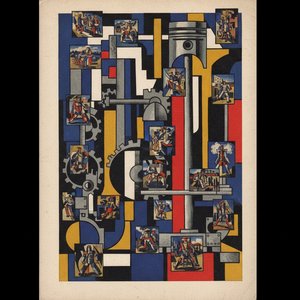
Descoperă cele mai importante 25 de opere ale lui Fernand Léger – pionier al cubismului și tubismului! Explorează istoria, tehnicile și semnificația fiecărei pânze. Reproduceri artă de calitate muzeală pentru un decor modern și sofisticat pe Most-Famous-Paintings.com.

Descoperă Top 10 sculpturi din bronz care au schimbat istoria artei! Explorează operele lui Rodin, Michelangelo și alți maeștri, tehnicile lor unice și inspirația pentru decorul casei tale. Replici de calitate muzeală pe Most-Famous-Paintings.com.
Descoperă cele mai importante 10 capodopere ale abstracției geometrice! Explorează istoria, artiștii (Mondrian, Kandinsky) și culorile vibrante care au definit arta modernă. Reproduceri de tablouri de lux pe Most-Famous-Paintings.com pentru un decor interior rafinat. Explorează colecția online!


Rămâneți la curent cu cele mai recente știri din lumea artei, ofertele noastre exclusive și ideile de decor.
Spuneți-ne despre proiectul dumneavoastră, iar experții noștri în artă vă vor oferi 3 sugestii personalizate.
Vom selecta 3 opțiuni special pentru tine – Gratuit!


 Preview
 Trimite
 Distribuie
 Detalii despre lucrare

 Descarcă
 Similare
 Radiografie
 Diaporama


 Vezi mai mult




































 Opțiunea cu sticlă este disponibilă doar pentru dimensiuni de sub 110 cm


