x

Printuri giclée sau pe canvas de calitate muzeală, cu proces de producție rapid și opțiuni flexibile de finisare. ( Comandă pictură lucrată manual Cumpără imaginea)





























Alegeți dintre dimensiunile noastre prestabilite, care respectă proporțiile originale ale operei de artă.

Puteți introduce propriile dimensiuni pentru a se potrivi unui anumit cadru sau spațiu. Dacă dimensiunea selectată nu corespunde proporțiilor imaginii originale, vom decupa lucrarea de artă sau vom extinde imaginea cu margini oglindite sau cu o culoare uniformă. Un mockup digital va fi trimis pentru aprobarea dumneavoastră înainte de începerea producției.
Vă rugăm să rețineți că previzualizarea de pe ecran nu reflectă decuparea sau extinderea reală. Doar mockup-ul va arăta cu exactitate compoziția finală.
Deși dimensiunile personalizate sunt disponibile, vă recomandăm să selectați o dimensiune din lista predefinită pentru a păstra proporțiile originale.
Livrare în întreaga lume () în 2 săptămâni, în loc de cele 4/5 săptămâni standard. (18 August)


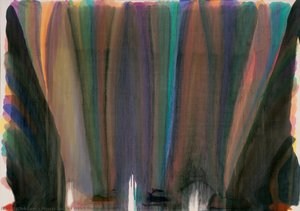
A Morning Breeze
Dimensiune reproducere

In the contemporary landscape of moving images, few voices resonate with as much profound social urgency as Petra Bauer. Born in Stockholm, Sweden, in 1970, Bauer has cultivated a practice that transcends the boundaries of traditional filmmaking, positioning herself instead at the vital intersection of art, activism, and feminist theory. Her work does not merely observe the world; it actively interrogates the structures of power that shape our reality. To encounter a Bauer film is to enter a space of negotiation, where the aesthetic becomes a tool for political mobilization and where the camera serves as a witness to the struggles of the marginalized.
Bauer’s artistic identity was forged within a Swedish cultural milieu deeply engaged with questions of gender equality and social justice. Her intellectual foundation is built upon the rigorous frameworks of feminist thinkers such as Judith Butler and Gayatri Chakravorty Spivak, whose explorations of performativity and post-coloniality permeate her cinematic language. This academic depth is balanced by a visceral commitment to the collective. Throughout her career, Bauer has eschewed the myth of the solitary genius, frequently employing the plural pronoun "we" to describe her creative process. This reflects her deep-seated belief in collaborative authorship and her role as an initiator of platforms like k.ö.k (Kvinnor könskar kollektivitet), a feminist collective dedicated to the pursuit of solidarity.
The essence of Bauer’s oeuvre lies in its refusal to exist in isolation from the pulse of society. Her methodology is inherently relational; she seeks out existing social and political organizations to create works that reflect on how aesthetics can catalyze change. This dedication to socially engaged art is perhaps most evident in her documentary-style interventions. In projects such as "Film Workers!", she documented the labor struggles of sex workers during a TUC occupation, transforming the screen into a site of visibility for those often pushed to the periphery of political discourse. Similarly, her film "Der Fall Joseph" confronted the harrowing realities of immigrant child mortality in Germany, forcing a confrontation with institutional failures and systemic discrimination.
Bauer’s thematic preoccupations are vast, ranging from the material consequences of the colonial world order to the intimate politics of domesticity. She often revisits and rethinks cinematic histories to find new meanings for contemporary struggles. A notable example is her engagement with the work of Chantal Akerman, specifically the seminal film Jeanne Dielman, 23 Quai du Commerce, 1080 Bruxelles. By revisiting the themes of domestic labor, parenting, and sex work through an Akerman-inspired lens, Bauer explores how the aesthetics of the everyday can be politicized to challenge the globalized structures of the present day.
Beyond her filmography, Bauer has made significant contributions to the academic and institutional fabric of the art world. Her journey through the Malmö Art Academy and her doctoral research at Konstfack have culminated in a role as a Professor of Moving Image at the Royal Institute of Art in Stockholm. In this capacity, she continues to bridge the gap between rigorous research and experimental practice, focusing on the relationship between art, technology, and materiality. Her work has been celebrated on the most prestigious global stages, including:
Ultimately, Petra Bauer’s significance lies in her ability to transform the moving image from a medium of passive consumption into a dynamic site of resistance. Her legacy is not found merely in the films she has produced, but in the communities she has helped organize and the critical dialogues she has ignited regarding the very nature of authorship, visibility, and justice in an increasingly complex world.

1970 - , Sweden
Descoperă cele mai iconice 25 de opere de artă de la La Biennale di Venezia! Explorează poveștile artiștilor, tehnicile și stilurile (impresionism, modernism). Reproduceri tablouri de colecție & decorațiuni interioare pe Most-Famous-Paintings.com.

Master the Nordic Vibe with our expert trend forecast on Bold Swedish Art & Modern Scandi Aesthetics. Discover how to blend minimalist precision with high-impact graphic energy to transform your space into a contemporary design masterpiece.

Explore the captivating landscapes of Johan Krouthén, a Swedish artist who broke from tradition to embrace realism & idealism. Discover his technique, influences, and legacy with Most-Famous-Paintings.

Explore the life & art of Anders Zorn, a celebrated Swedish Impressionist painter renowned for his masterful portraits, vibrant watercolors, and captivating etchings. Discover his legacy at Most-Famous-Paintings.

Explore the life & art of Giovanni Antonio Canal (Canaletto), a Venetian master renowned for his breathtaking cityscapes. Discover his techniques, legacy, and captivating depictions of 18th-century Venice & London.


Rămâneți la curent cu cele mai recente știri din lumea artei, ofertele noastre exclusive și ideile de decor.
Spuneți-ne despre proiectul dumneavoastră, iar experții noștri în artă vă vor oferi 3 sugestii personalizate.
Vom selecta 3 opțiuni special pentru tine – Gratuit!


 Previzualizare
 Trimite
 Distribuie
 Detalii despre lucrare

 Descarcă
 Produse similare
 Radiografie
 Diapozitive automate


 Vezi mai mult







 Opțiunea cu sticlă este disponibilă doar pentru dimensiuni de sub 110 cm