x

 Oil On PanelEarly Netherlandish Renaissance
 1445Renaissance
 91.0 x 89.0 cm
 Muzeele Statale din Berlin
Pictură în ulei pe pânză, realizată manual de artiștii noștri la dimensiunea și ramele dorite de dumneavoastră, pe comandă. ( Comandă printul Cumpără imaginea)





























Alegeți dintre dimensiunile noastre prestabilite, care respectă proporțiile originale ale operei de artă.

Puteți introduce propriile dimensiuni pentru a se potrivi unui anumit cadru sau spațiu. Dacă dimensiunea selectată nu corespunde proporțiilor imaginii originale, vom decupa opera de artă sau vom extinde pictura cu elemente suplimentare pictate manual. O simulare digitală vă va fi trimisă pentru aprobare înainte de începerea producției.
Vă rugăm să rețineți că previzualizarea de pe ecran nu reflectă decuparea sau extinderea reală. Doar macheta va arăta cu exactitate compoziția finală.
Deși sunt disponibile dimensiuni personalizate, vă recomandăm să selectați o dimensiune din lista predefinită pentru a păstra proporțiile originale.
Livrare în întreaga lume () în 3-4 săptămâni, în loc de cele 5 săptămâni standard. (15 August). Fără compromisuri în ceea ce privește calitatea.


Bladelin Triptych
Dimensiune reproducere
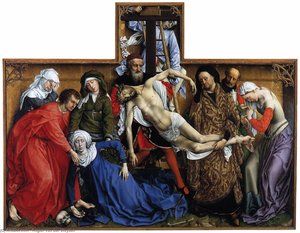
The Bladelin Triptych, formally known as the Middelburg Altarpiece, stands as a testament to Rogier van der Weyden's unparalleled skill in capturing human emotion and conveying profound theological ideas. Completed around 1450, this monumental painting transcends mere visual representation; it’s an immersive experience into the spiritual landscape of its time—a period marked by burgeoning humanist thought alongside unwavering faith.
At first glance, the triptych presents a seemingly simple scene – the birth of Jesus – yet Van der Weyden’s genius lies in layering narratives and symbolism within its framework. The central panel depicts Mary and Joseph kneeling before a crumbling Romanesque chapel, representing the transition from pagan antiquity to Christian dogma. Tiny figures depict angels announcing the divine miracle, while on the right, a cityscape subtly underscores the universality of Christ's reign. Each element contributes to a larger story about redemption and hope.
What distinguishes this artwork is Van der Weyden’s masterful use of oil paint on oak panel—a technique that revolutionized painting at the time. Unlike tempera, which dries quickly and lacks vibrancy, oil allowed for gradual blending and layering, resulting in astonishingly rich colors and textures. The artist meticulously rendered every detail – from the folds of Mary's robe to the expressions etched upon Joseph’s face – achieving a level of realism previously unattainable. This dedication to meticulous observation is evident throughout the entire composition.
Beyond its visual splendor, the Bladelin Triptych overflows with symbolic significance. The ruined chapel symbolizes the decline of pagan beliefs and the ascendancy of Christianity. The shepherds represent humility and faith—the first witnesses to Jesus’s birth. Furthermore, the depiction of Augustus and Sibyl speaks to the interconnectedness of pagan mythology and Christian scripture, highlighting the transformative power of divine revelation.
Originally commissioned for the Middelburg church by Pieter Bladelin, a prominent Bruges burgher, the triptych has traveled through history, culminating in its current residence at the Gemäldegalerie, Berlin. Its enduring appeal lies not only in its artistic brilliance but also in its ability to evoke contemplation and inspire awe—a testament to Van der Weyden’s legacy as one of the foremost painters of his era.
Most-Famous-Paintings.com offers exceptional reproductions that allow you to experience the beauty and depth of this iconic artwork firsthand. Capture the emotional resonance of Van der Weyden's masterpiece in your home!

1400 - 1464 , Belgia

Explore the profound history and technical brilliance of oil on panel painting. From Renaissance masters to modern techniques, discover why this rigid support offers unparalleled precision and permanence for fine art lovers and collectors.


Rămâneți la curent cu cele mai recente știri din lumea artei, ofertele noastre exclusive și ideile de decor.
Spuneți-ne despre proiectul dumneavoastră, iar experții noștri în artă vă vor oferi 3 sugestii personalizate.
Vom selecta 3 opțiuni special pentru tine – Gratuit!


 Previzualizare
 Trimite
 Distribuie
 Detalii despre lucrare

 Descarcă
 Produse similare
 Radiografie
 Diapozitive automate
 Vezi mai mult







 Opțiunea cu sticlă este disponibilă doar pentru dimensiuni de sub 110 cm