


x

Pictură în ulei pe pânză, realizată manual de artiștii noștri la dimensiunea și ramele dorite de dumneavoastră, pe comandă. ( Comandă printul Cumpără imaginea)





























Alegeți dintre dimensiunile noastre prestabilite, care respectă proporțiile originale ale operei de artă.

Puteți introduce propriile dimensiuni pentru a se potrivi unui anumit cadru sau spațiu. Dacă dimensiunea selectată nu corespunde proporțiilor imaginii originale, vom decupa opera de artă sau vom extinde pictura cu elemente suplimentare pictate manual. O simulare digitală vă va fi trimisă pentru aprobare înainte de începerea producției.
Vă rugăm să rețineți că previzualizarea de pe ecran nu reflectă decuparea sau extinderea reală. Doar macheta va arăta cu exactitate compoziția finală.
Deși sunt disponibile dimensiuni personalizate, vă recomandăm să selectați o dimensiune din lista predefinită pentru a păstra proporțiile originale.
Livrare în întreaga lume () în 3-4 săptămâni, în loc de cele 5 săptămâni standard. (22 August). Fără compromisuri în ceea ce privește calitatea.


Madonna și copil cu doi îngeri
Dimensiune reproducere
The painting “Madonna and Child with Two Angels,” a captivating work by Sandro Botticelli, offers a glimpse into the heart of the Early Renaissance in Florence. Created around 1468-1469 during a pivotal period in the artist’s career, this tempera on panel masterpiece resides within the Museo Nazionale di Capodimonte in Naples—a testament to its enduring beauty and historical significance. More than simply a depiction of the Virgin Mary cradling her infant son, it's an exploration of faith, grace, and the burgeoning humanist ideals that were reshaping European art and thought.
Botticelli’s early style is immediately apparent in this piece: a delicate balance between the formality of the late Gothic tradition and the emerging naturalism of the Renaissance. The figures possess a remarkable elegance—their poses are graceful, their lines fluid, and their expressions imbued with an almost ethereal serenity. Notice particularly the flowing drapery, rendered with meticulous detail that suggests both luxuriousness and a subtle awareness of volume and form. The color palette is restrained yet luminous; the vibrant red of Mary’s gown provides a striking focal point against the softer hues of the background and the angels’ robes, drawing the eye to the central figures.
Botticelli's meticulous attention to detail—evident in the rendering of textures like fabric folds and hair strands—demonstrates his mastery of technique. He employed a glazing method, applying thin layers of pigment over previous coats to achieve depth and luminosity. This technique was characteristic of Florentine painting during this era and reflects Botticelli’s commitment to capturing the subtleties of visual perception.
To fully appreciate “Madonna and Child,” it’s essential to understand the historical context in which it was created. The Early Renaissance—a period spanning roughly from 1400 to 1500—witnessed a remarkable revival of interest in classical Greek and Roman art, philosophy, and literature. Artists like Botticelli were deeply influenced by these ancient ideals, seeking to emulate their sense of beauty, proportion, and humanism. This is evident in the painting’s idealized figures and its emphasis on harmonious composition.
Botticelli's work reflects the intellectual climate of Florence at this time, a city that was experiencing a period of unprecedented wealth and cultural flourishing. The patronage of powerful families like the Medici fueled artistic innovation, creating an environment where artists could experiment with new techniques and ideas. The painting’s creation coincided with a shift in religious thought—a move towards a more personal and emotional understanding of faith. Botticelli's Madonna is not simply a representation of the Virgin Mary; it’s an invitation to contemplate her love, compassion, and connection to humanity.
The composition itself is carefully orchestrated. Botticelli masterfully employs symmetry—the Virgin and Child occupy the precise center, flanked by two angels on either side. This creates a sense of balance and harmony, reflecting the theological importance of the subject matter. However, it’s not merely a static arrangement; there's a dynamic quality to the scene, conveyed through subtle gestures and expressions. Mary’s gaze is directed towards her child with an expression of profound love and devotion, while one angel extends a hand in blessing, mirroring the gesture of Christ. The other angel appears to be pointing upwards, perhaps symbolizing divine guidance or the promise of salvation.
Botticelli’s Madonna embodies the humanist ideals that were transforming European art and thought—a departure from the more stylized conventions of medieval painting. He sought to depict human figures with anatomical accuracy and emotional realism, reflecting a renewed appreciation for the beauty and dignity of humankind.
The painting's serene atmosphere contributes to its enduring appeal. The soft colors and graceful lines evoke a sense of tranquility and contemplation—a reflection of the spiritual values that underpinned Renaissance culture. It’s a masterpiece that continues to inspire artists and viewers alike, reminding us of the power of art to convey profound emotions and ideas.
The angel's gesture of blessing is a prominent symbol in the painting—representing divine grace and protection. The drapery of Mary’s gown is richly ornamented with gold thread, signifying royalty and holiness. These details underscore Botticelli’s intention to communicate complex theological concepts through visual imagery.
“Madonna and Child” stands as a cornerstone of Early Renaissance art—a testament to Botticelli's artistic genius and his ability to capture the spirit of his time. Its influence can be seen in countless subsequent works, solidifying its place as one of the most beloved paintings of the era.
At Most-Famous-Paintings.com, we are proud to offer meticulously crafted hand-painted oil reproductions of “Madonna and Child with Two Angels,” capturing the original’s luminosity and detail with unparalleled accuracy. Explore our collection of Botticelli reproductions—including his iconic "Birth of Venus" and "Portrait of a Young Man"—and discover how you can own a piece of art history.
To view high-resolution images and explore other works by Sandro Botticelli, visit here and here.
Discover the beauty of Italian Renaissance art with Most-Famous-Paintings.com! Explore our collection of hand-made oil paintings reproductions and learn more about the artists and their works.

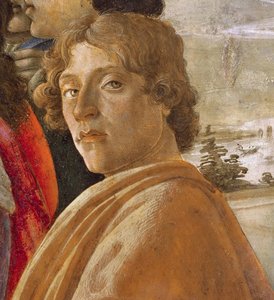
1445 - 1510 , Italia

Explore the profound alchemy of egg tempera painting. Discover how medieval masters used egg yolk and pure pigments to create luminous, enduring masterpieces that define art history. A deep dive into the disciplined techniques of the Old Masters for the true art enthusiast.

Master the science of art with our expert guide to oil, acrylic, tempera, and watercolor. Explore the chemistry, history, and techniques behind the world's greatest painting mediums, perfect for students, collectors, and lovers of fine art masterpieces.


Rămâneți la curent cu cele mai recente știri din lumea artei, ofertele noastre exclusive și ideile de decor.
Spuneți-ne despre proiectul dumneavoastră, iar experții noștri în artă vă vor oferi 3 sugestii personalizate.
Vom selecta 3 opțiuni special pentru tine – Gratuit!


 Previzualizare
 Trimite
 Distribuie
 Detalii despre lucrare

 Descarcă
 Produse similare
 Radiografie
 Diapozitive automate

 Vezi mai mult







 Opțiunea cu sticlă este disponibilă doar pentru dimensiuni de sub 110 cm


