x

Pictură în ulei pe pânză, realizată manual de artiștii noștri la dimensiunea și ramele dorite de dumneavoastră, pe comandă. ( Comandă printul Cumpără imaginea)





























Alegeți dintre dimensiunile noastre prestabilite, care respectă proporțiile originale ale operei de artă.

Puteți introduce propriile dimensiuni pentru a se potrivi unui anumit cadru sau spațiu. Dacă dimensiunea selectată nu corespunde proporțiilor imaginii originale, vom decupa opera de artă sau vom extinde pictura cu elemente suplimentare pictate manual. O simulare digitală vă va fi trimisă pentru aprobare înainte de începerea producției.
Vă rugăm să rețineți că previzualizarea de pe ecran nu reflectă decuparea sau extinderea reală. Doar macheta va arăta cu exactitate compoziția finală.
Deși sunt disponibile dimensiuni personalizate, vă recomandăm să selectați o dimensiune din lista predefinită pentru a păstra proporțiile originale.
Livrare în întreaga lume () în 3-4 săptămâni, în loc de cele 5 săptămâni standard. (14 August). Fără compromisuri în ceea ce privește calitatea.


St.thomas aquinas
Dimensiune reproducere
Sandro Botticelli's “St. Thomas Aquinas” is more than just a portrait; it’s a carefully constructed meditation on faith, reason, and the human intellect. Painted around 1480-85 during the height of the Florentine Renaissance, this captivating work offers a rare glimpse into the mind of one of history's most influential theologians. The painting immediately draws the viewer in with its intimate composition – a close-up study of a bearded man, rendered with Botticelli’s signature grace and attention to detail. He is presented not as a distant figure of religious authority, but as an approachable scholar, engaged in contemplation within a space that subtly speaks to his intellectual pursuits.
Botticelli's mastery lies in his ability to imbue seemingly simple subjects with profound symbolic weight. The subject himself, St. Thomas Aquinas (1225-1274), was a Dominican friar and philosopher whose synthesis of Aristotelian philosophy and Christian theology profoundly shaped Western thought. Here, Botticelli doesn’t depict Aquinas in grand ecclesiastical robes; instead, he presents him as a man of learning, holding a quill pen – a symbol of writing and the dissemination of knowledge – alongside an open book. The inclusion of this small container, likely containing ink, further emphasizes his role as a scholar dedicated to preserving and expanding upon established wisdom.
Examining the painting’s technique reveals Botticelli's deep understanding of Renaissance artistic conventions. The composition follows a classic pyramidal structure, providing stability and visual harmony. The lighting, originating from an unseen source above and slightly to the side, creates dramatic chiaroscuro – strong contrasts between light and shadow – that sculpts the subject’s face and robes with remarkable realism. Note the deliberate roughness of the brushwork, particularly in the depiction of skin and fabric; this impasto technique adds texture and depth, grounding the image in a tangible reality.
Botticelli's use of color is equally significant. The palette is dominated by rich browns, golds, reds, and blacks – colors associated with piety, wisdom, and the authority of the Church. The golden halo encircling Aquinas’ head serves as a potent symbol of his holiness and divine connection, while the dark background effectively isolates the figure, directing the viewer's attention to his contemplative expression.
To fully appreciate “St. Thomas Aquinas,” it’s essential to consider Botticelli’s place within the broader context of the Florentine Renaissance. He began his career as a goldsmith's assistant, developing a meticulous eye for detail and an appreciation for craftsmanship – qualities that would later inform his painting style. His early training under Fra Filippo Lippi, a leading painter of the time, provided him with invaluable experience in mastering the techniques of oil painting on canvas.
Botticelli’s artistic style evolved significantly throughout his career. Initially influenced by the Gothic tradition, he gradually embraced the principles of linear perspective and classical ideals that characterized the High Renaissance. “St. Thomas Aquinas” represents a transitional phase in his work, blending elements of both styles while retaining his distinctive sense of elegance and grace. The painting’s subject matter – religious figures and mythological scenes – reflects Botticelli's patronage by powerful families like the Medici, who commissioned works that celebrated their wealth and status.
“St. Thomas Aquinas” is a testament to Botticelli’s artistic skill and his ability to capture the essence of human intellect and faith. The painting evokes a sense of solemnity, piety, and wisdom – qualities that continue to resonate with viewers today. It's not merely a portrait; it’s an invitation to contemplate the enduring legacy of St. Thomas Aquinas and the power of knowledge to illuminate the human spirit. Reproductions of this iconic work offer a beautiful way to bring this profound image into your home or office, serving as a constant reminder of the pursuit of wisdom and understanding.

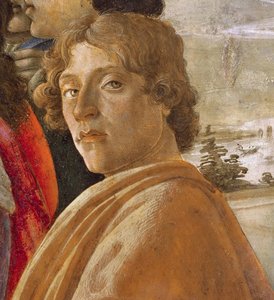
1445 - 1510 , Italia

Explore the profound history and technical brilliance of oil on panel painting. From Renaissance masters to modern techniques, discover why this rigid support offers unparalleled precision and permanence for fine art lovers and collectors.


Rămâneți la curent cu cele mai recente știri din lumea artei, ofertele noastre exclusive și ideile de decor.
Spuneți-ne despre proiectul dumneavoastră, iar experții noștri în artă vă vor oferi 3 sugestii personalizate.
Vom selecta 3 opțiuni special pentru tine – Gratuit!


 Previzualizare
 Trimite
 Distribuie
 Detalii despre lucrare

 Descarcă
 Produse similare
 Radiografie
 Diapozitive automate

 Vezi mai mult







 Opțiunea cu sticlă este disponibilă doar pentru dimensiuni de sub 110 cm