Vinde opere de artă
Lista de dorințe Coș de cumpărături Cart
PrevizualizarePrevizualizare Previzualizare ARPrevizualizare AR Comandă printul Comandă printulComandă pictură lucrată manual Comandă pictură lucrată manual TrimiteTrimite
Detalii despre lucrareDetalii despre lucrare Adaugă la favorite Adaugă la favorite DescarcăDescarcă Produse similareProduse similare RadiografieRadiografie Diapozitive automateDiapozitive automate

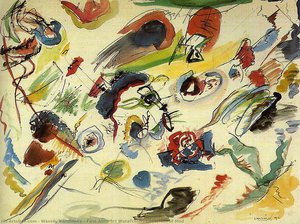
Fixed Points

Explore Wassily Kandinsky’s "Fixed Points," a vibrant abstract landscape masterpiece from 1942. Discover his geometric shapes & colors at Most-Famous-Paintings.com – high-quality reproductions available!

Descoperă Wassily Kandinsky, pionierul artei abstracte! Explorează expresionismul său vibrant, temele spirituale și moștenirea Bauhaus prin reproduceri picturale uimitoare.

Achiziționați o imagine digitală de înaltă rezoluție, îmbunătățită, mult superioară previzualizării online.

Fiecare fișier este pregătit cu meticulozitate de specialiștii noștri interni, utilizând instrumente avansate și retușare manuală expertă. Ne asigurăm că fiecare imagine beneficiază de o claritate excepțională, o acuratețe precisă a culorilor și detalii fine.

Fișierul final este livrat prin e-mail în termen de 72 de ore, optimizat pentru utilizare imediată în medii profesionale, editoriale și de imprimare. Aceasta este aceeași calitate în care au încredere studiouri de design, edituri și galerii de top.

Imagine Digitală

Descărcați un fișier la rezoluție înaltă pentru afișare personală, imprimare și proiecte creative. (Comandă printul Comandă printulComandă pictură lucrată manual Comandă pictură lucrată manual)

Preț total

$ 24,90

Inclus în fiecare comandă de imagini digitale

Livrare digitală de expertiză, garantată

Când alegeți Most-Famous-Paintings.com, nu primiți doar o simplă imagine – primiți o operă de artă digitală îmbunătățită profesional, creată cu precizie și susținută de o garanție de satisfacție. Iată tot ceea ce primești odată cu comanda ta, în mod automat:

shipping_icon
Livrare rapidă prin e-mail

Fișierul imaginii digitale la rezoluție înaltă vă va fi trimis prin e-mail în termen de 72 de ore de la finalizarea comenzii – gata pentru utilizare imediată.

canvas_icon
Fișier digital optimizat prin IA

Opera ta de artă este optimizată profesional prin intermediul unor instrumente AI avansate și al editării manuale, asigurând un nivel maxim de detalii, claritate și acuratețe a culorilor.

insurance_icon
Retransmitere gratuită pe viață

Ai șters sau ai pierdut din greșeală fișierul? Nu îți face griji – ți-l vom retrimite oricând, gratuit.

tax_icon
Fără taxe de import – Întotdeauna

Bucură-te instant de noua ta operă de artă, fără taxe vamale, taxe de import sau costuri de livrare – descărcările digitale sunt întotdeauna fără taxe.

color_icon
Garanția acurateții culorilor

Asigurăm o reflectare cât mai fidelă a culorilor originale în imaginea ta digitală, prin utilizarea unor instrumente profesionale și a proceselor de gestionare a culorii.

return_icon
Garanție de satisfacție de 60 de zile

Dacă nu sunteți mulțumit de imaginea digitală achiziționată, o vom revizui sau vă vom returna 100% în termen de 60 de zile – fără nicio explicație necesară.

guarantee_icon
Garanție de returnare 100% a banilor

Nu ești mulțumit? Obține o rambursare completă în termen de 60 de zile de la primirea fișierului tău digital – fără întrebări.

discount_icon
Reduceri pentru comenzi în volum

Cumpără 3 imagini, economisește 10% - Cumpără 5, economisește 15% - Cumpără 10+, economisește 20%. Ideal pentru proiecte creative, galerii și agenții.

Informații rapide

  • Title: Fixed Points
  • Movement: Abstract Art
  • Location: Private Collection
  • Artistic style: Expressionism
  • Dimensions: 17" x 22"
  • Notable elements or techniques: Geometric Shapes, Vibrant Colors
  • Medium: Oil on Canvas

Test de cultură artistică

Fiecare întrebare are un singur răspuns corect.

Întrebare 1:
What artistic movement is Wassily Kandinsky’s ‘Fixed Points’ primarily associated with?
Întrebare 2:
The painting utilizes geometric shapes like circles and squares. What is the dominant purpose of these shapes in conveying Kandinsky’s artistic vision?
Întrebare 3:
What color scheme characterizes ‘Fixed Points’?
Întrebare 4:
‘Fixed Points’ exemplifies Kandinsky's exploration of spirituality. How does the painting contribute to this thematic element?
Întrebare 5:
What is the significance of the clock element in ‘Fixed Points’?

Descriere obiect de colecție

Fixed Points by Wassily Kandinsky

Wassily Wassilyevich Kandinsky (1866-1944), born in Moscow, Russia, was an artist whose groundbreaking exploration of abstraction fundamentally reshaped the landscape of modern art. Initially drawn to music—he possessed considerable skill on the piano and cello—Kandinsky’s artistic journey began with a transformative encounter: witnessing Monet's “Haystacks” exhibition ignited his passion for painting and propelled him toward a radical new vision. He pursued law and economics at Moscow University, graduating in 1889, but swiftly abandoned academic pursuits to dedicate himself entirely to artistic creation. This decisive step culminated in relocating to Munich, Germany, where he honed his craft at Anton Ažbe’s private school and later the Academy of Fine Arts. It was during this period that Kandinsky's stylistic evolution accelerated. Influenced by Impressionism, Fauvism, and Cubism—movements that wrestled with capturing fleeting sensations and exploring new perspectives—he nevertheless sought a path beyond mere representation. The pivotal moment arrived in 1896 when he witnessed Monet’s “Haystacks” exhibition, sparking his interest in art. This encounter served as catalyst for Kandinsky's artistic exploration, leading him to abandon his academic career and embrace painting with unwavering conviction. He studied law and economics at Moscow University, graduating in 1889, but swiftly abandoned academic pursuits to dedicate himself entirely to artistic creation. His early canvases reflected these influences—bold colors and expressive brushstrokes conveyed emotion rather than precise observation. However, Kandinsky’s true genius lay in his unwavering commitment to abstraction, a concept he championed as a means of accessing pure spiritual experience. He believed that art should transcend the limitations of visual perception, striving instead for an inner harmony that mirrored the rhythms of nature and the harmonies of music. This conviction drove him to experiment relentlessly with color, form, and composition—techniques that would become hallmarks of his distinctive style.
  • Color: Kandinsky recognized color as possessing inherent expressive power, assigning each hue a specific psychological significance. He meticulously studied color theory, analyzing its effects on the human psyche and employing it to evoke moods and emotions within his paintings.
  • Form: Geometric shapes—circles, squares, triangles—became central to Kandinsky’s visual vocabulary. These forms were not merely decorative elements but symbols representing fundamental concepts such as unity, stability, and dynamism.
  • Composition: Kandinsky orchestrated intricate arrangements of shapes and colors, creating dynamic compositions that defied conventional perspective and logic. He sought to capture the essence of movement and energy, mirroring the rhythms of life itself.
“Fixed Points,” created in 1942 during a period marked by profound artistic introspection, exemplifies Kandinsky’s unwavering dedication to abstraction. The painting features a predominantly red background punctuated by interconnected circles, squares, and triangles—a deliberate choice reflecting Kandinsky's belief that color could convey spiritual truths. These geometric forms pulsate with energy, creating a visual landscape that transcends literal representation and invites contemplation. As a testament to Kandinsky’s visionary approach, “Fixed Points” remains an enduring symbol of artistic innovation and spiritual aspiration.

The Influence of Kandinsky's Art

Kandinsky’s pioneering spirit resonated throughout the art world, inspiring generations of artists who followed in his footsteps. His bold experimentation with color and form challenged established conventions and paved the way for movements such as Surrealism and Expressionism—artists like Richard Mortensen embraced Kandinsky’s aesthetic principles, furthering the legacy of abstraction.

Collecting Kandinsky Reproductions

If you aspire to enrich your home décor with a touch of Kandinsky's genius, consider acquiring a high-quality reproduction of “Fixed Points.” At Most-Famous-Paintings.com, we offer meticulously crafted oil paintings that faithfully capture the essence of Kandinsky’s original vision—using only archival materials and techniques to ensure enduring beauty. Explore our extensive collection at Most-Famous-Paintings.com!

Experience the Beauty of Fixed Points

Most-Famous-Paintings.com presents an unparalleled opportunity to immerse yourself in the captivating world of Wassily Kandinsky's art. Discover “Fixed Points” and countless other iconic masterpieces—bringing artistic inspiration into your living space. Visit Most-Famous-Paintings.com today!

Biografie artist

A Life Immersed in Color and Spirit

Wassily Wassilyevich Kandinsky, born in Moscow in 1866, was a revolutionary figure who irrevocably altered the course of modern art. His journey wasn’t one of immediate artistic calling; initially destined for a career in law and economics at the University of Moscow, it was a profound encounter with Impressionist painting – specifically Claude Monet's “Haystacks” – and a deeply moving experience witnessing Wagner’s opera "Lohengrin" that ignited within him an irrepressible desire to pursue art. This pivotal moment, occurring around age thirty, marked not merely a career change but a complete transformation of perspective, setting him on a path toward pioneering abstraction. He soon relocated to Munich, enrolling at the prestigious Academy of Fine Arts and studying under Franz von Stuck, though even within formal training, Kandinsky’s spirit yearned for exploration beyond conventional boundaries. Early influences included Russian folk art, gleaned from an ethnographic expedition to the Vologda region in 1889, which instilled a fascination with vibrant color palettes and symbolic imagery. This foundation would prove crucial as he began to develop his unique artistic language. These early explorations weren’t simply about aesthetic preference; they were rooted in a deep cultural connection and a burgeoning understanding of how art could communicate beyond the literal. He was particularly drawn to the rich symbolism embedded within Russian icons, which informed his initial approach to color and composition.

The Dawn of Abstraction: From Expressionism to Inner Necessity

Kandinsky’s early works reveal a strong expressionistic bent, characterized by bold colors and emotional intensity – pieces like “Papeln (Poplars)” from 1902 exemplify this period. These canvases are imbued with a sense of dynamism and raw feeling, reflecting the artist's personal experiences and emotions. However, he wasn’t content with merely representing the external world; he sought to express inner realities, spiritual truths that transcended mere visual depiction. This quest led him gradually away from representational art and toward a revolutionary exploration of color, form, and their emotional resonance. He believed that art should not simply mirror reality but rather act as a conduit for accessing deeper levels of consciousness. He began to believe that colors possessed inherent psychological effects, capable of evoking specific feelings and sensations in the viewer. This conviction was deeply intertwined with his burgeoning interest in Theosophy, a spiritual movement emphasizing esoteric knowledge and universal brotherhood. As he delved deeper into these ideas, Kandinsky’s paintings became increasingly non-objective, shedding recognizable forms in favor of abstract compositions driven by an “inner necessity.” This wasn't simply about abandoning representation; it was about discovering a new visual language capable of expressing the intangible realms of emotion and spirituality. He sought to create a visual equivalent of music, where color and form harmonized to evoke profound emotional responses.

Geometric Harmony and Spiritual Resonance

The period following his involvement with the influential artist group Der Blaue Reiter (The Blue Rider), which he co-founded in Munich in 1911, saw a further evolution in Kandinsky’s style. While earlier works often featured fluid, organic shapes, he began to explore geometric abstraction, focusing on the interplay of circles, triangles, and squares. “Several Circles” (140 x 140 cm) stands as a prime example of this phase – a dynamic composition where color and form interact in a harmonious yet energetic dance. These works represent a shift towards a more intellectual and conceptual approach to art-making, reflecting Kandinsky’s growing interest in mathematics and the underlying order of the universe. He believed that geometric forms possessed inherent symbolic meaning, and their arrangement within the canvas could evoke specific emotional responses. His theoretical writings, most notably “Concerning the Spiritual in Art” (1911), articulated these beliefs, laying the groundwork for a new understanding of abstract art as a vehicle for expressing profound spiritual truths. He argued that art should not aim to imitate nature but rather to reveal the artist’s inner world and connect with the viewer on a deeper, more intuitive level. The use of primary colors – red, blue, and yellow – was central to his philosophy, representing fundamental forces of nature and human emotion.

Bauhaus Influence and Lasting Legacy

The outbreak of World War I forced Kandinsky’s return to Russia in 1914, but following the Russian Revolution, he found himself increasingly at odds with the prevailing artistic climate. In 1920, he accepted a teaching position at the Bauhaus school in Germany, where he profoundly influenced generations of artists with his theories on color, form, and abstraction. The Bauhaus provided an ideal environment for Kandinsky to further develop his ideas and explore new creative avenues. He emphasized the importance of intuitive feeling alongside rational design principles, advocating for a holistic approach to art education. He continued to experiment with geometric forms and vibrant colors, often incorporating layered impasto techniques to create textured surfaces that added depth and complexity to his compositions – as seen in later works like “An Intimate Party” (1942). After the closure of the Bauhaus by the Nazi regime in 1933, Kandinsky moved to France, where he remained for the rest of his life. His impact on modern art is immeasurable; he is widely recognized as a pioneer of abstract expressionism and a key figure in the development of non-representational painting. His works are held in major museums worldwide, including the Tretyakov Gallery in Moscow, which houses his monumental “Composition VII,” a testament to his artistic vision and enduring legacy. Kandinsky’s exploration of color, form, and spirituality continues to inspire artists today, solidifying his place as one of the most important figures in 20th-century art history. He didn't just paint pictures; he painted emotions, ideas, and the very essence of the human spirit.

Wassily Wassilyevich Kandinsky

Wassily Wassilyevich Kandinsky

1866 - 1944 , Русия

Detalii rapide

  • Artistic Movement Or Style: Abstract, Expresionism
  • Artists Or Movements Influenced By This Artist:
    • Bauhaus
    • Der Blaue Reiter
  • Artists Who Influenced This Artist:
    • Monet
    • Wagner
  • Date Of Birth: 1866
  • Date Of Death: 1944
  • Full Name: Wassily Wassilyevich Kandinsky
  • Nationality: Rus, France
  • Notable Artworks:
    • Comp. VII
    • Papeln
    • Succesiune
  • Place Of Birth: Moscu, Rusia