x


 Масло на холстеНастенный декорPost-Impressionism
 1890— XIX век
 81.0 x 65.0 cm
 Ohara Museum of Art
Картина маслом на холсте в выбранном вами размере и раме, написанная на заказ нашими художниками. ( Перейти к печати Переключиться на изображение)





























Выберите один из наших стандартных размеров, соответствующих оригинальным пропорциям произведения искусства.

Вы можете указать собственные размеры, чтобы картина идеально вписалась в выбранную раму или пространство. Если выбранный вами размер не соответствует пропорциям оригинала, мы либо обрежем полотно, либо расширим его за счет дополнительных элементов, написанных вручную. Цифровой макет будет отправлен вам на утверждение перед началом производства.
Обратите внимание, что предварительный просмотр на экране не отражает фактическую обрезку или расширение. Только макет точно покажет окончательную композицию.
Хотя доступны индивидуальные размеры, мы рекомендуем выбирать вариант из предопределенного списка, чтобы сохранить исходные пропорции.
Доставка по всему миру () за 3–4 недели вместо стандартных 5 недель. (3 Август). Без компромиссов в качестве.


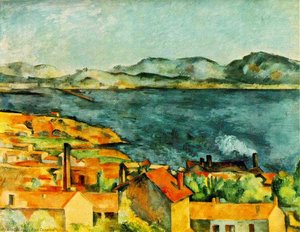
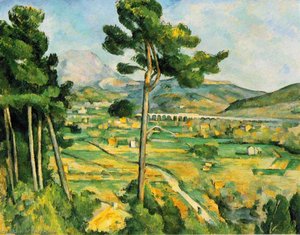
Панорама с деревней
Размер репродукции
The world of Paul Cézanne is one of profound transformation, a deliberate dismantling and rebuilding of artistic conventions. His work wasn't merely about depicting what the eye sees; it was an intensely personal exploration of how the mind *perceives* reality. “Landscape” (1890), a seemingly simple depiction of a Provençal hillside bathed in the muted light of a cloudy day, encapsulates this revolutionary approach with remarkable power. It’s not simply a painting of a view; it's an invitation into Cézanne’s internal world, a testament to his relentless pursuit of capturing the essence of form and color.
The scene itself is deceptively quiet – a small village nestled amongst rolling hills under a sky heavy with clouds. There are no dramatic vistas or heroic figures; instead, we encounter a sense of profound stillness, an invitation to pause and contemplate the subtle beauty of the natural world. This isn’t the romanticized landscape of earlier generations; it's grounded in observation, imbued with a quiet dignity that speaks volumes about Cézanne’s deep connection to his native Provence.
Cézanne’s genius lay not in replicating visual reality but in reconstructing it. He abandoned the traditional rules of perspective—the vanishing point, linear convergence—that had dominated Western art for centuries. Instead, he sought to represent the underlying structure of objects by breaking them down into their fundamental geometric components: cylinders, spheres, and cones. This approach is strikingly evident in “Landscape.” Notice how the buildings are rendered as simplified volumes, their edges softened and blended, creating a sense of depth that transcends conventional spatial relationships.
The painting’s surface is alive with texture – thick impasto strokes build up layers of color, creating a tactile quality that invites close inspection. Cézanne wasn't interested in smooth surfaces or delicate brushwork; he embraced the physicality of paint, using it to express his vision with raw intensity. The loose, expressive brushstrokes contribute significantly to the painting’s sense of movement and energy, suggesting the constant flux of light and atmosphere.
Cézanne’s artistic development was inextricably linked to his surroundings. Born and raised in Aix-en-Provence, he spent his life immersed in the beauty of the Provençal landscape. Early influences included Romanticism and Realism, but he gradually moved towards a more subjective and expressive style, absorbing lessons from Impressionists like Camille Pissarro and Post-Impressionist contemporaries such as Paul Gauguin. He was particularly fascinated by the work of Seurat, experimenting with color theory and optical mixing to achieve his desired effects.
“Landscape” reflects this evolution. While retaining elements of Impressionism—particularly in its use of color—it demonstrates Cézanne’s growing independence and willingness to challenge established conventions. He wasn't simply painting *what* he saw, but rather *how* he perceived it – a radical shift that paved the way for modern art.
Despite its seemingly objective depiction of a rural scene, “Landscape” is rich in symbolic and emotional resonance. The muted tones—primarily blues, greens, and browns—evoke a sense of tranquility and nostalgia, suggesting a connection to tradition and a simpler way of life. The village itself represents a link to the past, a reminder of enduring values and community.
There’s an underlying feeling of quiet contemplation within the painting – an invitation to pause and reflect on our own relationship with nature and place. It's not a dramatic or sensational landscape; it’s one that speaks to the profound beauty found in everyday observation, offering a moment of respite from the complexities of modern life.
“Landscape” is an ideal addition to any interior space, bringing a touch of Provençal charm and contemplative serenity. Its muted palette and balanced composition make it suitable for a wide range of styles, from traditional to contemporary. The painting’s size (81 x 65 cm) makes it well-suited as a focal point in a living room, dining room, or study.
Consider pairing it with rustic wood furniture or textured textiles—linen, wool, or cotton—to enhance the sense of warmth and authenticity. The painting’s subtle colors complement neutral color schemes, adding depth and visual interest without overwhelming the space. Owning a reproduction of “Landscape” is more than just acquiring a beautiful artwork; it's embracing a piece of art history – a testament to Cézanne’s enduring vision.


1839 - 1906 , Франция

Explore the transformative era of Post-Impressionism. Discover how masters like Van Gogh moved beyond light to embrace emotion, structure, and vibrant color, redefining modern art history through expressive brushwork and symbolic depth.


Будьте в курсе последних новостей из мира искусства, эксклюзивных предложений и идей для оформления интерьера.
Расскажите нам о вашем проекте, и наши эксперты по искусству предложат вам 3 персонализированных варианта произведений искусства.
Мы подберем для вас 3 варианта — бесплатно!


 Предпросмотр
 Поделиться
 Поделиться
 Детали произведения

 Скачать
 Похожие работы
 Рентгенография
 Слайд-шоу
 Читать далее







 Вариант со стеклом доступен только для размеров менее 110 см