x

Картина маслом на холсте в выбранном вами размере и раме, написанная на заказ нашими художниками. ( Купить принт Купить изображение)





























Выберите один из наших стандартных размеров, соответствующих оригинальным пропорциям произведения искусства.

Вы можете указать собственные размеры, чтобы картина идеально вписалась в выбранную раму или пространство. Если выбранный вами размер не соответствует пропорциям оригинала, мы либо обрежем полотно, либо расширим его за счет дополнительных элементов, написанных вручную. Цифровой макет будет отправлен вам на утверждение перед началом производства.
Обратите внимание, что предварительный просмотр на экране не отражает фактическую обрезку или расширение. Только макет точно покажет окончательную композицию.
Хотя доступны индивидуальные размеры, мы рекомендуем выбирать вариант из предопределенного списка, чтобы сохранить исходные пропорции.
Доставка по всему миру () за 3–4 недели вместо стандартных 5 недель. (20 Август). Без компромиссов в качестве.


Схождение
Размер репродукции
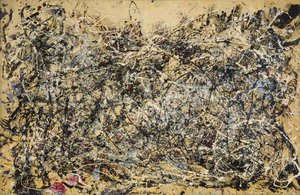
«Схождение» Джексона Поллока — это не просто картина; это висцеральный опыт, монументальное свидетельство силы абстрактного экспрессионизма и определяющее произведение американского искусства послевоенной эпохи. Созданное в переломный момент истории искусства, это полотно воплощает в себе дух новаторства, бросая вызов традиционным представлениям о репрезентации и приглашая зрителя в динамичный мир цвета и энергии.
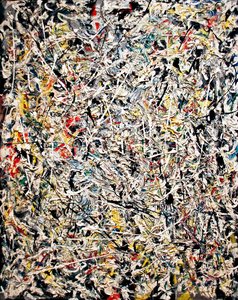
«Схождение» смело отвергает привычные сюжеты. Вместо того чтобы передавать узнаваемые формы, Поллок представляет композицию типа «all-over» — безграничное поле, где весь холст пульсирует жизнью. Слои брызг, потеков и наслоений краски переплетаются друг с другом, создавая сложную сеть линий, форм и текстур. Здесь нет единой точки фокуса; взгляд зрителя вольно блуждает по полотну, открывая новые детали в его запутанных глубинах. Это намеренное отсутствие структуры способствует глубокому погружению, вовлекая наблюдателя в экспансивную энергию произведения.
«Схождение» является воплощением новаторской техники Поллока — «живописи разбрызгиванием», ставшей радикальным отходом от устоявшихся методов. Он отказался от кистей в пользу палочек, жестких щеток и даже прямого выливания краски из банок на необработанный холст, расстеленный на полу. Художник двигался вокруг и над поверхностью, позволяя гравитации и жесту диктовать поток пигмента. Это не было просто нанесением краски; это был перформанс — танец между случайностью и контролем, породивший уникальный визуальный язык, характеризующийся управляемым хаосом и сбалансированной энергией. Как говорил сам Поллок: «Я предпочитаю прибивать холст к полу... Мне лучше работается на большом холсте».
Появившись в послевоенной Америке, «Схождение» отражает значительный культурный сдвиг. Абстрактный экспрессионизм ознаменовал уход от европейского художественного доминирования, приняв американский индивидуализм и новаторство. Работа Поллока напрямую бросила вызов установленным нормам, отвергнув традиционные темы и техники. Техника «дриппинга» была не просто стилистическим приемом, она была философской, подчеркивая сам акт творения — что созвучно экзистенциалистским идеям того времени. «Схождение» мощно воплощает дух эпохи экспериментов, свободы и отрицания условностей.
В картине используется яркая, но при этом тонко приглушенная палитра, в которой доминируют черный, белый, желтый, оранжевый, синий и красный цвета. Эти цвета не смешиваются; они сопоставляются друг с другом, создавая визуальный контраст и динамическое напряжение. Многослойность добавляет глубины и сложности, а видимая текстура холста под краской подчеркивает рельеф поверхности. Общий эффект — это интенсивная эмоциональная энергия, вызывающая чувства одновременно хаоса и гармонии, смятения и спокойствия. Зрители часто интерпретируют «Схождение» как отражение внутренних состояний, необузданных эмоций или просто исследование чистой формы и цвета.
Не обладая явными символическими образами, абстрактная природа «Схождения» приглашает к глубоко личной интерпретации. Некоторые видят в нем отголоски природных явлений — штормов, геологических образований или даже космических событий. Другие находят здесь отражение человеческой психики, духовных миров или просто красоту чистого эстетического опыта. Отсутствие четкого повествования позволяет каждому зрителю проецировать свой собственный опыт и эмоции на произведение, создавая уникальную связь с его силой.
Для коллекционеров: Владение «Схождением» — или высококачественной репродукцией — представляет собой инвестицию в исторически значимое произведение. Оно воплощает дух художественного новаторства, что делает его ценным дополнением к любой коллекции.
Для дизайнеров интерьера: Его динамичная композиция и яркие цвета идеально подходят для современных и актуальных интерьеров. Масштаб произведения приковывает внимание, а абстрактная природа позволяет ему гармонировать с широким спектром цветовых схем и стилей дизайна.
«Схождение» — это не просто визуальное высказывание; это приглашение пережить искусство в его самой сырой, эмоциональной и освобождающей форме.
Paul Jackson Pollock, born in Cody, Wyoming, in 1912, was a restless spirit from the very beginning. His early life was marked by constant movement; his father, LeRoy Pollock, pursued work as a land surveyor across the vast landscapes of the American West, leading the family on a nomadic journey through Arizona and California. This itinerant existence instilled in young Pollock a deep connection to the natural world – he developed an appreciation for Native American art during these surveying trips, absorbing their visual language and spiritual intensity. Though he never consciously imitated Indigenous styles, these early experiences undoubtedly left an indelible mark on his artistic sensibility, shaping his later exploration of raw energy and primal expression.
Pollock’s formal artistic training commenced at the Manual Arts High School in Los Angeles, followed by studies at the Art Students League of New York under the tutelage of Thomas Hart Benton. Benton, a prominent figure in the Regionalist movement, emphasized rhythmic composition and narrative themes rooted in American life. Initially, Pollock absorbed Benton's lessons diligently, learning to create works that depicted scenes of rural America with a sense of dynamism and social commentary. However, his inherent inclination leaned toward more abstract explorations – he was drawn to the expressive potential of color and form, seeking ways to convey emotions and ideas beyond representational accuracy.
Furthermore, Pollock was profoundly influenced by Mexican muralists like José Clemente Orozco, whose monumental works depicted social struggles and historical events with a powerful emotional intensity. The scale, dynamism, and symbolic language of these murals resonated deeply with Pollock, inspiring him to seek ways to create art that could capture the complexities of human experience on a grander scale.
The 1930s witnessed Pollock’s experimentation with various techniques, driven by a desire to move beyond traditional brushwork. He began pouring paint directly onto canvases, exploring its fluidity and unpredictable nature – this was not simply applying color; it was an attempt to capture the very essence of movement and spontaneity. However, it was around 1947 that his artistic trajectory underwent a radical transformation. Abandoning the easel altogether, Pollock laid canvases directly on the floor, initiating what would become known as his “drip technique.” He then proceeded to drip, splash, and fling paint onto the canvas from above, orchestrating a dynamic dance between artist, medium, and surface – this wasn’t merely about applying paint; it was about embodying the act of creation itself.
This innovative approach fundamentally altered the way painting was conceived. Pollock's canvases became arenas for physical expression, capturing the immediacy of his gestures and emotions. The resulting paintings are characterized by their “all-over” composition – a lack of central focus that invites the viewer to explore the entire surface as a unified field of energy. Intricate networks of lines and colors intertwine, creating a visual complexity that is both captivating and challenging. He employed unconventional tools—sticks, knives, even syringes—to manipulate the paint in unpredictable ways, further emphasizing the spontaneous nature of his process.
This revolutionary technique positioned Pollock as a central figure in the burgeoning Abstract Expressionist movement, which emerged in post-World War II New York City. Abstract Expressionism prioritized spontaneous gesture, large scale, and non-representational imagery – reflecting a broader cultural shift away from traditional artistic conventions. His marriage to fellow artist Lee Krasner was also pivotal; she provided unwavering emotional support and actively encouraged his artistic development, recognizing the groundbreaking nature of his work.
Pollock’s most celebrated works—such as Number 1, 1950 (Lavender Mist), One: Number 31, 1950, Blue Poles: Number 11, 1952, and *Convergence*—are testaments to his revolutionary technique. These paintings are not simply images; they are records of a performance, imbued with the artist’s physical presence and emotional intensity. The dynamic energy that emanates from these canvases is palpable, drawing viewers into a world of pure abstraction.
The significance of Pollock's work extends beyond mere aesthetics; it represents an exploration of process over product. He sought to capture the immediacy of his actions and emotions on canvas, rejecting traditional notions of composition and representation. He delved into Jungian psychology, exploring archetypes and the subconscious in his art, seeking to tap into universal symbols and primal energies.
Pollock’s impact on the history of art is immeasurable. He fundamentally altered the way artists approached painting, breaking free from easel-based methods and embracing a more performative approach. His work helped solidify New York City's position as a global center for modern art, shifting the focus away from European dominance. His influence can be seen in the work of countless artists who followed, including those associated with Color Field painting and later forms of abstract expressionism.
Despite his groundbreaking achievements, Pollock’s life was marked by personal struggles. He battled alcoholism for much of his adult life, a condition that exacerbated his volatile personality and contributed to his untimely death in 1956 at the age of 44. However, it is important to recognize Pollock not just as an artist but also as a complex individual grappling with profound emotional challenges.
His legacy continues to evolve and inspire artists today. His work remains a subject of intense debate and interpretation, prompting viewers to consider the relationship between art, emotion, and experience. The drip technique he pioneered is still practiced by many contemporary painters, demonstrating the enduring relevance of his innovations. Jackson Pollock’s paintings are not merely decorative objects; they are windows into the artist's psyche, offering a glimpse into the depths of human consciousness.

1912 - 1956 , Соединенные Штаты Америки

Погрузитесь в мир абстрактного экспрессионизма! Откройте для себя 10 шедевров Поллока, Ротко и других гениев. История искусства, техники живописи и вдохновение для вашего интерьера от Most-Famous-Paintings.com. Explore the full collection online!

Explore the revolutionary art of Jackson Pollock & Abstract Expressionism. Discover his iconic drip paintings, lasting impact, and considerations for collecting this pivotal American artist. Expert insights at Most-Famous-Paintings.
Explore the profound emotional world of Abstract Expressionism with Most-Famous-Paintings. Discover key artists like Pollock & Rothko, learn about collecting, and find museum-quality reproductions to inspire your space.

Explore the life & work of Jacob Kainen, a pivotal figure in American Abstract Expressionism and Color Field painting. Discover his journey from Social Realism to vibrant abstraction and lasting influence on 20th-century art.

Explore the captivating world of Paul Jenkins, a pioneer of abstract expressionism & color field painting. Discover his unique ‘Phenomena’ series and investment potential for art collectors. Expert insights at Most-Famous-Paintings.


Будьте в курсе последних новостей из мира искусства, эксклюзивных предложений и идей для оформления интерьера.
Расскажите нам о вашем проекте, и наши эксперты по искусству предложат вам 3 персонализированных варианта произведений искусства.
Мы подберем для вас 3 варианта — бесплатно!


 Предпросмотр
 Поделиться
 Поделиться
 Детали произведения

 Скачать
 Похожие работы
 Рентгенография
 Слайд-шоу

 Читать далее







 Вариант со стеклом доступен только для размеров менее 110 см