


x

 Акрил на холстеНастенное искусствоRenaissance Revival
 1893
1893 31.0 x 42.0 cm
 Сфорца-Кастелло
Картина маслом на холсте в выбранном вами размере и раме, написанная на заказ нашими художниками. ( Перейти к печати Переключиться на изображение)





























Выберите один из наших стандартных размеров, соответствующих оригинальным пропорциям произведения искусства.

Вы можете указать собственные размеры, чтобы картина идеально вписалась в выбранную раму или пространство. Если выбранный вами размер не соответствует пропорциям оригинала, мы либо обрежем полотно, либо расширим его за счет дополнительных элементов, написанных вручную. Цифровой макет будет отправлен вам на утверждение перед началом производства.
Обратите внимание, что предварительный просмотр на экране не отражает фактическую обрезку или расширение. Только макет точно покажет окончательную композицию.
Хотя доступны индивидуальные размеры, мы рекомендуем выбирать вариант из предопределенного списка, чтобы сохранить исходные пропорции.
Доставка по всему миру () за 3–4 недели вместо стандартных 5 недель. (5 Август). Без компромиссов в качестве.


Планировка северо-восточного угла замка Сфорца
Размер репродукции
Сфорца Кастело – это не просто средневековая крепость Милана, это живая история итальянского искусства и власти. Возведенная во времена висКонтинской династии в XIII веке и значительно расширенная последующими правителями Сфорца и Эста, она является одним из самых крупных цитаделей Европы и сегодня служит домом для нескольких важных музеев и художественных коллекций.
Леонардо да Винчи был приглашен создать декоративный проект для зала Ассов в 1498 году, что стало одним из самых значительных проектов его жизни. Художник использовал инновационные техники живописи и скульптуры, чтобы передать ощущение движения и силы природы. Его работы были выполнены в стиле ренессанса и отличаются высоким уровнем мастерства и детализации.
Планировка Сфорца Кастело отражает идею о гармонии между человеком и природой, а также символизирует мощь и стабильность государства. Картины стен были выполнены в стиле эпохи Возрождения и отличаются высоким уровнем мастерства и эмоциональной выразительностью.
Сфорца Кастело вызывает чувство восхищения и благоговения перед величием истории и искусства. Этот зал является одним из самых важных памятников архитектуры эпохи Возрождения и привлекает туристов со всего мира.
Сфорца Кастело является уникальным памятником архитектуры и искусства эпохи Возрождения и представляет огромный интерес для исследователей и искусствоведов. Этот зал является одним из самых важных символов итальянской культуры и истории и продолжает вдохновлять художников и архитекторов по всему миру.

Luca Beltrami was far more than a mere builder; he was a guardian of the Lombardian soul, an intellectual whose life’s work served as a bridge between the crumbling grandeur of the past and the burgeoning energy of a modernizing Italy. Born in 1854 in Milan, a city then navigating the complex transitions of the Austro-Hungarian era and the fervent spirit of the Risorgimento, Beltrami possessed a sensitivity to the layers of history that define urban landscapes. His early years were marked by a profound duality of mind—a rigorous mathematical precision paired with an exquisite artistic temperament. It is whispered in historical accounts that his talent for fine detail was first discovered during a mathematics lesson, when the esteemed Francesco Brioschi caught the young student meticulously etching designs onto copper plates. This early intersection of science and art would become the hallmark of his entire career.
His academic journey took him through the prestigious halls of the Polytechnic University of Milan and the Brera Academy, where he studied under the influential Camillo Boito. However, it was his pilgrimage to Paris that truly expanded his architectural vocabulary. Immersed in the atmosphere of the École des Beaux-Arts, Beltrami entered the ateliers of masters such as Jean-Louis Pascal and Gabriel Daviult, and came into contact with the legendary Charles Garnier. This exposure to French neoclassicism and the grand urban planning of Paris provided him with a sophisticated lens through which to view his native Milan. He did not merely seek to copy European trends; rather, he sought to translate their elegance into a local vernacular that respected the unique Lombard heritage.
While history remembers Beltrami primarily as an architect of monumental restoration, his artistic output was equally diverse, encompassing the delicate medium of etching. His graphic works, such as his evocative depictions of the Arch of Titus in Rome or the serene columns of Saint Mark’s Square, reveal a man deeply enamored with the interplay of light and shadow on ancient surfaces. Through his etchings, he captured the ephemeral beauty of architectural textures, documenting the very details that he would later fight to preserve in stone. This artistic practice was not a separate pursuit but an essential component of his architectural methodology, allowing him to study and communicate the structural nuances of the monuments he loved.
The true magnitude of Beltrami’s contribution lies in his transformative work on Milan’s most iconic landmarks. His tenure as a restorer was characterized by a scientific devotion to authenticity. Between 1891 and 1905, he undertook the Herculean task of restoring the Castello Sforzesco, a project that required him to act as both an archaeologist and an artist. He meticulously researched original designs to ensure that every reconstructed facade remained true to its medieval and Renaissance roots. His influence can be seen across the city in various capacities:
As an all-round intellectual—a conservator, historian, journalist, and politician—Beltrami understood that a city’s identity is inextricably linked to its physical continuity. He viewed the demolition of historic structures not merely as urban progress, but as a loss of collective memory. His career was a constant struggle to balance the necessity of modern development with the sacred duty of historical preservation. Even as Milan expanded and modernized, Beltrami’s hand was present, ensuring that the new layers of the city did not erase the old.
By the time of his death in 1933, Luca Beltrami had left an indelible mark on the skyline of Lombardy. His legacy is found in the very stones of the Castello Sforzesco and in the quiet dignity of the churches he helped restore. He taught future generations that architecture is not just about creating new spaces, but about honoring the dialogue between what was and what is yet to be. Through his meticulous research, his exquisite etchings, and his architectural triumphs, he ensured that the glory of Milan’s past would remain a living, breathing part of its future.

1854 - 1933 , Italy

Explore the Italian Renaissance! Discover humanist ideals, iconic masterpieces by Leonardo, Michelangelo & Raphael, and lasting artistic innovations. A comprehensive guide for art enthusiasts.

Explore the rich history & techniques of oil painting! Discover Renaissance masters, scientific principles behind color, and emotional resonance in art. Learn about glazing, layering, and atmospheric perspective – a guide for enthusiasts & collectors.

Explore the revolutionary art of Antonio da Correggio, a master of Renaissance illusionism and chiaroscuro. Discover his frescoes, mythological paintings & lasting influence on Baroque art. Expert analysis & key works featured.
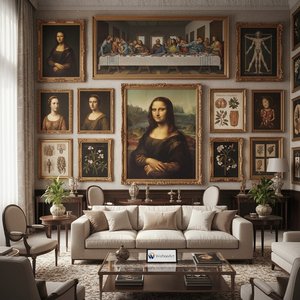
Погрузитесь в мир гения Леонардо да Винчи! 25 шедевров эпохи Возрождения, истории создания картин и техники великого мастера. Репродукции высокого качества для вашего интерьера на Most-Famous-Paintings.com. Откройте всю коллекцию онлайн!
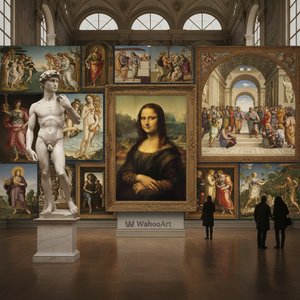
Погрузитесь в эпоху Возрождения! Откройте 10 шедевров Леонардо да Винчи, Микеланджело и Рафаэля. История искусства, техники живописи и вдохновение для вашего интерьера. Репродукции картин Ренессанса премиум-качества на Most-Famous-Paintings.com


Будьте в курсе последних новостей из мира искусства, эксклюзивных предложений и идей для оформления интерьера.
Расскажите нам о вашем проекте, и наши эксперты по искусству предложат вам 3 персонализированных варианта произведений искусства.
Мы подберем для вас 3 варианта — бесплатно!


 Предпросмотр
 Поделиться
 Поделиться
 Детали произведения

 Скачать
 Похожие работы
 Рентгенография
 Слайд-шоу
 Читать далее







 Вариант со стеклом доступен только для размеров менее 110 см


