x

Ručne maľovaný olej na plátne vo vašej zvolenej veľkosti a v ráme, vyrobený na mieru našimi umelcami. ( Prejsť na tlač Prepnúť na obrázok)





























Vyberte si z našich preddefinovaných rozmerov, ktoré zodpovedajú pôvodným pomeroḿ diela.

Môžete zadať vlastné rozmery tak, aby sa hodili do konkrétneho rámu alebo priestoru. Ak sa váš zvolený rozmer nezhoduje s pôvodnými proporciami obrazu, dielo buď orezáme, alebo ho doplníme ručne maľovanými prvkami. Pred začiatkom výroby vám zašleme digitálny náhľad na schválenie.
Upozorňujeme, že ukážka na obrazovke neodráža skutočné orezanie alebo doplnenie. Skutočnú finálnu kompozíciu zobrazuje iba digitálny náhľad.
Hoci sú k dispozícii vlastné rozmery, odporúčame vybrať rozmer z preddefinovaného zoznamu, aby sme zachovali pôvodné proporcie.
Celosvetová doprava () za 3 až 4 týždne namiesto štandardných 5 týždňov. (8 august). Bez kompromisov v kvalite.


Double Portrait of Jean de Dinteville and Georges de Selve (aka The Ambassadors)
Veľkosť reprodukcie
Hans Holbein the Younger’s “Double Portrait of Jean de Dinteville and Georges de Selve,” more famously known as “The Ambassadors,” stands as a monumental achievement in Renaissance portraiture. Painted in 1533, this masterpiece housed within the National Gallery in London transcends mere representation; it's a complex tapestry woven with symbolism, intellectual references, and artistic innovation that continues to captivate viewers centuries later.
The painting depicts Jean de Dinteville, the French ambassador to England, and Georges de Selve, a Catholic bishop. Holbein masterfully captures their individual personalities through meticulous detail in their attire and expressions. De Dinteville, on the left, exudes confidence with his richly adorned clothing and commanding presence. De Selve, positioned to the right, presents a more contemplative demeanor, his refined features suggesting intellectual depth. The style is characteristic of Northern Renaissance portraiture – highly realistic, emphasizing texture and detail, and imbued with symbolic meaning. Holbein’s skill in rendering fabrics, jewelry, and facial expressions is unparalleled, creating an almost photographic realism within the context of 16th-century painting.
Holbein employed oil on panel, a technique that allowed for incredible detail and subtle gradations of color. The painting’s most striking technical innovation is the inclusion of an anamorphic skull in the foreground. This distorted image appears as a blurred shape when viewed directly but resolves into a clear depiction of a skull when seen from a specific oblique angle. This clever visual trick serves as a *memento mori*, a reminder of mortality amidst the opulence and intellectual pursuits represented by the two ambassadors. The use of anamorphic perspective was groundbreaking for its time, showcasing Holbein’s artistic ingenuity and his engagement with contemporary scientific advancements.
“The Ambassadors” was created during a period of significant religious and political upheaval in Europe. Henry VIII's break from the Roman Catholic Church, the rise of Protestantism (represented by Martin Luther’s hymnal open on the table), and diplomatic tensions between England and France all contribute to the painting’s layered meaning. The objects arranged on the two shelves—globes, scientific instruments, musical instruments, books—are not merely decorative; they are carefully chosen symbols representing fields of knowledge, earthly pleasures, and religious discord. The broken lute string is a particularly poignant symbol of disharmony within Christendom. These symbolic elements elevate the portrait beyond a simple depiction of individuals to a commentary on the intellectual and spiritual climate of the era.
“The Ambassadors” evokes a sense of both grandeur and melancholy. The ambassadors’ wealth and status are undeniable, yet the presence of the *memento mori* skull subtly reminds viewers of the fleeting nature of earthly power and possessions. Holbein's masterful technique and intricate symbolism invite contemplation on themes of mortality, faith, knowledge, and diplomacy. This painting remains a powerful testament to the artistic genius of Hans Holbein the Younger and provides an invaluable window into the complex intellectual and cultural landscape of the Renaissance.

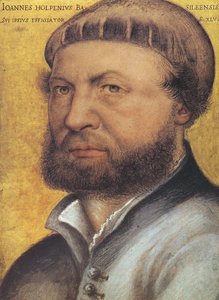
1497 - 1543 , Nemecko

Explore the life & art of Hans Holbein the Younger, a Renaissance master renowned for his strikingly realistic portraits and psychological insight. Discover iconic works like 'The Ambassadors' and delve into his lasting legacy.
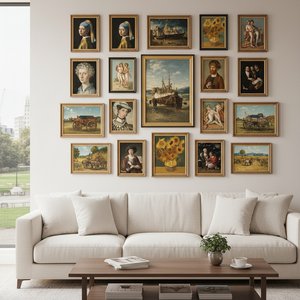
Objavte 25 ikonických diel z National Gallery v Londýne! Van Gogh, Monet, Rembrandt a ďalší majstri. Prežite príbehy umenia a nájdite dokonalé plátno pre váš interiér na Most-Famous-Paintings.com – kvalita múzejnej úrovne.

Explore the breathtaking precision of Hans Holbein the Younger. From Tudor royal portraits to intricate Northern Renaissance details, discover the mastery behind his legendary works and learn how to bring this historical grandeur into your collection with museum-quality reproductions.

Explore the rich history of formal portraiture & its enduring power to capture identity and shape perception. Discover investment-worthy artworks, expert appraisals, and custom reproduction services at Most-Famous-Paintings.
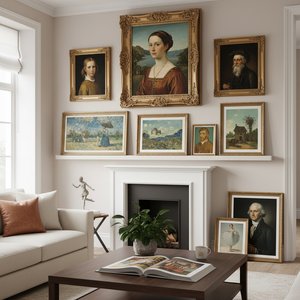
Objavte top 25 diel Národnej galérie umenia vo Washingtone! Prežite príbehy Cézanna, Matissea a Picassa. Reprodukcie obrazov pre luxusný interiér na Most-Famous-Paintings.com – múzejná kvalita a inšpirácia pre váš domov.


Zostaňte v obraze s najnovšími správami zo sveta umenia, exkluzívnymi ponukami a nápormi na dekoráciu.
Povedzte nám o svojom projekte a naši odborníci na umenie vám pripravia 3 personalizované návrhy umeleckých diel.
Nechajte si od nás vybrať 3 možnosti priamo pre vás – zadarmo!


 Odoslať
 Zdieľať
 Podrobnosti o dielo

 Stiahnuť
 Podobné diela
 Prezentácia


 Zobraziť viac







 Možnosť skla je dostupná len pri rozmeroch pod 110 cm