x

Giclée ali platnati odtis muzejske kakovosti z hitro proizvodnjo in prilagodljivimi možnostmi končne obdelave. ( Kupi ročno naslikano sliko Kupi digitalno sliko)





























Izberite eno od naših vnaprej določenih velikosti, ki ustrezajo prvotnim proporcijam umetničkega dela.

Svoje dimenzije lahko vnesete sami, da bodo ustrezne za določen okvir ali prostor. Če izbrana velikost ne bo skladna z razmerji izvirne slike, bomo umetniško delo orezali ali podaljšali s pomočjo ogledalnega odraza ali barvno polnega roba. Pred začetkom proizvodnje vam bomo poslali digitalni predogled za potrditev.
Upoštevajte, da predogled na zaslonu ne prikazuje dejanskega orezovanja ali podaljševanja. Le digitalni predogled bo natančno prikazal končno kompozicijo.
Čeprav so na voljo prilagojene velikosti, priporočamo izbiro dimenzije s predhodno določenega seznama, da ohranite prvotna razmerja.
Globalna dostava () v 2 tednih namesto standardnih 4/5 tednov. (14 avgust)


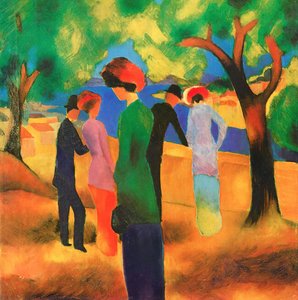
Colored Composition of Forms, 1914
Velikost reprodukcije
August Macke's Colored Composition of Forms, painted in the tumultuous year of 1914, is a captivating testament to the burgeoning energy of German Expressionism. This vibrant work, dominated by a central tennis racket – a seemingly mundane object elevated to symbolic importance – embodies Macke’s exploration of modern life and his desire to capture fleeting moments of intense feeling. The painting isn't simply a depiction; it’s an emotional resonance rendered in bold color and fractured forms. Created just months before the artist’s untimely death at the age of 27, the work carries with it the weight of a generation poised on the brink of war, reflecting both optimism and a profound sense of unease.
Macke’s use of color is utterly crucial to understanding this work. He rejects naturalistic representation in favor of an intensely chromatic approach. The palette – a riot of blues, greens, yellows, and reds – isn’t intended to mimic reality but rather to convey emotion directly. The vibrant hues evoke a sense of energy, excitement, and perhaps even anxiety. Notice how the cooler tones of blue and green are juxtaposed with the warmer shades of yellow and red, creating visual tension and amplifying the painting's emotional impact. This deliberate manipulation of color aligns perfectly with the Expressionist desire to express inner feelings rather than simply depict external appearances.
The inclusion of seemingly random objects – a bowl, a cup, and other scattered items – adds layers of symbolic meaning. These fragments could represent the brokenness of modern life, the anxieties surrounding rapid industrialization, or perhaps even the artist’s own fragmented state of mind. Painted in 1914, a year marked by political instability and impending war, the work resonates with the broader historical context of the time. Macke was deeply concerned with portraying the experiences of ordinary people – particularly children – and his art reflects this social consciousness.
Colored Composition of Forms is more than just a visually striking painting; it’s an emotionally charged experience. The dynamic composition, bold colors, and fragmented forms combine to create a powerful sense of movement and energy. Macke's work foreshadowed the key tenets of Expressionism – a focus on subjective emotion, distortion of form, and the use of color as a primary means of expression. It stands as a poignant reminder of a brilliant artist’s tragically short career and his significant contribution to the development of modern art.


1887 - 1914 , Nemčija

Explore the visceral power of German Expressionism. From Ernst Ludwig Kirchner to Die Brücke, discover how bold colors and distorted forms unmask raw human emotion in this expert art history guide for collectors and enthusiasts.

Explore the raw realism of Neue Sachlichkeit. Discover how German New Objectivity artists like Otto Dix and George Grosz captured the turbulent Weimar Republic through unflinching social critique and precise detail. A definitive guide for art historians and collectors.


Bodite na sešte, s najnovejšimi novicami iz sveta umetnosti, ekskluzivnimi ponudbami in idejami za dekoracijo.
Povejte nam o svojem projektu in naši strokovnjaki za umetnost vam bodo pripravili 3 prilagojene predloge umetniških del.
Naj vam izberemo 3 možnosti – popolnoma brezplačno!


 Predogled
 Pošlji
 Deli
Deli
 Podrobnosti o delu

 Prenesi
 Podobni izdelki
 Rentgenski posnetek
 Predvajaj diaporama


 Razviljaj več







 Možnost stekla je na voljo le za velikosti pod 110 cm