x

 Sculpture BronzeSculptureModern Sculpture
 1956
1956 52.0 x 80.0 cm
 The Hepworth Wakefield
Giclée ali platnati odtis muzejske kakovosti z hitro proizvodnjo in prilagodljivimi možnostmi končne obdelave. ( Kupi ročno naslikano sliko Kupi digitalno sliko)
Izberite eno od naših vnaprej določenih velikosti, ki ustrezajo prvotnim proporcijam umetničkega dela.

Svoje dimenzije lahko vnesete sami, da bodo ustrezne za določen okvir ali prostor. Če izbrana velikost ne bo skladna z razmerji izvirne slike, bomo umetniško delo orezali ali podaljšali s pomočjo ogledalnega odraza ali barvno polnega roba. Pred začetkom proizvodnje vam bomo poslali digitalni predogled za potrditev.
Upoštevajte, da predogled na zaslonu ne prikazuje dejanskega orezovanja ali podaljševanja. Le digitalni predogled bo natančno prikazal končno kompozicijo.
Čeprav so na voljo prilagojene velikosti, priporočamo izbiro dimenzije s predhodno določenega seznama, da ohranite prvotna razmerja.
Globalna dostava () v 2 tednih namesto standardnih 4/5 tednov. (18 avgust)


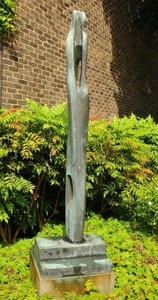
Curved Forms (Pavan)
Velikost reprodukcije
Barbara Hepworth (1903–1975) stands as one of the most influential figures in British sculpture of the mid-20th century, a pioneer who championed abstraction and sought to capture the essence of organic forms—particularly those found in nature. Her oeuvre is characterized by monumental sculptures crafted from materials like bronze, stone, and alabaster, yet “Curved Forms (Pavan),” created in 1956, exemplifies her distinctive approach: metallized plaster cast on aluminum armature.
Inspired by the graceful Pavan dance—a stately court dance of Elizabethan England—Hepworth’s sculpture transcends mere imitation. Instead, it embodies her profound fascination with movement and transformation. As Hepworth herself eloquently described, she aimed to “capture ‘the spiritual inner life’ of art,” striving not just for visual representation but for conveying a sense of dynamism and interconnectedness.
Hepworth's method was revolutionary for its time. Rejecting the traditional modeling techniques favored by many sculptors, she opted for a process that prioritized resistance—the interaction between sculptor and material. She constructed an aluminum armature – a skeletal framework – providing structural support while allowing her to manipulate the plaster surface with precision.
"Curved Forms (Pavan)" isn't merely a beautiful object; it’s laden with symbolic significance. The three interconnected ovoids represent Hepworth’s belief in the fundamental unity of existence—the idea that all things are interdependent and constantly evolving. Their flowing curves mirror the movement of water or wind, symbolizing fluidity and adaptability.
Hepworth's aesthetic vision was rooted in a deep appreciation for natural forms and a desire to express their underlying principles. She sought to distill the essence of organic shapes into simplified geometric forms, creating sculptures that evoke contemplation and invite viewers to consider the relationship between form and space.
"Curved Forms (Pavan)" resides in The Hepworth Wakefield’s collection, a testament to Hepworth's enduring influence on modern sculpture. Its placement alongside other works by Hepworth underscores her commitment to exploring themes of spirituality and materiality—a legacy that continues to inspire artists and collectors alike.
The sculpture’s distinctive monochromatic surface – achieved through careful polishing – enhances its visual impact, emphasizing the texture and contours of the form while creating a serene atmosphere. As Hepworth herself noted, “Curved Forms (Pavan), Version II” embodies "the spiritual inner life" of art—a profound statement that encapsulates her artistic philosophy.


1903 - 1975 , Združeno kraljestvo

Discover the sophisticated world of metal art. From industrial grace to contemporary sculpture, our expert guide explores how premium metallic masterpieces elevate luxury interiors for discerning collectors seeking timeless elegance and investment-grade artistry.

Explore the profound history of sculpture, from classical realism to modern abstraction. Discover the mastery of form, texture, and medium through an expert art-historical lens designed for discerning collectors and enthusiasts.
Elevate your collection with our expert guide to bronze sculpture. Discover the mastery of lost-wax casting, the artistry of patination, and professional insights for acquiring timeless metal masterpieces that define sophisticated interiors.


Bodite na sešte, s najnovejšimi novicami iz sveta umetnosti, ekskluzivnimi ponudbami in idejami za dekoracijo.
Povejte nam o svojem projektu in naši strokovnjaki za umetnost vam bodo pripravili 3 prilagojene predloge umetniških del.
Naj vam izberemo 3 možnosti – popolnoma brezplačno!


 Pošlji
 Deli
Deli
 Podrobnosti o delu

 Prenesi
 Podobni izdelki
 Predvajaj diaporama
 Razviljaj več




































 Možnost stekla je na voljo le za velikosti pod 110 cm