x

Ročno slikano olje na platnu v vaši izbiri velikosti in okvirja, izdelano po naročilu naših umetnikov. ( Kupi tisk Kupi digitalno sliko)





























Izberite eno od naših vnaprej določenih velikosti, ki ustrezajo prvotnim proporcijam umetničkega dela.

Svoje dimenzije lahko vnesete tako, da se prilagodite določenemu okvirju ali prostoru. Če izbrana velikost ne ustreza razmerjem originalne slike, bomo umetniško delo obrezali ali sliko dopolnili z dodatnimi ročno naslikanimi elementi. Pred začetkom proizvodnje vam bo poslan digitalni osnutek v odobritev.
Upoštevajte, da predogled na zaslonu ne odraža dejanskega obrezovanja ali podaljšanja. Le osnutek bo natančno prikazal končno kompozicijo.
Čeprav so na voljo velikosti po meri, priporočamo izbiro dimenzije s preddefiniranega seznama, da ohranimo originalne razmere.
Svetska dostava () za 3/4 nedelje umesto uobičajenih 5 nedelja. (13 avgust). Bez kompromisa po pitanju kvaliteta.


untitled (1574)
Velikost reprodukcije
Michelangelo Merisi da Caravaggio, a name that reverberates through the annals of Baroque art history, wasn't merely a painter; he was a revolutionary who fundamentally altered artistic conventions. Born in Milan in 1571 amidst the turbulent backdrop of plague and familial loss—experiences profoundly shaping his worldview—Caravaggio’s early life instilled within him an unwavering empathy for human suffering, a preoccupation that would become central to his oeuvre.
His formative training under Simone Peterzano, a former pupil of Titian, provided him with the foundational skills of Renaissance painting. However, Caravaggio swiftly rejected these established traditions, forging instead a path characterized by audacious experimentation and an uncompromising commitment to realism. This rebellious spirit found its ultimate expression in Rome around 1592, where he wrestled for recognition amidst fierce competition and endured considerable hardship—challenges that fueled his artistic drive.
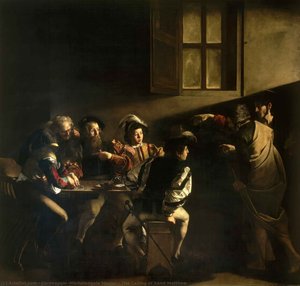
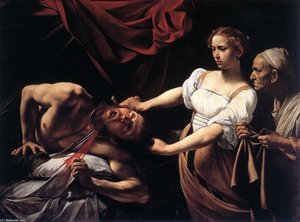
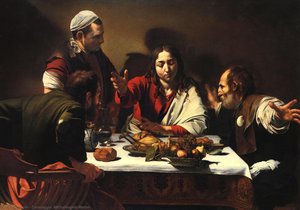
Caravaggio's genius lay not just in depicting biblical narratives with visceral immediacy but also in mastering a technique known as tenebrism – dramatic chiaroscuro. Unlike the subtle gradations of light prevalent in earlier Renaissance art, Caravaggio employed stark contrasts between darkness and illumination, creating an unsettling yet profoundly captivating visual experience. This masterful manipulation of light wasn’t merely stylistic; it served to heighten emotional impact, drawing viewers into the scene and emphasizing key figures—particularly Jesus—amidst oppressive gloom.
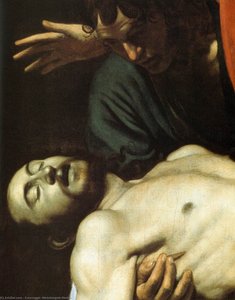
“Untitled (1574)” exemplifies Caravaggio's signature style perfectly. The depiction of Christ crucified embodies the core tenets of Baroque religious art: unflinching realism combined with intense emotional expression. The artist meticulously rendered every detail—the musculature of Jesus’s body, the texture of his garments—creating a portrait that transcends mere representation and aspires to evoke profound contemplation.
The inclusion of subtle symbolic elements – the book at the bottom left corner representing divine wisdom, and the vase atop the cross symbolizing resurrection – reinforces Caravaggio's thematic preoccupation with faith and redemption. The painting’s overall composition compels viewers to confront mortality and grapple with questions of spiritual significance.
Caravaggio’s influence extended far beyond the confines of Rome, impacting artists across Europe—most notably Rubens and Rembrandt—who adopted his tenebristic style. His groundbreaking approach irrevocably altered the course of Baroque painting, establishing a precedent for dramatic lighting and psychological depth that continues to inspire artists today.

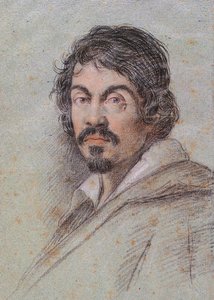
1571 - 1610 , Španija

Explore the dramatic world of Italian Baroque art. Discover how masters like Caravaggio used chiaroscuro and tenebrism to revolutionize painting through light, shadow, and profound realism. A definitive guide for history lovers and art collectors.

Explore the profound elegance of Baroque Classicism. Discover how 17th-century masters synthesized dramatic emotion with classical order through the lens of the Counter-Reformation and the works of legends like Carlo Maratta and Andrea Sacchi.

Explore the dramatic world of Baroque painting. Discover how masters like Caravaggio used chiaroscuro to evoke emotion, the historical impact of the Counter-Reformation, and how you can bring these museum-quality masterpieces into your home through exquisite hand-painted reproductions.


Bodite na sešte, s najnovejšimi novicami iz sveta umetnosti, ekskluzivnimi ponudbami in idejami za dekoracijo.
Povejte nam o svojem projektu in naši strokovnjaki za umetnost vam bodo pripravili 3 prilagojene predloge umetniških del.
Naj vam izberemo 3 možnosti – popolnoma brezplačno!


 Predogled
 Pošlji
 Deli
Deli
 Podrobnosti o delu

 Prenesi
 Podobni izdelki
 Rentgenski posnetek
 Predvajaj diaporama
 Razviljaj več







 Možnost stekla je na voljo le za velikosti pod 110 cm