x

 Olje na platnuStenska umetnostAmerican Realism
 1940Moderna doba
 56.0 x 64.0 cm
Giclée ali platnati odtis muzejske kakovosti z hitro proizvodnjo in prilagodljivimi možnostmi končne obdelave. ( Kupi ročno naslikano sliko Kupi digitalno sliko)





























Izberite eno od naših vnaprej določenih velikosti, ki ustrezajo prvotnim proporcijam umetničkega dela.

Svoje dimenzije lahko vnesete sami, da bodo ustrezne za določen okvir ali prostor. Če izbrana velikost ne bo skladna z razmerji izvirne slike, bomo umetniško delo orezali ali podaljšali s pomočjo ogledalnega odraza ali barvno polnega roba. Pred začetkom proizvodnje vam bomo poslali digitalni predogled za potrditev.
Upoštevajte, da predogled na zaslonu ne prikazuje dejanskega orezovanja ali podaljševanja. Le digitalni predogled bo natančno prikazal končno kompozicijo.
Čeprav so na voljo prilagojene velikosti, priporočamo izbiro dimenzije s predhodno določenega seznama, da ohranite prvotna razmerja.
Globalna dostava () v 2 tednih namesto standardnih 4/5 tednov. (17 avgust)


Urad ponoči
Velikost reprodukcije
Edward Hopper's "Office at Night," painted in 1940, isn’t merely a depiction of an office scene; it's a profound exploration of the human condition within the burgeoning modernity of mid-20th century America. The painting hangs as a quiet testament to routine, isolation, and the subtle melancholy that permeated daily life during a period of significant social and economic change. It invites us into a space both familiar and unsettling, where the mundane becomes imbued with a deep sense of introspection.
Hopper’s mastery lies in his ability to capture reality not as it appears superficially, but as it *feels*. "Office at Night" exemplifies American realism through its meticulous attention to detail – the wooden furniture, the filing cabinet, the carefully rendered window frames. Yet, this isn't a photographic reproduction; Hopper subtly manipulates perspective and light to create an atmosphere of quiet tension. The color palette is deliberately restrained—greens, browns, and grays dominate, creating a sense of muted formality. However, the woman’s striking blue dress acts as a focal point, drawing the eye and injecting a touch of vibrancy into the otherwise somber scene. Notice how Hopper uses vertical lines from the filing cabinet and door frame to establish order and stability, counterbalanced by the softer curves of the figures' faces and the man’s spectacles – a delicate interplay that prevents the composition from feeling overly rigid.
Created during the early years of World War II, "Office at Night" reflects the anxieties and uncertainties of the time. The painting subtly hints at themes of work, routine, and a pervasive sense of isolation that characterized many American workplaces. The presence of the typewriter—a symbol of burgeoning communication technology—adds a nostalgic touch, grounding the scene firmly in its historical context. But beyond the literal depiction of an office, Hopper uses symbolism to evoke deeper emotions. The figures themselves seem lost in their tasks, disconnected from one another despite sharing the same space. Are they engaged in meaningful work, or simply going through the motions? The artificial lighting casts long shadows, further emphasizing a sense of detachment and quiet introspection. It’s as if we are peering into a world where human connection is fleeting, and solitude reigns supreme.
What makes "Office at Night" so compelling isn't just its technical skill or historical significance; it's the profound emotional resonance it evokes. Hopper doesn’t offer easy answers or grand narratives. Instead, he presents a moment—a fleeting glimpse into the lives of ordinary people—and allows us to draw our own conclusions. The painting lingers in the mind long after we’ve looked away, prompting reflection on themes of loneliness, ambition, and the quiet dignity of everyday existence. It's a testament to Hopper's genius that he could transform a seemingly mundane scene into such a powerful and enduring work of art—a mirror reflecting not just American society, but the universal human experience.


1931 - 1967 , Združene države Amerike
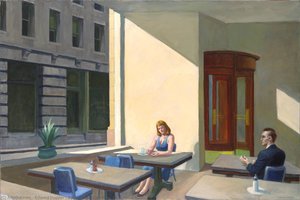
Odkrijte 25 mojstrovskih del Edwarda Hopperja – ikonične slike ameriške moderne. Preberite zgodbe, tehnike in navdih za te brezčasne umetnine. Reprodukcije slik visoke kakovosti na Most-Famous-Paintings.com! Raziskajte celotno zbirko online.
Explore 10 defining American Realism masterpieces – Hopper, Homer & more. Discover the stories behind these iconic paintings and bring timeless art to your home with Most-Famous-Paintings's museum-quality reproductions. Explore the full collection online.

Explore the profound world of Edward Hopper's American realism. Discover the symbolism, themes & enduring legacy of this iconic artist – from 'Nighthawks' to his lesser-known masterpieces. Expert analysis and insights.

Odkrijte 10 mojstrovin sodobnega realizma, ki so zaznamovale umetnost! Izveste o priznanih umetnikih, tehnikah in zgodbah za temi ikoničnimi deli. Najboljša zbirka slik in reprodukcij na Most-Famous-Paintings.com – najdite navdih za svoj dom!

Explore the powerful social commentary & artistic representation of American Realism. Discover key artists like Bellows & Sloan, and understand the movement's lasting impact on 20th-century art history.


Bodite na sešte, s najnovejšimi novicami iz sveta umetnosti, ekskluzivnimi ponudbami in idejami za dekoracijo.
Povejte nam o svojem projektu in naši strokovnjaki za umetnost vam bodo pripravili 3 prilagojene predloge umetniških del.
Naj vam izberemo 3 možnosti – popolnoma brezplačno!


 Predogled
 Pošlji
 Deli
Deli
 Podrobnosti o delu

 Prenesi
 Podobni izdelki
 Rentgenski posnetek
 Predvajaj diaporama
 Razviljaj več







 Možnost stekla je na voljo le za velikosti pod 110 cm