x

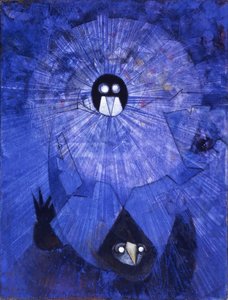
 1959
1959 183.0 x 121.0 cm
Ročno slikano olje na platnu v vaši izbiri velikosti in okvirja, izdelano po naročilu naših umetnikov. ( Kupi tisk Kupi digitalno sliko)
Izberite eno od naših vnaprej določenih velikosti, ki ustrezajo prvotnim proporcijam umetničkega dela.

Svoje dimenzije lahko vnesete tako, da se prilagodite določenemu okvirju ali prostoru. Če izbrana velikost ne ustreza razmerjem originalne slike, bomo umetniško delo obrezali ali sliko dopolnili z dodatnimi ročno naslikanimi elementi. Pred začetkom proizvodnje vam bo poslan digitalni osnutek v odobritev.
Upoštevajte, da predogled na zaslonu ne odraža dejanskega obrezovanja ali podaljšanja. Le osnutek bo natančno prikazal končno kompozicijo.
Čeprav so na voljo velikosti po meri, priporočamo izbiro dimenzije s preddefiniranega seznama, da ohranimo originalne razmere.
Svetska dostava () za 3/4 nedelje umesto uobičajenih 5 nedelja. (19 avgust). Bez kompromisa po pitanju kvaliteta.


The Delta
Velikost reprodukcije

Fritz Bultman stands as a luminous, if sometimes overlooked, pillar of the Abstract Expressionist movement, a creator whose work transcended the boundaries of medium to achieve a rare, holistic synthesis of form. Born in 1919 in the culturally rich landscape of New Orleans, Bultman’s early life was steeped in an environment where visual aesthetics and tradition intertwined. The son of a prominent funeral director, his childhood fascination with art was nurtured by close connections to fellow artists like Morris Graves. This early exposure to the power of imagery laid the foundation for a career defined by a restless, searching intellect and an uncompromising commitment to the evolution of modern abstraction.
His journey toward becoming a central figure of the New York School was marked by a series of profound geographical and intellectual shifts. In 1935, as a young student, Bultman traveled to Munich, a period that would fundamentally reshape his artistic DNA. It was here that he encountered the influential Maria Hofmann, whose presence served as a bridge to the legendary Hans Hofmann. This connection proved transformative; under the guidance of Hofmann’s rigorous approach to color and space, Bultman moved toward New York and Provincetown, absorbing the burgeoning energy of American avant-garde art. His early canvases, often described as rough and painterly, began to exhibit a unique tension between symbolic depth and geometric precision, creating a language that was both visceral and meticulously organized.
What truly distinguished Bultman from his contemporaries in the New York School was his refusal to be confined by the two-dimensional plane. While many of his peers focused exclusively on the gestural power of paint, Bultman sought a more profound integration of space and matter. Following a prestigious Fulbright Scholarship to Italy, he immersed himself in the ancient and demanding art of bronze casting in Florence. This period of technical mastery allowed him to become the sole Abstract Expressionist artist to fully weave sculpture into his creative oeuvre. His work became a dialogue between the flat surface of the canvas and the tactile reality of three-dimensional form, often utilizing collage to bridge these two worlds.
His artistic process was characterized by an extraordinary ability to balance chaos with order. Bultman’s compositions were not merely spontaneous outbursts of emotion but were carefully constructed architectures of meaning. He utilized:
This period of intense creativity was not without its shadows. Bultman faced significant personal struggles with anxiety and depression, leading to a notable hiatus in his production between 1952 and 1956. However, through the introspective process of Freudian analysis, he emerged with a renewed vigor, capable of translating his internal complexities into a more resilient and profound artistic voice.
Beyond the studio, Bultman was a man of deep conviction and social engagement. He was a prominent member of the "Irascibles," the group of defiant artists who famously protested the Metropolitan Museum of Art’s conservative biases in 1950. By signing this historic letter alongside giants like Jackson Pollock and Mark Rothko, Bultman helped assert the legitimacy of modernism in the American consciousness. His activism was not limited to the gallery walls; he possessed a profound sense of social responsibility, often using his position to advocate for greater inclusivity within the art world.
Today, Fritz Bultman is remembered as an artist of immense breadth and bravery. He did not merely participate in a movement; he expanded its very definition. Through his seamless integration of painting, sculpture, and collage, he proved that abstraction could be both physically present and spiritually resonant. His legacy remains a testament to the power of an integrated vision—a life lived at the intersection of profound personal struggle and monumental creative achievement.

1919 - 1985 , United States of America


Bodite na sešte, s najnovejšimi novicami iz sveta umetnosti, ekskluzivnimi ponudbami in idejami za dekoracijo.
Povejte nam o svojem projektu in naši strokovnjaki za umetnost vam bodo pripravili 3 prilagojene predloge umetniških del.
Naj vam izberemo 3 možnosti – popolnoma brezplačno!


 Predogled
 Pošlji
 Deli
Deli
 Podrobnosti o delu

 Prenesi
 Podobni izdelki
 Rentgenski posnetek
 Predvajaj diaporama
 Razviljaj več




































 Možnost stekla je na voljo le za velikosti pod 110 cm