Prodajajte svojo umetnost
Lista želja Nakupovalni košarica Cart
PredogledPredogled AR predogledAR predogled Kupi ročno naslikano sliko Kupi ročno naslikano slikoKupi digitalno sliko Kupi digitalno sliko PošljiPošlji
Podrobnosti o deluPodrobnosti o delu Dodaj v priljubljene Dodaj v priljubljene PrenesiPrenesi Podobni izdelkiPodobni izdelki Rentgenski posnetekRentgenski posnetek Predvajaj diaporamaPredvajaj diaporama

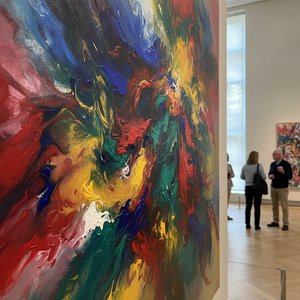
Untitled (484)

Gerhard Richter je vodilni nemški umetnik znan po abstraktnih slikah in fotografičnem realizmu ter inovativnih tehnikah, ki so oblikovali sodobno umetnost. Raziskoval je zgodovino, identiteto in pomen življenja v kompleksnem svetu.

Giclée tisk / Umetniški tisk

Giclée ali platnati odtis muzejske kakovosti z hitro proizvodnjo in prilagodljivimi možnostmi končne obdelave. (Kupi ročno naslikano sliko Kupi ročno naslikano slikoKupi digitalno sliko Kupi digitalno sliko)

P118B $10
P118H $10
P118W $10
P438Z $10
P508JH $12
P508YH $12
P805H $10
P805Z $10
P919BZ $10
P919G $10
P919XJ $10
P959ZH $10
P968JZ $12
W106C $8
W218G $10
W218JH $8
W218Y $10
W307PJ $10
W316G $10
W316PJ $8
W316Y $10
W398PJ $8
W4111J $10
W500HY $15
W500JH $15
W692G $12
W849H $8
W940BG $15
W953PJ $8

Standard
custom
CM
INCH

Izberite eno od naših vnaprej določenih velikosti, ki ustrezajo prvotnim proporcijam umetničkega dela.

širina
višina

Svoje dimenzije lahko vnesete sami, da bodo ustrezne za določen okvir ali prostor. Če izbrana velikost ne bo skladna z razmerji izvirne slike, bomo umetniško delo orezali ali podaljšali s pomočjo ogledalnega odraza ali barvno polnega roba. Pred začetkom proizvodnje vam bomo poslali digitalni predogled za potrditev.
Upoštevajte, da predogled na zaslonu ne prikazuje dejanskega orezovanja ali podaljševanja. Le digitalni predogled bo natančno prikazal končno kompozicijo.
Čeprav so na voljo prilagojene velikosti, priporočamo izbiro dimenzije s predhodno določenega seznama, da ohranite prvotna razmerja.

Globalna dostava () v 2 tednih namesto standardnih 4/5 tednov. (21 avgust)

why_choose_icon
Brezplačna ekspresna dostava po vsem svetu
why_choose_icon
Visokokakovostno laneno platno
why_choose_icon
Popolno zavarovanje pošiljke
why_choose_icon
Garancija povračila carine in uvoznih davkov
why_choose_icon
Garancija popolnega ujemanja barv
why_choose_icon
60-dnevna politika vračanja (le v primeru napak)
why_choose_icon
Garancija 100% povračila denarja
why_choose_icon
Popust pri večjem naročilu

Skupna cena

$ 68

reproduction

Untitled (484)

Giclée tisk / Umetniški tisk

Velikost reprodukcije

-

Skupna končna cena

$ 68

Ključni podatki

  • Artist: Gerhard Richter
  • Location: Private Collection
  • Influences: Minimalism
  • Notable elements or techniques: Blurring and scraping paint
  • Artistic style: Photorealistic abstraction
  • Title: Untitled (484)

Umetniški kviz

Pri vsakem vprašanju je na voljo le eden pravilen odgovor.

Vprašanje 1:
What artistic movement is Gerhard Richter’s Untitled (484) primarily associated with?
Vprašanje 2:
The photograph depicts a painting created using which medium?
Vprašanje 3:
What is the dominant color palette of Untitled (484)?
Vprašanje 4:
The jagged line in the composition contributes to which visual element?
Vprašanje 5:
Based on the description, what stylistic technique is Richter employing?

Opis zbirateljskega predmeta

A Landscape Suspended Between Reality and Illusion

Gerhard Richter’s “Untitled (484)” isn't merely a depiction of a landscape; it’s an exploration of perception itself. Captured as a photograph of a painting—likely executed in oil on canvas—the artwork immediately invites contemplation about the process of representation and how our eyes interpret visual information. Richter, renowned for his pioneering use of photorealistic techniques alongside abstract explorations, presents here a masterful blend of observation and artistic intervention.

Compositional Layers: Echoes of Geological Time

The image’s horizontal bands dominate the canvas, creating an illusion of depth reminiscent of geological strata or atmospheric perspective. A prominent jagged line bisects the composition, injecting dynamism into what might otherwise appear static. This deliberate structuring isn't accidental; it reflects Richter’s fascination with layering and repetition—themes central to his artistic vocabulary.

Chromatic Harmony: Cool Tones Convey Transience

The color palette leans heavily towards cool hues – shades of purple, grey, and white – skillfully manipulated to evoke a sense of melancholy and quiet contemplation. Subtle variations within each band suggest a range of tonal nuances rather than flat blocks of color. The upper band bursts with brighter whites and lighter purples, hinting at illumination, while the lower sections descend into darker greys and muted violets, symbolizing obscurity and perhaps the passage of time. Richter’s masterful use of color contributes significantly to the artwork's emotional resonance.

Technique: Blur and Scraping – The Alchemy of Texture

Richter’s signature technique—characterized by blurring and scraping away paint—is evident in this image, mirroring his broader approach to creating textured surfaces. Although the photograph captures a static representation, it speaks volumes about the original artwork's process. Richter deliberately disrupts the surface, revealing glimpses of underlying layers and hinting at the physicality of painting itself – a deliberate rejection of traditional illusionistic realism.

Symbolic Resonance: Dusk’s Embrace

"Untitled (484)" subtly conveys a mood of twilight—a moment between day and night—suggesting transience and vulnerability. The hazy quality invites viewers to consider the ephemeral nature of experience, mirroring Richter's broader preoccupation with capturing fleeting impressions. Ultimately, this artwork transcends mere visual representation; it’s an invitation to engage in a dialogue about perception, memory, and the enduring power of artistic abstraction.


Biografija umetnika

A Life Shaped by Division: The Early Years and Artistic Formation of Gerhard Richter

Gerhard Richter’s story is inextricably linked to the fractured history of 20th-century Germany. Born in Dresden in 1932, his childhood unfolded under the shadow of a rising National Socialist regime. This formative period, marked by displacement – his family moved several times during the war years – instilled within him a profound sense of uncertainty and a questioning spirit that would permeate his artistic practice for decades to come. The idyllic landscapes of his early upbringing in Reichenau and Waltersdorf were soon disrupted by conflict, leaving an indelible mark on his psyche. His father, though not a fervent supporter of the Nazi party, navigated the complexities of life under authoritarian rule as a schoolteacher, while his mother fostered a love for literature and music within the family. This duality – a pragmatic acceptance of circumstance alongside a yearning for cultural expression – became a defining characteristic of Richter’s own artistic approach. He began formal training at the Dresden Academy of Fine Arts in 1951, initially immersed in the tradition of socialist realism demanded by the East German state. However, even within this constrained environment, a desire for artistic freedom simmered beneath the surface, fueled by a growing dissatisfaction with ideological constraints and a longing to explore more expansive creative possibilities.

Escaping Constraints: Düsseldorf and the Exploration of Style

The year 1961 proved pivotal. Richter, along with his wife Marianne Eufinger, made the daring decision to flee East Germany, seeking refuge in the burgeoning art scene of Düsseldorf. This move marked a radical shift in his artistic trajectory. The West German landscape offered a liberating environment where experimentation and innovation were not only permitted but actively encouraged. In Düsseldorf, he encountered a vibrant community of artists grappling with questions of identity, representation, and the legacy of history. He quickly began to dismantle the rigid stylistic conventions of socialist realism, embarking on a period of intense exploration that would define his early mature work. This era saw him oscillate between seemingly disparate approaches – from photorealism, meticulously recreating photographic images with astonishing precision, to abstract compositions characterized by bold colors and dynamic brushstrokes. His collaboration with Sigmar Polke led to the coining of the term ‘Capitalist Realism,’ a deliberately ambiguous label that reflected their shared skepticism towards established artistic norms and their appropriation of imagery from advertising and mass media. This period wasn’t about finding *a* style, but rather questioning the very notion of stylistic coherence, embracing contradiction as a fundamental principle.

Blurring Boundaries: Photorealism, Abstraction, and the Power of Chance

Richter's artistic vocabulary expanded throughout the 1960s and beyond, encompassing a remarkable range of techniques and themes. His photorealistic paintings, often based on family photographs or newspaper images, are not merely copies of reality but rather investigations into the nature of perception and representation. By meticulously rendering these images with an almost clinical detachment, he forces viewers to confront the inherent ambiguity of photographic truth. Simultaneously, Richter delved deeper into abstraction, creating canvases layered with vibrant colors and gestural marks. These abstract works are often created using a unique technique involving squeegees – tools typically used for cleaning windows – which he drags across the surface of the canvas, manipulating the paint in unpredictable ways. This embrace of chance and spontaneity is central to his artistic philosophy, allowing him to relinquish control and invite unexpected outcomes. His ‘Color Charts,’ systematic arrangements of colored squares, further challenge traditional notions of artistic expression, questioning the very definition of painting itself. These works are not about individual aesthetic preferences but rather about exploring the inherent properties of color and its organizational possibilities.

Major Achievements and Artistic Influence

Richter’s contribution to contemporary art is undeniable. He has consistently resisted easy categorization, defying attempts to pigeonhole his work into a single stylistic framework. This refusal to be defined, coupled with his technical virtuosity and intellectual rigor, has earned him widespread critical acclaim and commercial success – his paintings regularly fetch record prices at auction. Beyond the market value, however, lies a deeper significance. Richter’s art speaks to the complexities of modern existence, grappling with issues of memory, identity, and the search for meaning in a fragmented world. He doesn't offer answers but rather poses questions, prompting viewers to confront their own preconceptions and engage in critical dialogue. His influence can be seen in the work of countless artists who have followed in his footsteps, drawn to his innovative techniques and his unwavering commitment to artistic exploration. Richter’s legacy is not simply about creating beautiful objects; it's about expanding the possibilities of painting itself. He remains a vital force in contemporary art, continuing to inspire and provoke audiences with his challenging and deeply resonant work.
Gerhard Michalski

Gerhard Michalski

1932 - , Nemčija

Hitri podatki

  • Artistic Movement Or Style:
    • Lovski pilot
    • Fotorealizem
  • Artists Or Movements Influenced By This Artist: ['Sigmar Polke']
  • Artists Who Influenced This Artist:
    • Pablo Picasso
    • Jean Arp
  • Date Of Birth: 25. junij 1917
  • Full Name: Gerhard Michalski
  • Nationality: Nemški
  • Notable Artworks:
    • Lovski pilot
    • Živo barvo
  • Place Of Birth: Augsdorf, Nemčija
Raziščite umetniška dela, razvrščena po temah, slogih in značilnostih.