x


 Preview
 Kupi tiskanino Kupi digitalno sliko
 Pošlji
 Podrobnosti o delu
 Dodaj v priljubljene
 Prenesi
 Podobni izdelki
 Rentgenski posnetek
 Predvajaj diaporama
Ročno slikano olje na platnu v vaši izbiri velikosti in okvirja, izdelano po naročilu naših umetnikov.





























Izberite eno od naših vnaprej določenih velikosti, ki ustrezajo prvotnim proporcijam umetničkega dela.

Svoje dimenzije lahko vnesete tako, da se prilagodite določenemu okvirju ali prostoru. Če izbrana velikost ne ustreza razmerjem originalne slike, bomo umetniško delo obrezali ali sliko dopolnili z dodatnimi ročno naslikanimi elementi. Pred začetkom proizvodnje vam bo poslan digitalni osnutek v odobritev.
Upoštevajte, da predogled na zaslonu ne odraža dejanskega obrezovanja ali podaljšanja. Le osnutek bo natančno prikazal končno kompozicijo.
Čeprav so na voljo velikosti po meri, priporočamo izbiro dimenzije s preddefiniranega seznama, da ohranimo originalne razmere.
Svetska dostava () za 3/4 nedelje umesto uobičajenih 5 nedelja. (27 julij). Bez kompromisa po pitanju kvaliteta.


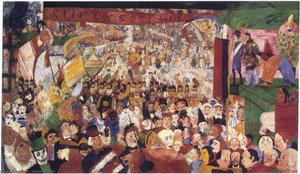
Duel de Masque
Velikost reprodukcije
James Ensor's "Duel de Masque" (c. 1890) isn’t merely a painting; it’s an immersive plunge into the unsettling heart of masquerade and social decay. This large-scale oil on canvas, largely lost to definitive documentation regarding its exact dimensions, immediately confronts the viewer with a scene brimming with theatrical excess and veiled menace. Set against a muted, almost melancholic backdrop – suggesting a bleak winter morning – it depicts a gathering of figures caught in the aftermath of a duel, their identities obscured by elaborate costumes and masks. The painting’s power lies not in dramatic action, but in its carefully constructed atmosphere of unease, hinting at hidden resentments and unspoken anxieties beneath the veneer of festive entertainment.
Ensor, born in Ostend, Belgium, to an English father and a Belgian mother, possessed a uniquely dual heritage that profoundly shaped his artistic vision. His childhood spent amidst the vibrant chaos of carnival celebrations – a world saturated with masks, puppets, and theatrical performances – became a foundational element of his oeuvre. This fascination with disguise and concealment is powerfully evident in “Duel de Masque,” where each figure embodies a carefully constructed persona, deliberately distancing themselves from genuine emotion or identity. The artist’s early exposure to this world of illusion undoubtedly fueled his exploration of the darker aspects of human nature, often presented through distorted figures and unsettling imagery.
The central motif of “Duel de Masque” – the mask itself – is far more than a simple decorative element. It represents a deliberate attempt to conceal, to create an artificial identity, and ultimately, to distance oneself from responsibility. Each character wears a costume that actively obscures their true nature: a Pierrot with a bloodied face, a Duc de Guise shrouded in velvet, a Domino clutching his head – all figures trapped within the confines of their chosen roles. The skeletal figure prominently displayed adds another layer of symbolic weight, representing mortality and the inevitable decay beneath the surface of social performance. The inclusion of a surgeon, dressed as a doge of Venice, suggests an attempt to mend wounds both physical and emotional, yet his efforts are futile against the pervasive sense of ruin.
Beyond the individual costumes, the painting’s composition contributes significantly to its unsettling effect. The figures are arranged in a deliberately claustrophobic space, creating a feeling of confinement and tension. The muted color palette – dominated by grays, browns, and blacks – further enhances this sense of gloom, while the stark lighting emphasizes the drama of the scene. The deliberate blurring of lines between reality and illusion—the painted backdrop, the theatrical costumes, the obscured faces—forces the viewer to question the nature of truth and deception.
“Duel de Masque” is widely considered a pivotal work in James Ensor's development as an artist, foreshadowing his later explorations into Expressionism and Surrealism. While he initially struggled with the rigid conventions of the Académie Royale des Beaux-Arts in Brussels, Ensor ultimately forged his own distinctive style—characterized by bold colors, distorted figures, and a preoccupation with psychological themes. His willingness to challenge artistic norms and embrace unconventional subject matter established him as a radical innovator within the Belgian art scene.
The painting’s influence extends far beyond its immediate historical context. Ensor's exploration of masks, social satire, and the anxieties of modern life resonated with artists who would later define these movements. Reproductions of “Duel de Masque,” particularly in high-quality formats offered by Most-Famous-Paintings.com, provide a powerful window into Ensor’s artistic vision—a captivating glimpse into a world where appearances are deceiving, and the masks we wear conceal profound emotional turmoil. The painting's enduring appeal lies in its ability to provoke thought and evoke a visceral response, reminding us of the complexities of human identity and the ever-present tension between appearance and reality.
James Sidney Edouard Ensor (Ostend, 13 April 1860-19 November 1949) was a Belgian painter and printmaker who stands as one of the most influential figures in the development of Expressionism and Surrealism. Born into an English father and Belgian mother—a duality that profoundly shaped his artistic worldview—Ensor defied convention from the outset, rejecting academic formalism and embracing unsettling imagery rooted in psychological exploration.
His formative years were marked by exposure to Ostend’s vibrant seaside atmosphere and his parents’ souvenir shop, which stocked exotic objects and carnival masks – stimuli that ignited his imagination and instilled a lifelong fascination with disguise. Ensor pursued formal artistic training at the Académie Royale des Beaux-Arts in Brussels, where he encountered fellow artists like Fernand Khnopff and Theo Van Rysselberghe—connections that fostered intellectual debate and propelled him beyond traditional boundaries.
Around 1886-1889 Ensor embarked on a transformative stylistic journey, abandoning Impressionistic ideals for Expressionist techniques characterized by bold brushwork and vibrant color palettes. Influenced by Rembrandt’s masterful use of chiaroscuro, Francisco Goya’s unflinching depictions of human suffering, and Japanese woodcuts—a fascination with visual symbolism—Ensor developed a distinctive iconography focused on grotesque figures and unsettling narratives.
His most celebrated works – including *Christ's Entry into Brussels* (1888-1889), *The Scandalized Masks* (1883) and *Skeletons Fighting over a Hanged Man* (1891) – exemplify Ensor’s commitment to confronting uncomfortable truths about human psychology and societal hypocrisy. Recurring themes throughout his oeuvre include death, decay, social critique, religious satire, and the boundless potential of imagination—elements that continue to resonate with audiences today.
James Ensor's uncompromising artistic vision solidified his position as a pivotal innovator in modern art, paving the way for Expressionist artists like Edvard Munch and Surrealists like René Magritte. His rejection of academic conventions and embrace of psychological depth profoundly impacted subsequent generations of painters—establishing him as an enduring symbol of artistic rebellion and intellectual courage.

1860 - 1949 , Belgija

Explore the evolution of Willem de Kooning's iconic Abstract Expressionist paintings. Discover his signature style, key themes & investment potential with expert insights for discerning art collectors.

Explore the captivating world of Pop Surrealism with Most-Famous-Paintings. Discover key artists like George Condo & Robert Williams, investment potential, and the movement's cultural impact. Expert insights for collectors.
Odkrijte 25 mojstrovin Maxa Ernsta – ikone surrealizma, dadaizma in abstraktne umetnosti. Preberite zgodbe za slikami, tehnike ter navdih za dekoracijo doma z reprodukcijami visoke kakovosti na Most-Famous-Paintings.com.

Discover the vibrant world of Ágatha Ruiz de la Prada, a leading figure in contemporary Spanish art. Explore her eclectic style, emotional depth & legacy – a must-read for discerning collectors.
Odkrijte 25 mojstrovin René Magritta – ikonične slike surrealizma, polne sanjskih vizij in simbolizma. Umetniški tisk vrhunske kakovosti za vaš dom! Kupite reprodukcije slik na Most-Famous-Paintings.com


Bodite na sešte, s najnovejšimi novicami iz sveta umetnosti, ekskluzivnimi ponudbami in idejami za dekoracijo.
Povejte nam o svojem projektu in naši strokovnjaki za umetnost vam bodo pripravili 3 prilagojene predloge umetniških del.
Naj vam izberemo 3 možnosti – popolnoma brezplačno!


 Deli
Deli


 Razviljaj več







 Možnost stekla je na voljo le za velikosti pod 110 cm