x


 Preview
 Kupi tiskanino Kupi digitalno sliko
 Pošlji
 Podrobnosti o delu
 Dodaj v priljubljene
 Prenesi
 Podobni izdelki
 Rentgenski posnetek
 Predvajaj diaporama
Ročno slikano olje na platnu v vaši izbiri velikosti in okvirja, izdelano po naročilu naših umetnikov.





























Izberite eno od naših vnaprej določenih velikosti, ki ustrezajo prvotnim proporcijam umetničkega dela.

Svoje dimenzije lahko vnesete tako, da se prilagodite določenemu okvirju ali prostoru. Če izbrana velikost ne ustreza razmerjem originalne slike, bomo umetniško delo obrezali ali sliko dopolnili z dodatnimi ročno naslikanimi elementi. Pred začetkom proizvodnje vam bo poslan digitalni osnutek v odobritev.
Upoštevajte, da predogled na zaslonu ne odraža dejanskega obrezovanja ali podaljšanja. Le osnutek bo natančno prikazal končno kompozicijo.
Čeprav so na voljo velikosti po meri, priporočamo izbiro dimenzije s preddefiniranega seznama, da ohranimo originalne razmere.
Svetska dostava () za 3/4 nedelje umesto uobičajenih 5 nedelja. (26 julij). Bez kompromisa po pitanju kvaliteta.


The two mills
Velikost reprodukcije
James Ensor's “The Two Mills,” painted around 1880, is not merely a depiction of a Dutch landscape; it’s a profoundly unsettling glimpse into the artist’s psyche. Executed in oil on canvas, this work embodies the burgeoning Impressionistic movement while simultaneously retaining Ensor’s uniquely dark and introspective vision. The scene unfolds with a quiet drama – two windmills dominate the composition, their silhouettes stark against a bruised, overcast sky. A body of water, shimmering with reflected light, stretches towards the horizon, creating a sense of both vastness and confinement. It's a landscape imbued with an almost palpable melancholy, reflecting Ensor’s own complex emotional state.
Ensor’s masterful technique is immediately apparent in the loose, expressive brushstrokes that define every element of the painting. The artist deliberately avoids precise detail, favoring instead a focus on capturing fleeting moments and atmospheric effects. Short, broken strokes create a rich texture, particularly evident in the depiction of the water and the weathered surfaces of the windmills. This textured surface invites the viewer to almost feel the wind whipping across the scene – a tangible sense of movement that contributes significantly to the painting’s emotional impact. The muted color palette—dominated by blues, browns, and grays—further enhances this effect, creating a somber yet captivating atmosphere. The use of diffused lighting adds to the overall mood, suggesting an overcast day and intensifying the feeling of isolation.
Born in Ostend, Belgium, in 1860, James Ensor was deeply influenced by his upbringing amidst a world of masks, curiosities, and unsettling beauty. This fascination with disguise and hidden emotions would become central to his artistic output. “The Two Mills” is rife with symbolic potential. The windmills themselves, traditionally symbols of Dutch industry and prosperity, are presented here in a state of quiet decay, perhaps reflecting Ensor’s own anxieties about the changing world. The cloudy sky and the shimmering water can be interpreted as metaphors for uncertainty and emotional turmoil – themes frequently explored throughout Ensor's oeuvre. The painting resonates with a sense of foreboding, hinting at the darker aspects of human experience that he relentlessly confronted in his work.
Painted around 1880, “The Two Mills” sits squarely within the burgeoning Impressionist movement, yet Ensor’s personal style distinguishes it. While embracing the Impressionists' focus on capturing light and atmosphere, he infused his work with a distinctly darker sensibility, anticipating the Symbolist movement that would soon emerge. This piece is notable for its early example of Ensor's mature style, showcasing his ability to blend technical skill with profound psychological depth. It’s a crucial work in understanding the development of one of Belgium’s most important and influential artists.

James Sidney Edouard Ensor (Ostend, 13 April 1860-19 November 1949) was a Belgian painter and printmaker who stands as one of the most influential figures in the development of Expressionism and Surrealism. Born into an English father and Belgian mother—a duality that profoundly shaped his artistic worldview—Ensor defied convention from the outset, rejecting academic formalism and embracing unsettling imagery rooted in psychological exploration.
His formative years were marked by exposure to Ostend’s vibrant seaside atmosphere and his parents’ souvenir shop, which stocked exotic objects and carnival masks – stimuli that ignited his imagination and instilled a lifelong fascination with disguise. Ensor pursued formal artistic training at the Académie Royale des Beaux-Arts in Brussels, where he encountered fellow artists like Fernand Khnopff and Theo Van Rysselberghe—connections that fostered intellectual debate and propelled him beyond traditional boundaries.
Around 1886-1889 Ensor embarked on a transformative stylistic journey, abandoning Impressionistic ideals for Expressionist techniques characterized by bold brushwork and vibrant color palettes. Influenced by Rembrandt’s masterful use of chiaroscuro, Francisco Goya’s unflinching depictions of human suffering, and Japanese woodcuts—a fascination with visual symbolism—Ensor developed a distinctive iconography focused on grotesque figures and unsettling narratives.
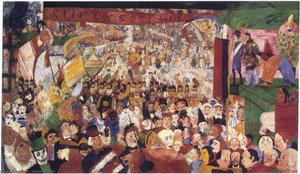
His most celebrated works – including *Christ's Entry into Brussels* (1888-1889), *The Scandalized Masks* (1883) and *Skeletons Fighting over a Hanged Man* (1891) – exemplify Ensor’s commitment to confronting uncomfortable truths about human psychology and societal hypocrisy. Recurring themes throughout his oeuvre include death, decay, social critique, religious satire, and the boundless potential of imagination—elements that continue to resonate with audiences today.
James Ensor's uncompromising artistic vision solidified his position as a pivotal innovator in modern art, paving the way for Expressionist artists like Edvard Munch and Surrealists like René Magritte. His rejection of academic conventions and embrace of psychological depth profoundly impacted subsequent generations of painters—establishing him as an enduring symbol of artistic rebellion and intellectual courage.

1860 - 1949 , Belgija

Discover Johan Hendrik Weissenbruch (1824-1903), a leading Dutch Hague School painter renowned for his atmospheric watercolours & oil landscapes. Explore his beautiful depictions of the Dutch countryside and skies – a master of light & detail.

Explore the captivating world of Ludolf Backhuysen I, a master of Dutch marine painting. Discover his signature realism, atmospheric seascapes & lasting influence on art history. Learn about collecting and appreciating this Golden Age artist.

Explore the captivating world of Jacob Henricus Maris, a leading figure of the Dutch Hague School. Discover his atmospheric landscapes, signature brushstrokes & lasting influence on 19th-century art. Learn more at Most-Famous-Paintings.

Explore the captivating world of Impressionistic landscape painting! Discover techniques, key artists like Monet & Renoir, and its lasting influence on art history. A comprehensive guide for enthusiasts.

Odkrijte 10 impresivnih mojstrovin, ki so definirale impresionistično pokrajino! Monet, Renoir & drugi slikarji vas vodijo skozi čarobne barve in svetlobo. Najdi navdih za notranjo ureditev na Most-Famous-Paintings.com!


Bodite na sešte, s najnovejšimi novicami iz sveta umetnosti, ekskluzivnimi ponudbami in idejami za dekoracijo.
Povejte nam o svojem projektu in naši strokovnjaki za umetnost vam bodo pripravili 3 prilagojene predloge umetniških del.
Naj vam izberemo 3 možnosti – popolnoma brezplačno!


 Deli
Deli


 Razviljaj več







 Možnost stekla je na voljo le za velikosti pod 110 cm