x
Ročno slikano olje na platnu v vaši izbiri velikosti in okvirja, izdelano po naročilu naših umetnikov. ( Kupi tisk Kupi digitalno sliko)





























Izberite eno od naših vnaprej določenih velikosti, ki ustrezajo prvotnim proporcijam umetničkega dela.

Svoje dimenzije lahko vnesete tako, da se prilagodite določenemu okvirju ali prostoru. Če izbrana velikost ne ustreza razmerjem originalne slike, bomo umetniško delo obrezali ali sliko dopolnili z dodatnimi ročno naslikanimi elementi. Pred začetkom proizvodnje vam bo poslan digitalni osnutek v odobritev.
Upoštevajte, da predogled na zaslonu ne odraža dejanskega obrezovanja ali podaljšanja. Le osnutek bo natančno prikazal končno kompozicijo.
Čeprav so na voljo velikosti po meri, priporočamo izbiro dimenzije s preddefiniranega seznama, da ohranimo originalne razmere.
Svetska dostava () za 3/4 nedelje umesto uobičajenih 5 nedelja. (18 avgust). Bez kompromisa po pitanju kvaliteta.


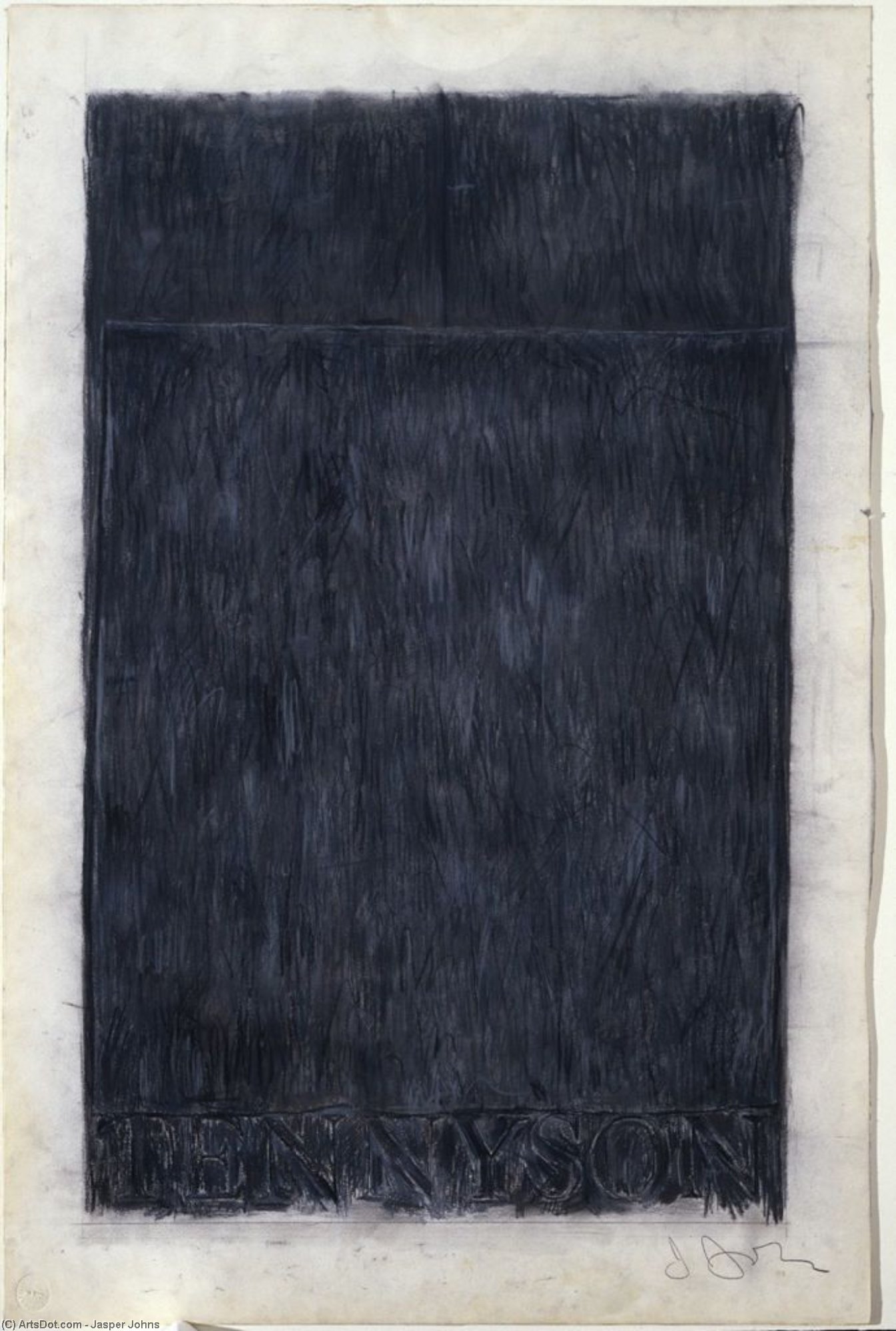
Tennyson
Velikost reprodukcije
Jasper Johns’ “Tennyson,” completed in 1959 during the height of Abstract Expressionism, isn’t merely a painting; it’s an invitation into a realm where recognizable forms dissolve into evocative suggestion. This monumental canvas embodies the spirit of its era—a reaction against the emotionally charged canvases of artists like Pollock and Rothko—yet simultaneously anticipates the stylistic innovations that would characterize Pop Art.
Unlike the sprawling, gestural brushstrokes synonymous with Abstract Expressionism, Johns’ approach to “Tennyson” is characterized by a deliberate restraint. The painting utilizes a predominantly dark background—a deep charcoal gray—creating an atmosphere of profound stillness. However, this apparent simplicity belies a meticulous technique. Johns employs encaustic wax mixed with pigment, layering thin sheets of wax onto the canvas and fusing them together under intense heat. This process lends the artwork a remarkable textural quality – subtle ridges and depressions emerge from the surface, hinting at hidden depths.
“Tennyson” emerged from a period marked by significant upheaval—the Korean War disrupted Johns’ artistic pursuits and instilled in him a heightened awareness of geopolitical realities. Simultaneously, it represented an audacious challenge to the prevailing aesthetic conventions of the time. Artists like Pollock had championed spontaneity and improvisation, prioritizing emotion over intellectual consideration. Johns countered this trend with his unwavering commitment to precision and control, reflecting a broader philosophical shift toward rational inquiry.
The painting's title references Alfred Lord Tennyson’s poem “In Memoriam A Lay of Remembrance,” which explores themes of grief, loss, and the enduring power of memory. Johns deliberately avoids explicit representation—there are no discernible figures or landscapes—instead opting for a visual language that speaks to these poetic concepts. The dark background symbolizes sorrow and obscurity, while the textured surface embodies the fragmented nature of remembrance – impressions linger beneath the surface like echoes of past experiences.
"Tennyson" doesn’t demand immediate gratification; it invites contemplation. Its subdued palette and meticulous technique encourage viewers to slow down, to absorb its atmosphere, and to engage in a dialogue with its underlying symbolism. Ultimately, the painting succeeds in conveying a profound sense of melancholy—a quiet acknowledgement of life's inevitable sorrows—but also hints at an enduring capacity for resilience and beauty. It’s a testament to Johns’ ability to transform abstract concepts into emotionally resonant visual experiences.

1930 - , Združene države Amerike

Explore the profound impact of Minimalism and Geometric Abstraction. From Mondrian to Malevich, discover how stripping art to its essential forms revolutionized modern aesthetics through our expert-led historical guide.
Explore the profound emotional depth of Lyrical Abstraction. Discover how masters like Raymond Parker used color and form to bridge Impressionism and Abstract Expressionism. Learn about this pivotal movement through our expert-led art history guide.


Bodite na sešte, s najnovejšimi novicami iz sveta umetnosti, ekskluzivnimi ponudbami in idejami za dekoracijo.
Povejte nam o svojem projektu in naši strokovnjaki za umetnost vam bodo pripravili 3 prilagojene predloge umetniških del.
Naj vam izberemo 3 možnosti – popolnoma brezplačno!


 Predogled
 Pošlji
 Deli
Deli
 Podrobnosti o delu

 Prenesi
 Podobni izdelki
 Rentgenski posnetek
 Predvajaj diaporama

 Razviljaj več







 Možnost stekla je na voljo le za velikosti pod 110 cm