


x
Kupite digitalno sliko visoke ločljivosti z izboljšano kakovostjo, ki je precej boljša od spletnega predogleda.
Vsaka datoteka je pod natančnim nadzorom naših strokovnjakov, ki uporabljajo napredna orodja in strokovno ročno obdelavo. Zagotovimo, da ima vsaka slika izjemno jasnost, natančnost barv in fine podrobnosti.
Končna datoteka je po e-pošti dostavljena v 72 urah, optimizirana za takojšnjo uporabo v profesionalnem, uredniškem in tiskarskem okolju. To je kakovost, ki ji zaupajo vrhunska oblikovalna studia, založniki in galerije.
Prenesite datoteko visoke ločljivosti za osebno uporabo, tiskanje in kreativne projekte. ( Kupi tisk Kupi ročno naslikano sliko)
Ko izberete Most-Famous-Paintings.com, ne prejmete le slike – prejmete digitalno umetniško delo, ki je profesionalno urejeno, izdelano z natančnostostjo in zavestno zagotovljeno z garancijo za zadovoljstvo. Tukaj je vse, kar samodejno prejmete z vašim naročilom:

Vaša digitalna slika visoke ločljivosti bo na vaš e-naslov poslana v roku 72 ur od zaklopa naročila – pripravljena za takojšnjo uporabo.

Vaše umetniško delo je strokovno optimizirano z uporabo naprednih orodij umetne inteligence in ročne obdelave, kar zagotavlja največjo stopnjo podrobnosti, jasnosti in barvne natančnosti.

Ste zaradi nespremietne napake izgubili ali izbrisali svojo datoteko? Ni težav – vam jo bomo ponovno poslali kadar koli in brezplačno.

Uživajte v svojem umetniškem delu takoj, brez carin, davkov ali stroškov dostave – digitalni prenosi so vedno brezdavčni.

Z uporabo profesionalnih orodij in upravljanja barv zagotavljamo, da vaša digitalna slika čim bolj natančno odraža prvotne barve.

Če niste zadovoljni s svojo digitalno sliko, jo bomo uredili ali vam v 60 dneh povrnili 100% denarja – brez kakršnih koli vprašanj.

Niste zadovoljni? Zagovрите popoln povračilo sredstev v 60 dneh po prejemu digitalne datoteke – brez kakršnih koli vprašanj.

Kupite 3 slike, prihranite 10% - Kupite 5 slik, prihranite 15% - Kupite 10+ slik, prihranite 20%. Odlično za kreativne projekte, galerije in agencije.

In the vibrant, shifting landscape of nineteenth-century France, few artists captured the delicate interplay between human emotion and social grace as intimately as Nicolas Eustache Maurin. Born in the historic town of Perpignan in 1799, Maurin was a child of artistic lineage, the son of the painter Pierre Maurin. This early immersion in the scent of oil paints and the tactile nature of the studio laid the foundation for a career that would eventually bridge the worlds of fine painting and the burgeoning medium of lithography. His journey from the quiet corners of southern France to the prestigious salons of Paris was fueled by a rigorous technical training, most notably under the guidance of Henri Regnault, whose influence helped shape Maurin’s ability to infuse even the simplest line with profound psychological depth.
As Maurin established himself in the Parisian art scene, he became a master of the lithographic stone, an artist capable of translating the fleeting nuances of a facial expression into permanent, striking imagery. His work during the 1830s and 1840s reflected the spirit of Romanticism, a movement that sought to explore the depths of individual feeling and the dramatic beauty of the human condition. Whether through his celebrated portraits or his more playful, observational prints, Maurin possessed a rare gift for capturing the "spirit of the age." His hands were skilled not just in the mechanical precision required for engraving, but in the artistic interpretation that allowed him to breathe life into his subjects, making them feel like contemporaries to anyone viewing his work decades later.
Maurin’s legacy is perhaps most vibrantly felt through his ability to document the faces and fashions of his era. He was a painter of manners, an observer of the subtle social cues that defined nineteenth-century life. His portfolio contains a remarkable breadth of subject matter, ranging from the deeply personal to the broadly historical. One cannot discuss his contributions without mentioning his ability to distill complex personalities into singular, evocative compositions. His work often touched upon themes of intimacy and domesticity, seen in titles such as Love, Modesty, and Tender Avowal, where he utilized tonal gradations and soft shading to create a sense of warmth and vulnerability.
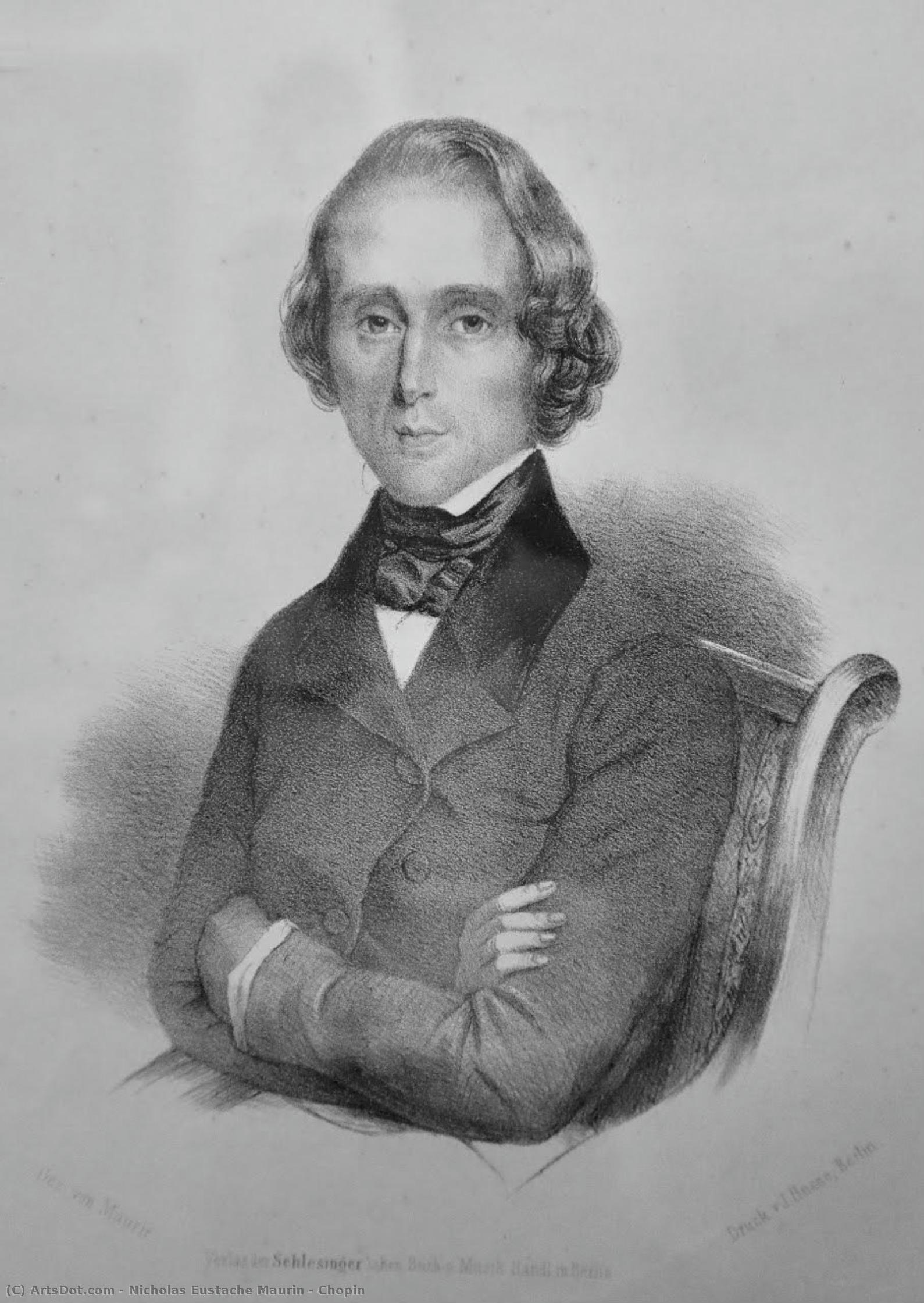
Beyond the domestic sphere, Maurin’s talent for portraiture allowed him to immortalize some of the most significant figures of his time. His ability to capture the essence of a person—the weight of their thoughts or the spark of their intellect—is evident in his depictions of legendary figures such as Chopin and James Madison. These were not merely likenesses; they were character studies that utilized the unique textures of lithography to suggest depth and movement. His work often appeared in prestigious collections, including the National Portrait Gallery in London and The Metropolitan Museum of Art, ensuring that his vision of the nineteenth century would endure long after his passing in 1850.
What truly set Maurin apart from his contemporaries was his elevation of lithography from a reproductive tool to a primary medium of artistic expression. While many used the technique to simply copy existing paintings, Maurin approached the stone with the eye of a painter. He understood how light could be manipulated through varying pressures on the lithographic crayon, creating a sense of atmosphere that mimicked the soft glow of candlelight or the dramatic shadows of a studio portrait. This technical prowess allowed him to participate in significant series, such as his Iconography of Contemporaries, which served as a visual encyclopedia of the era's most notable individuals.
The historical significance of Nicolas Eustache Maurin lies in his role as a visual chronicler. Through his meticulous attention to detail and his empathetic approach to his subjects, he provided a window into the social fabric of nineteenth-century France. His work remains a testament to the power of printmaking to capture both the grand narratives of history and the quiet, intimate moments of human existence. Today, collectors and historians alike look to his prints not just as beautiful objects of art, but as essential fragments of a lost world, preserved through the enduring magic of stone and ink.

1799 - 1850 , France


Bodite na sešte, s najnovejšimi novicami iz sveta umetnosti, ekskluzivnimi ponudbami in idejami za dekoracijo.
Povejte nam o svojem projektu in naši strokovnjaki za umetnost vam bodo pripravili 3 prilagojene predloge umetniških del.
Naj vam izberemo 3 možnosti – popolnoma brezplačno!


 Predogled
 Pošlji
 Deli
Deli
 Podrobnosti o delu

 Prenesi
 Podobni izdelki
 Rentgenski posnetek
 Predvajaj diaporama
 Razviljaj več





