x

Ročno slikano olje na platnu v vaši izbiri velikosti in okvirja, izdelano po naročilu naših umetnikov. ( Kupi tisk Kupi digitalno sliko)





























Izberite eno od naših vnaprej določenih velikosti, ki ustrezajo prvotnim proporcijam umetničkega dela.

Svoje dimenzije lahko vnesete tako, da se prilagodite določenemu okvirju ali prostoru. Če izbrana velikost ne ustreza razmerjem originalne slike, bomo umetniško delo obrezali ali sliko dopolnili z dodatnimi ročno naslikanimi elementi. Pred začetkom proizvodnje vam bo poslan digitalni osnutek v odobritev.
Upoštevajte, da predogled na zaslonu ne odraža dejanskega obrezovanja ali podaljšanja. Le osnutek bo natančno prikazal končno kompozicijo.
Čeprav so na voljo velikosti po meri, priporočamo izbiro dimenzije s preddefiniranega seznama, da ohranimo originalne razmere.
Svetska dostava () za 3/4 nedelje umesto uobičajenih 5 nedelja. (18 avgust). Bez kompromisa po pitanju kvaliteta.


Crucifixion
Velikost reprodukcije
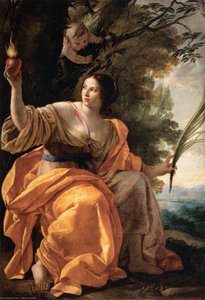
Simon Vouet's “Crucifixion,” painted around 1622, isn’t merely a depiction of a pivotal biblical event; it’s an immersion into profound grief and spiritual contemplation. This masterpiece, rendered in the burgeoning Baroque style that Vouet championed upon his return to France from Italy, transcends simple representation, aiming instead to evoke a visceral emotional response within the viewer. The painting immediately commands attention with its dramatic chiaroscuro – a masterful manipulation of light and shadow – which sculpts Christ’s body, emphasizing both its suffering and inherent divinity. It's a technique deeply indebted to Caravaggio, yet Vouet elevates it, imbuing the scene with an almost unbearable intensity.
The composition itself is carefully orchestrated. Christ, centrally positioned on the stark wooden cross, dominates the visual field, his posture conveying both agony and acceptance. Below him, a constellation of figures – Mary, her face etched with sorrow; John the Apostle, rendered in a state of bewildered grief; and other mourners – collectively amplify the sense of loss. Vouet skillfully employs pyramidal structure, drawing the eye upwards to Christ’s figure while simultaneously anchoring it within this sea of mourning. The use of diagonals, particularly in the drapery and the figures' postures, creates a dynamic tension that mirrors the emotional turmoil at the heart of the scene.
Vouet’s journey to Rome represents a crucial turning point in his artistic development. During his decade-long sojourn in Italy, he absorbed the innovations of the High Renaissance and early Baroque – the dramatic lighting, the emotional intensity, and the dynamic compositions championed by artists like Caravaggio, Annibale Carracci, and Guido Reni. He meticulously studied their techniques, not simply copying them, but adapting them to his own sensibilities and incorporating them into a distinctly French style. His time in Venice, particularly, exposed him to Venetian color palettes and compositional strategies that profoundly influenced his work.
Returning to France in 1627, Vouet was immediately appointed Premier peintre du Roi by Louis XIII. This prestigious position afforded him unprecedented access to royal commissions, allowing him to shape the artistic landscape of the court and introduce the Baroque aesthetic to a wider audience. He wasn’t just painting for royalty; he was actively translating Italian artistic trends into a distinctly French idiom, bridging the gap between two cultures and establishing a new standard for visual art in France.
Beyond its technical brilliance, “Crucifixion” is rich with symbolic meaning. The crucifixion itself represents sacrifice, redemption, and the ultimate act of divine love – core tenets of Christian faith. The weeping figures embody humanity’s sorrow in response to this profound loss. Mary's grief is particularly poignant, reflecting not only her personal tragedy but also the suffering of all humankind. The dark, stormy sky serves as a backdrop for this drama, symbolizing despair and impending doom.
Furthermore, the painting subtly references classical iconography. Christ’s posture echoes depictions of Roman martyrs, connecting his sacrifice to a broader tradition of heroic endurance. The careful attention to detail – from the texture of Christ's skin to the folds of the drapery – elevates the scene beyond mere illustration, transforming it into a powerful meditation on faith, suffering, and hope.
Created primarily with oil paints on canvas, “Crucifixion” demonstrates Vouet’s mastery of technique. He employed layering glazes to achieve rich colors and luminous effects, while utilizing meticulous brushwork to capture the nuances of texture – the rough grain of the wood, the flowing fabric, and the delicate contours of human faces. The painting's enduring appeal lies not only in its aesthetic beauty but also in its ability to evoke a profound emotional response. It’s a testament to Vouet’s skill as an artist and his deep understanding of the power of visual storytelling – a work that continues to resonate with viewers centuries after its creation.

Simon Vouet je bil ključna osebnost v prehodu francškega slikarstva iz manirizma v barokni stil. Rojen v umetni družini – njegov oče Laurent je bil slikar, brat pa Aubin prav tako umetnost udajal – je prej prejel usposabljanje, ki je postavilo temelj za njegov kasnejši uspeh. Njegov vnuk, Ludovico Dorigny, je bo nadaljeval umetni nas družine.
Med svojim italijanskim prebivaljem je Vouet absorbiral različne vplive. Studiral je dramatične svetlobne tehnike, ki jih je pionir bil Caravaggio, prevzel elemente italijanskega manirizma in natančno analiziral palete barv ter di sotto in su (perspektiva odspodku) uporabljen v Paolo Veronese. Prav tako je bil navdohan z delami Carraccija, Guercina, Lanfranca in Guido Renija, sintezirajoč te različne stile v edinstveno umetniško vizijo.
Dediščina Simon Voueta temelji na njegovi ključni vlogi kot most med italijanskostjo in francsko umetnostjo. Uspešno je uvezel dinamiko in veličast italijanskega baroka, ga pa je transformiral v stil, ki je rezonoval z okusjem francškega dvora in aristokracije. Njegov vpliv na razvoj francškega slikarstva v 17. stoletju je neosporen, in njegovi prispevi so še danes dan znani umetnostnim zgodovnikom.

1590 - 1649 , Francija

Explore the profound elegance of Baroque Classicism. Discover how 17th-century masters synthesized dramatic emotion with classical order through the lens of the Counter-Reformation and the works of legends like Carlo Maratta and Andrea Sacchi.

Explore the dramatic power of Baroque art through an expert guide to light, shadow, and emotion. Discover how the Counter-Reformation shaped 17th-century masterpieces and learn about the profound techniques used by the Old Masters to inspire awe.

Explore the dramatic evolution from Mannerist distortion to Baroque grandeur. Discover how light, shadow, and emotion redefined art history through a masterclass in technical mastery and religious fervor.

Explore the profound differences between Baroque drama and Rococo elegance. Our expert guide delves into art history, chiaroscuro, and the evolution of European masterpieces for collectors and enthusiasts seeking deep historical context.

Explore the dramatic world of Baroque portraiture. Discover how masters used chiaroscuro and light to evoke profound emotion during the Counter-Reformation. A definitive guide for art enthusiasts seeking to understand the power of 17th-century masterpieces.


Bodite na sešte, s najnovejšimi novicami iz sveta umetnosti, ekskluzivnimi ponudbami in idejami za dekoracijo.
Povejte nam o svojem projektu in naši strokovnjaki za umetnost vam bodo pripravili 3 prilagojene predloge umetniških del.
Naj vam izberemo 3 možnosti – popolnoma brezplačno!


 Predogled
 Pošlji
 Deli
Deli
 Podrobnosti o delu

 Prenesi
 Podobni izdelki
 Rentgenski posnetek
 Predvajaj diaporama

 Razviljaj več







 Možnost stekla je na voljo le za velikosti pod 110 cm