


x

Giclée ali platnati odtis muzejske kakovosti z hitro proizvodnjo in prilagodljivimi možnostmi končne obdelave. ( Kupi ročno naslikano sliko Kupi digitalno sliko)





























Izberite eno od naših vnaprej določenih velikosti, ki ustrezajo prvotnim proporcijam umetničkega dela.

Svoje dimenzije lahko vnesete sami, da bodo ustrezne za določen okvir ali prostor. Če izbrana velikost ne bo skladna z razmerji izvirne slike, bomo umetniško delo orezali ali podaljšali s pomočjo ogledalnega odraza ali barvno polnega roba. Pred začetkom proizvodnje vam bomo poslali digitalni predogled za potrditev.
Upoštevajte, da predogled na zaslonu ne prikazuje dejanskega orezovanja ali podaljševanja. Le digitalni predogled bo natančno prikazal končno kompozicijo.
Čeprav so na voljo prilagojene velikosti, priporočamo izbiro dimenzije s predhodno določenega seznama, da ohranite prvotna razmerja.
Globalna dostava () v 2 tednih namesto standardnih 4/5 tednov. (22 avgust)


St Luke
Velikost reprodukcije
Vincenzo Foppa’s fresco depicting St Luke, housed within the magnificent San Maurizio al Monastero Maggiore in Milan, is more than just a devotional image; it's a captivating glimpse into the artistic landscape of early 16th-century Italy. Created around 1510, this work stands as a testament to Foppa’s mastery of Renaissance techniques and his unique contribution to the burgeoning Lombard school of painting. The scene immediately draws the eye with its quiet dignity – St Luke, an elderly figure radiating wisdom and piety, occupies the central space, framed by the subtle yet powerful presence of two angelic figures. The muted palette—earth tones interwoven with delicate blues and greens—evokes a sense of timelessness and spiritual contemplation, characteristic of frescoes produced during this period. Notice how Foppa skillfully employs perspective to create depth, drawing the viewer into the scene and emphasizing St Luke’s importance within it.
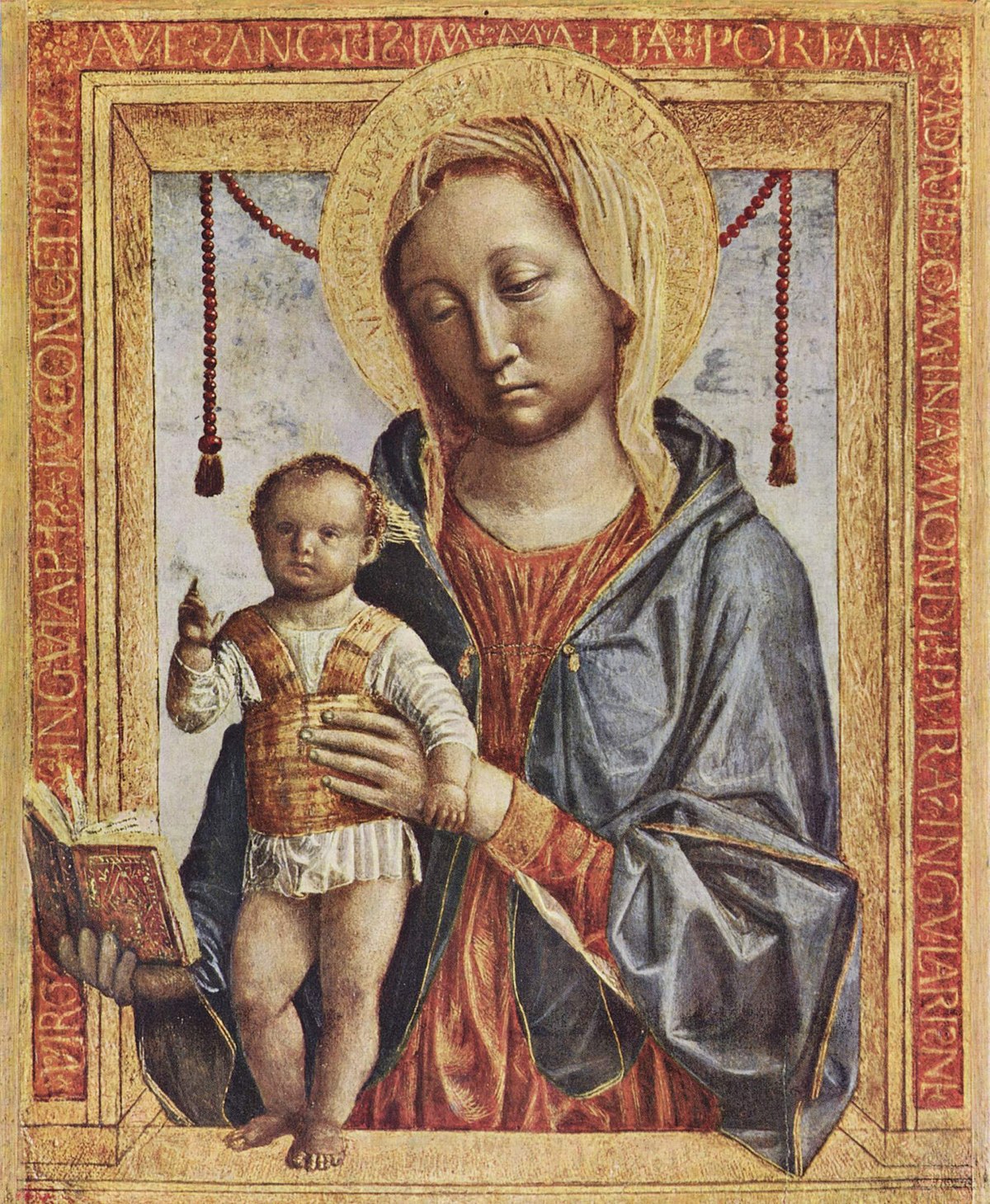
The hands of St Luke are particularly noteworthy, acting as focal points within the composition. Raised slightly above his body, they suggest both an act of offering and a gesture of pointing – perhaps towards the Gospel he is holding, or even to God himself. The detail in their rendering—the subtle veins, the delicate musculature—demonstrates Foppa’s meticulous attention to anatomical accuracy, a hallmark of Renaissance art. The ambiguity surrounding the objects held in his hands adds another layer of intrigue; while often interpreted as representing the Gospel of Luke, the second object remains deliberately obscured, inviting viewers to contemplate its symbolic significance. This deliberate withholding of clarity is not simply an artistic choice but reflects the complex and layered nature of faith itself.
Foppa's style firmly places him within the Lombard school, a movement that emerged in Northern Italy during the early 15th century. Unlike the High Renaissance ideals dominating Florence and Rome, the Lombard school prioritized a more intimate and emotionally resonant approach to painting. The use of diffused light, characteristic of fresco techniques, creates an atmospheric quality, bathing the scene in a soft glow. The influence of artists like Gentile da Fabriano and Pisanello is readily apparent – particularly in the delicate rendering of drapery and the expressive faces of the angels. The slightly elongated figures, a common feature of the Lombard style, contribute to a sense of grace and elegance. The background elements—the architectural details and floral motifs—further enhance this atmosphere, suggesting an interior setting within a sacred space.
The creation of St Luke’s fresco coincided with a period of significant artistic and political change in Milan. The Sforza family, powerful dukes who ruled the city, were major patrons of the arts, commissioning works that reflected their wealth and prestige. Foppa's work is therefore inextricably linked to this vibrant cultural environment. His dedication to his craft, coupled with his technical skill and artistic vision, solidified his position as a leading figure in the Lombard school. Though relatively few of his paintings survive, St Luke’s fresco remains a powerful testament to his legacy – a serene and evocative depiction of faith, scholarship, and the enduring beauty of Renaissance art. It's a piece that invites contemplation and offers a profound connection to the artistic traditions of Northern Italy.


1427 - 1515 , Italija
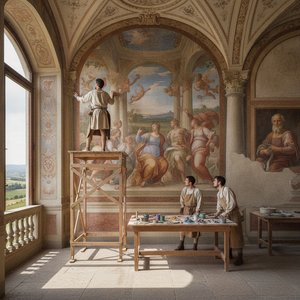
Explore the profound history and technical mastery of fresco painting. From ancient Roman murals to Michelangelo's Sistine Chapel, discover the enduring chemistry and artistry behind this timeless wall painting technique used by the world's greatest masters.

Explore the profound impact of the Barbizon School on landscape painting. Discover how masters like Rousseau and Corot revolutionized art through plein air naturalism, moving from academic idealism to the authentic beauty of the French countryside.

Explore the profound legacy of the Hudson River School. Discover how masters like Thomas Cole captured the American sublime through Romanticism and Luminism. A definitive guide for art historians and collectors seeking to understand America's wild beauty.


Bodite na sešte, s najnovejšimi novicami iz sveta umetnosti, ekskluzivnimi ponudbami in idejami za dekoracijo.
Povejte nam o svojem projektu in naši strokovnjaki za umetnost vam bodo pripravili 3 prilagojene predloge umetniških del.
Naj vam izberemo 3 možnosti – popolnoma brezplačno!


 Predogled
 Pošlji
 Deli
Deli
 Podrobnosti o delu

 Prenesi
 Podobni izdelki
 Rentgenski posnetek
 Predvajaj diaporama


 Razviljaj več







 Možnost stekla je na voljo le za velikosti pod 110 cm


