Prodajajte svojo umetnost
Lista želja Nakupovalni košarica Cart
PredogledPredogled AR predogledAR predogled Kupi ročno naslikano sliko Kupi ročno naslikano slikoKupi digitalno sliko Kupi digitalno sliko PošljiPošlji
Podrobnosti o deluPodrobnosti o delu Dodaj v priljubljene Dodaj v priljubljene PrenesiPrenesi Podobni izdelkiPodobni izdelki Rentgenski posnetekRentgenski posnetek Predvajaj diaporamaPredvajaj diaporama

Marriage à la Mode

William Hogarth je angleški mojster znan po inovativnem slogu satire in realizmu ter serijam slik kot *A Harlot’s Progress* in *A Rake's Progress*, ki prikazujejo družbo XVIII stoletja z osuplnimi kritičnimi komentarji. Pogosto uporabljal tehniko črtanja za ustvarjanje globine in teksture, kar je njegovo umetnostni delo naredilo živostno in angažirano.

Giclée tisk / Umetniški tisk

Giclée ali platnati odtis muzejske kakovosti z hitro proizvodnjo in prilagodljivimi možnostmi končne obdelave. (Kupi ročno naslikano sliko Kupi ročno naslikano slikoKupi digitalno sliko Kupi digitalno sliko)

P118B $10
P118H $10
P118W $10
P438Z $10
P508JH $12
P508YH $12
P805H $10
P805Z $10
P919BZ $10
P919G $10
P919XJ $10
P959ZH $10
P968JZ $12
W106C $8
W218G $10
W218JH $8
W218Y $10
W307PJ $10
W316G $10
W316PJ $8
W316Y $10
W398PJ $8
W4111J $10
W500HY $15
W500JH $15
W692G $12
W849H $8
W940BG $15
W953PJ $8

Standard
custom
CM
INCH

Izberite eno od naših vnaprej določenih velikosti, ki ustrezajo prvotnim proporcijam umetničkega dela.

širina
višina

Svoje dimenzije lahko vnesete sami, da bodo ustrezne za določen okvir ali prostor. Če izbrana velikost ne bo skladna z razmerji izvirne slike, bomo umetniško delo orezali ali podaljšali s pomočjo ogledalnega odraza ali barvno polnega roba. Pred začetkom proizvodnje vam bomo poslali digitalni predogled za potrditev.
Upoštevajte, da predogled na zaslonu ne prikazuje dejanskega orezovanja ali podaljševanja. Le digitalni predogled bo natančno prikazal končno kompozicijo.
Čeprav so na voljo prilagojene velikosti, priporočamo izbiro dimenzije s predhodno določenega seznama, da ohranite prvotna razmerja.

Globalna dostava () v 2 tednih namesto standardnih 4/5 tednov. (19 avgust)

why_choose_icon
Brezplačna ekspresna dostava po vsem svetu
why_choose_icon
Visokokakovostno laneno platno
why_choose_icon
Popolno zavarovanje pošiljke
why_choose_icon
Garancija povračila carine in uvoznih davkov
why_choose_icon
Garancija popolnega ujemanja barv
why_choose_icon
60-dnevna politika vračanja (le v primeru napak)
why_choose_icon
Garancija 100% povračila denarja
why_choose_icon
Popust pri večjem naročilu

Skupna cena

$ 68

reproduction

Marriage à la Mode

Giclée tisk / Umetniški tisk

Velikost reprodukcije

-

Skupna končna cena

$ 68

Ključni podatki

  • Subject or theme: Social satire; Marriage customs
  • Title: Marriage à la Mode
  • Artist: William Hogarth
  • Medium: Oil on canvas
  • Notable elements or techniques: Satirical depiction; Detailed observation
  • Influences: Dutch Baroque
  • Artistic style: Realism

Umetniški kviz

Pri vsakem vprašanju je na voljo le eden pravilen odgovor.

Vprašanje 1:
What is the primary subject matter of William Hogarth’s ‘Marriage à la Mode’?
Vprašanje 2:
The image description highlights several prominent features within the painting. Which of these best describes the overall atmosphere conveyed?
Vprašanje 3:
'Marriage à la Mode' is considered a significant work due to its use of satire. What technique did Hogarth employ to critique societal norms?
Vprašanje 4:
According to the Wikipedia article, ‘Marriage à la Mode’ is a play by John Dryden. What genre does this play belong to?
Vprašanje 5:
The painting includes two dogs. What symbolic significance might these animals hold within the context of Hogarth’s commentary on marriage and social status?

Opis zbirateljskega predmeta

Marriage à la Mode: A Portrait of Societal Decay

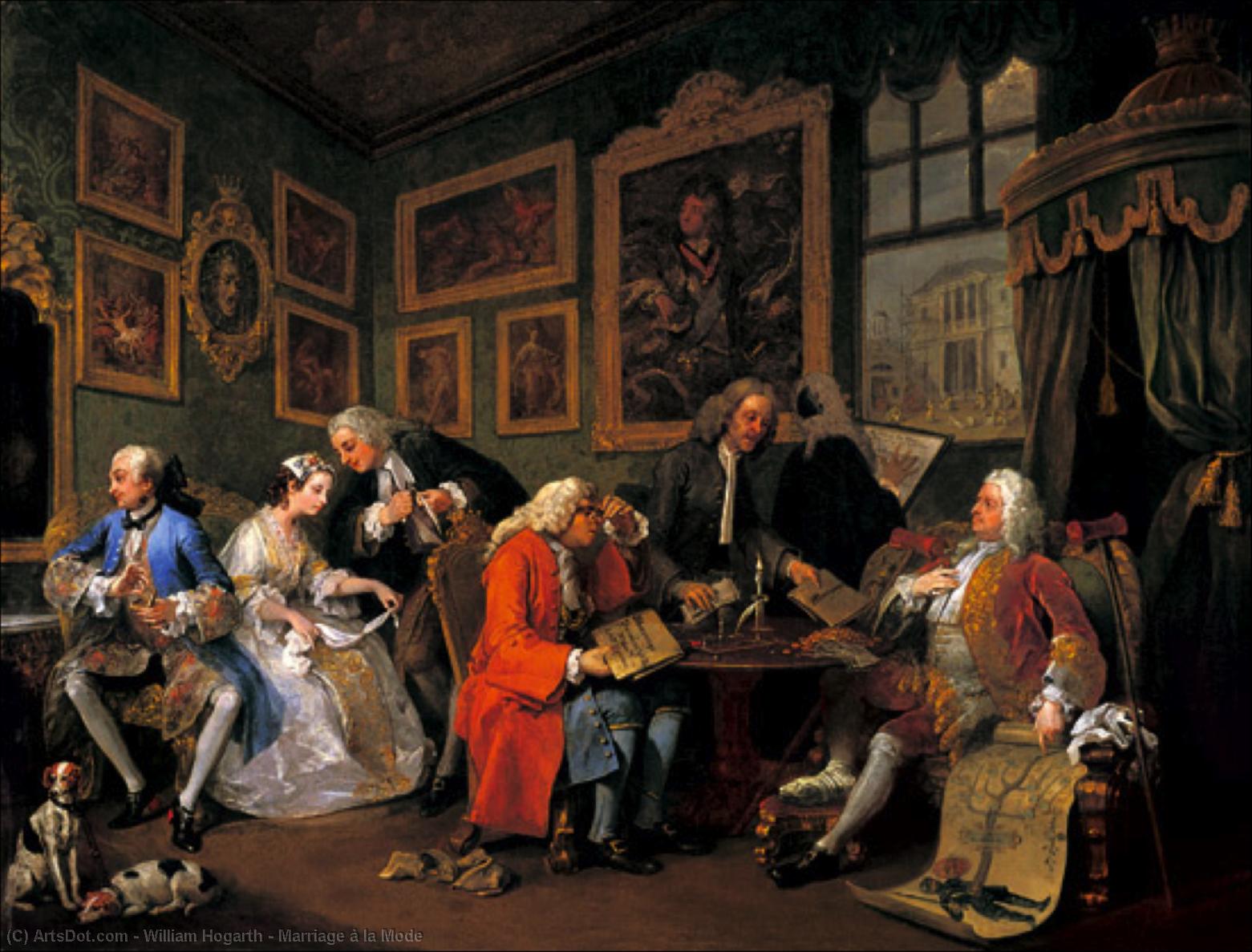
William Hogarth’s “Marriage à la Mode,” completed in 1743, stands as a cornerstone of English Rococo art and a searing indictment of the social mores prevalent during the Georgian era. More than just a depiction of a fashionable gathering—a lavish dinner party attended by affluent families—the painting operates on multiple levels of symbolic meaning, offering a profound commentary on themes of morality, deception, and the corrosive effects of societal pressures. This meticulously crafted tableau captures a moment frozen in time, yet its enduring power lies in its ability to resonate with audiences centuries later.
  • Subject Matter: The scene unfolds within a richly furnished room—a testament to the wealth and status of its inhabitants—featuring ornate chairs, tables laden with delicacies, and two dogs prominently positioned. These elements aren’t merely decorative; they serve as visual anchors for the narrative unfolding before us.
  • Style & Technique: Hogarth employed a masterful blend of realism and caricature, characteristic of Rococo art's penchant for elegance tempered by subtle critique. His meticulous attention to detail—from the textures of fabrics to the expressions on the faces of the figures—creates an immersive experience for the viewer. The artist skillfully utilized chiaroscuro, manipulating light and shadow to heighten dramatic tension and emphasize key elements within the composition.
The painting’s narrative centers around a young couple preparing for their wedding ceremony. However, Hogarth doesn't portray idealized romance; instead, he exposes the anxieties surrounding marriage and the compromises individuals make in pursuit of social acceptance. The woman’s furtive glances towards her husband—coupled with the presence of a gentleman whispering seductively—suggest a clandestine affair, undermining the façade of marital bliss. This juxtaposition is deliberately unsettling, prompting viewers to confront uncomfortable truths about human behavior and societal hypocrisy.
  • Historical Context: “Marriage à la Mode” emerged during a period marked by significant social upheaval – the Enlightenment challenged traditional beliefs and values, while anxieties surrounding economic instability fueled concerns about social stability. Hogarth’s work reflects these tensions, capturing the spirit of an era obsessed with appearances and driven by unspoken desires.
  • Symbolism: The dogs symbolize fidelity and loyalty—a stark contrast to the deceitful behavior depicted within the scene. Their positioning reinforces the narrative's central theme: the importance of upholding moral standards amidst societal pressures. Furthermore, the opulent furnishings serve as a visual representation of wealth and status, highlighting the disparity between aspiration and reality.
Ultimately, “Marriage à la Mode” transcends its immediate subject matter to deliver a timeless message about human vulnerability and the dangers of prioritizing social convention over genuine emotion. Hogarth’s unflinching gaze compels us to examine our own values and consider the consequences of succumbing to societal pressures. It remains an unforgettable portrait not only of its time but also of the enduring complexities of human relationships and the pervasive influence of social norms on individual conduct—a masterpiece that continues to inspire contemplation and provoke discussion today. Explore a stunning reproduction of this iconic artwork at Most-Famous-Paintings.com!

Biografija umetnika

A London Life in Ink and Paint: The World of William Hogarth

William Hogarth, born into the bustling heart of 18th-century London in 1697, was more than just an artist; he was a visual historian, a keen observer of human nature, and a satirical commentator on the societal currents of his age. His life story is inextricably linked to the very fabric of England during a period of significant transformation – its burgeoning ambitions, underlying anxieties, and pervasive hypocrisies all finding potent expression in his remarkably detailed and often biting works. The son of a struggling Latin schoolmaster, Hogarth’s early experiences instilled within him both a love for learning and a sharp awareness of social inequalities, a foundation that would prove crucial to shaping his artistic vision. Initially apprenticed to an engraver, he quickly demonstrated a talent extending beyond mere technical skill; he possessed an innate ability to observe the nuances of human behavior and translate them into compelling visual narratives. However, he chafed against the constraints of traditional engraving, seeking a more expressive outlet for his burgeoning creativity. This led him to studies at both St Martin’s Lane Academy and under Sir James Thornhill, where he honed his skills in painting and composition, absorbing influences that would later inform his unique style.

The Birth of Modern Moral Subjects

Hogarth's true innovation lay not simply *what* he painted, but *how*. He pioneered what he termed “modern moral subjects” – series of pictures designed to tell a story, often imbued with a strong satirical edge. These weren’t isolated portraits or landscapes; they were visual novels unfolding before the viewer’s eyes, offering pointed commentary on contemporary society. A Harlot's Progress, created in 1742, stands as perhaps his most famous example. This series of six paintings meticulously follows the tragic downfall of Mary, a young woman arriving in London full of hope but quickly succumbing to the temptations and dangers of city life. Each scene is rendered with painstaking detail, filled with symbolic elements that reveal the moral decay surrounding her. The meticulous depiction of every step of Mary’s descent into prostitution served as an unflinching indictment of societal attitudes towards women and morality. Similarly, A Rake's Progress, begun in 1733, charts the reckless decline of Tom Rakewell, a man who squanders his inheritance on gambling, debauchery, and ultimately, madness. These weren’t merely cautionary tales; they were unflinching portraits of a society grappling with issues of class, morality, and social mobility. Hogarth's genius resided in his ability to elevate everyday scenes – the bustling streets of London, the opulent interiors of the wealthy, the squalid lives of the poor – into works of art that resonated deeply with his audience. He didn’t shy away from depicting the harsh realities of life, presenting them with a blend of humor and pathos that forced viewers to confront uncomfortable truths about themselves and their society.

Technique and Influences: A Synthesis of Styles

Hogarth's artistic style was a unique amalgamation of diverse influences. He greatly admired the realism and narrative detail found in the works of Dutch genre painters like Pieter de Hooch, evident in his meticulous depictions of interiors and everyday life. The influence of Rembrandt’s masterful use of chiaroscuro – dramatic contrasts between light and shadow – can also be discerned in Hogarth's paintings. Furthermore, Hogarth was profoundly affected by the satirical prints produced in France during the Enlightenment, particularly those of Jean-Baptiste Simeon Chardin and François Boucher. He absorbed stylistic elements from these artists, adapting them to his own distinctive vision. However, Hogarth wasn’t simply imitating these sources; he was synthesizing them into something entirely new and distinctly his own. His technique was characterized by a masterful use of line and shading, particularly evident in his engravings. He employed a distinctive cross-hatching technique that created depth and texture, bringing his scenes to life with remarkable clarity. This painstaking process ensured that every detail—from the folds of fabric to the expressions on faces—was rendered with precision and conviction. He also possessed an exceptional eye for composition, arranging figures and objects within the frame to create dynamic and engaging narratives. Like many artists of his time, Hogarth studied under Sir James Thornhill, honing his skills in painting and mastering the conventions of theatrical illusionism – a technique that would later contribute to the grandeur of his monumental canvases.

Major Achievements: Shaping English Art History

William Hogarth’s contribution to English art history is undeniable. He established a distinctly British artistic identity, rejecting continental stylistic trends in favor of a style rooted in observation and moral reflection. His series of paintings—including *A Harlot's Progress*, *Marriage A-la-Mode*, and *Gin Lane*—became iconic representations of the social landscape of his era, capturing both its beauty and its ugliness with uncompromising honesty. These works challenged viewers to confront uncomfortable truths about themselves and their society, sparking debate and inspiring artists for generations to come. Moreover, Hogarth’s engravings achieved unprecedented popularity, disseminating his satirical commentary throughout England and beyond. His prints served as a powerful tool for social critique, exposing corruption and hypocrisy while simultaneously celebrating virtue and compassion. He is considered one of the fathers of political cartooning and comic strips, paving the way for visual storytelling in popular culture—a legacy that continues to endure today.

Historical Significance: A Voice for Change

Hogarth’s artistic vision was driven by a deep concern for social justice and moral responsibility. He believed that art should not merely be aesthetically pleasing but should also serve a purpose beyond mere decoration—namely, to provoke thought and inspire action. His unflinching depictions of poverty, prostitution, and gambling served as a catalyst for reform movements, prompting discussions about societal ills and advocating for compassionate solutions. By confronting viewers with uncomfortable realities, Hogarth compelled them to examine their own values and behaviors, urging them to strive for a more humane and equitable world. He remains a pivotal figure in the history of English art, celebrated not only for his artistic brilliance but also for his unwavering commitment to social reform—a testament to the enduring power of art as a force for change.
Vilijam Hogart

Vilijam Hogart

1697 - 1764 , Združeno kraljestvo Velike Britanije in Irsko

Hitri podatki

  • Artistic Movement Or Style: Satira, Realizem
  • Artists Who Influenced This Artist:
    • Pieter de Hooch
    • Jonathan Swift
  • Date Of Birth: 1697
  • Date Of Death: 1764
  • Full Name: William Hogarth
  • Nationality: Britanska
  • Notable Artworks:
    • A Harlot's Progress
    • A Rake's Progress
    • Marriage A-la-Mode
  • Place Of Birth: London, UK
Raziščite umetniška dela, razvrščena po temah, slogih in značilnostih.