x

Giclée štampa ili print na platnu muzejskog kvaliteta uz brzu proizvodnju i fleksibilne opcije završne obrade. ( Kupi ručno naslikanu sliku Kupi digitalnu sliku)
Izaberite jednu od naših unapred definisanih veličina koje odgovaraju originalnim proporcijama umetničkog dela.

Možete uneti sopstvene dimenzije kako biste umetničko delo prilagodili specifičnom okviru ili prostoru. Ako odabrani format ne odgovara proporcijama originalne slike, mi ćemo ili iscrtati deo dela ili proširiti sliku pomoću ogledane ivice ili jednobojnog popunjavanja. Digitalni prikaz će vam biti poslat na odobrenje pre početka proizvodnje.
Imajte na umu da pregled na ekranu ne odražava stvarno iscrtavanje ili proširivanje. Samo će prikaz (mockup) precizno pokazati finalnu kompoziciju.
Iako su prilagođene dimenzije dostupne, preporučujemo da odaberete dimenziju sa unapred definisane liste kako biste očuvali originalne proporcije.
Dostava širom sveta () za 2 nedelje umesto uobičajenih 4/5 nedelja. (18 август)


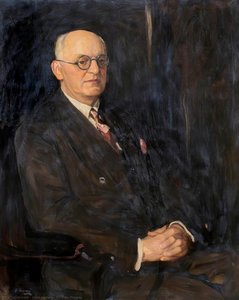
Thomas J. Watson
Dimenzije reprodukcije

Albert Ketcham Murray (1906-1992) wasn’t a name that immediately resonates through the halls of art history, yet his legacy resides in a quiet strength—a dignified portrayal of naval leaders and intellectuals that speaks volumes about American character and the solemn weight of duty. Born in Emporia, Kansas, into a family with artistic roots tracing back to Sir Joshua Reynolds, Murray’s journey was one of deliberate cultivation, blending formal training with immersive experiences abroad and culminating in a distinguished career as a combat artist for the United States Navy.
Murray's early education laid the groundwork for his future. He attended Cornell University and then Syracuse University’s College of Fine Arts, graduating with honors and honing his skills in drawing and painting. Crucially, he spent formative years studying in London and Paris, absorbing European artistic traditions while simultaneously seeking guidance from Wayman Adams in Mexico – a master known for his realistic portraiture. This combination of influences shaped his distinctive style: an academic precision tempered by a deep understanding of human psychology and the subtle nuances of expression.
Murray’s career took a dramatic turn during World War II when he was commissioned as a lieutenant in the Navy's Combat Art Section. This wasn’t merely documentation; it was an act of profound empathy – capturing the essence of naval officers, not just their uniforms and ranks, but their character, experience, and quiet resolve. He spent time aboard ships, witnessing firsthand the realities of naval warfare, sketching amidst the chaos and tension. His work during this period is particularly poignant, notably his portraits of members of the Navy’s General Board – a group of seasoned professionals who guided the nation's maritime strategy.
Beyond the official assignments, Murray’s artistic sensibilities shone through in his depiction of the USS Boise and its crew after their harrowing repairs following battle. These weren’t heroic battlefield scenes; they were intimate portraits of individuals grappling with hardship and resilience – a testament to the human spirit amidst extraordinary circumstances. His work during this time earned him the Bronze Star Medal, recognizing his bravery and dedication.
Murray's artistic approach was characterized by a remarkable ability to capture dignity and quiet observation. He wasn’t interested in flamboyant displays of emotion or dramatic poses; instead, he sought to reveal the inner life of his subjects through subtle shifts in expression, posture, and gaze. His portraits are imbued with a sense of timelessness – they feel as if they could have been painted centuries ago, yet retain an immediate connection to the individuals depicted.
As documented by sources like the Naval History and Heritage Command, Murray’s artistic philosophy centered on “seeing the creative character in the people he painted.” He approached each portrait with a deep respect for his subject, striving to understand their motivations, experiences, and inner world. This dedication is evident in the thoughtful composition and meticulous detail of his work.
Following the war, Murray continued to create portraits, solidifying his reputation as a master of the genre. His work found its way into private collections and was recognized by institutions like Lafayette College and the Union Club in New York City. The Victoria & Albert Museum holds one of his works, highlighting the breadth of his influence.
Contemporary accounts, such as those from John Howard-Andrews, emphasize Murray’s selfless nature and his ability to distill the essence of a subject into a single, compelling image. His portraits aren't merely representations; they are windows into the souls of men who shaped American history. Albert Ketcham Murray’s legacy endures not through grand pronouncements or sensational displays, but through the quiet dignity and profound humanity captured in his enduring portraits – a testament to an artist who understood that true greatness lies in observing, understanding, and respectfully portraying the human spirit.

1906 - 1992


Budite u toku sa najnovijim vestima o umetnosti, ekskluzivnim ponudama i idejama za dekoraciju.
Recite nam o vašem projektu i naši stručnjaci za umetnost će vam pružiti 3 personalizovana predloga umetničkih dela.
Dozvolite nam da odaberemo 3 opcije specijalno za Vas - Besplatno!


 Pregledaj u prostoru
 Pošalji
 Podeli
 Detalji o delu

 Преузми
 Slični predmeti
 Rendgenski snimak
 Slajdovi
 Pročitaj više




































 Opcija sa staklom dostupna je samo za dimenzije manje od 110 cm