


x

Ručno oslikano uljanim bojama na platnu u dimenzijama i okviru po vašem izboru, izrađeno po porudžbini od strane naših umetnika. ( Kupi print Kupi digitalnu sliku)





























Izaberite jednu od naših unapred definisanih veličina koje odgovaraju originalnim proporcijama umetničkog dela.

Можете унети сопствене димензије како бисте прилагодили дело одређеном оквиру или простору. Ако одабрана величина не одговара пропорцијама оригинала, слика ће бити исечена или проширена додатним елементима који се ручно насликавају. Дигитални prikaz ће вам бити послат на одобрење пре почетка производње.
Имајте на уму да преглед на екрану не одражава стварно исецање или проширење. Само приказ (mockup) ће тачно приказати коначну композицију.
Иако су доступне прилагођене величине, препоручујемо да одаберете димензију из дефинисане листе како бисте сачували оригиналне пропорције.
Isporuka širom sveta () za 3/4 nedelje umesto uobičajenih 5 nedelja. (14 август). Bez kompromisa po pitanju kvaliteta.


Арест 2
Dimenzije reprodukcije

Bridget Louise Riley, born in London in 1931 and now residing across Cornwall, France, and London, is an artist whose work has fundamentally reshaped our understanding of perception. More than simply a painter, she’s an architect of illusion, meticulously crafting canvases that challenge the eye and invite prolonged contemplation. Her journey began not with geometric abstraction but with a grounding in traditional landscape painting, influenced by her childhood spent amidst the rugged beauty of Cornwall. However, it was a pivotal encounter with Jackson Pollock's vibrant energy at the Museum of Modern Art in 1958 – specifically, his use of pointillism – that irrevocably altered her artistic trajectory. This initial exposure sparked an intense investigation into the principles of visual perception, leading her to explore the fascinating interplay between color, form, and movement.
Riley’s early work, spanning from 1958 to 1960, reveals a shift towards a more stylized approach, incorporating elements of impressionism and semi-abstraction. Yet, it was her engagement with the burgeoning field of Op Art – a movement characterized by its deliberate manipulation of visual perception – that truly defined her artistic identity. Influenced profoundly by Victor Vasarely’s explorations of optical phenomena and the pioneering work of Georges Seurat, Riley began to experiment with creating dynamic patterns that induced a sense of disorientation and movement within the viewer's eye. This wasn’t merely about replicating an illusion; it was about actively engaging the brain in decoding visual information, pushing the boundaries of how we experience color and space.
The mid-1960s marked a watershed moment for Riley's career. Her groundbreaking series of black and white paintings – works like *Drift No. 2* (1966) and *Nineteen Greys* (1968) – catapulted her to international prominence, establishing her as a leading figure in the Op Art movement. These pieces weren’t simply aesthetically pleasing; they were meticulously engineered to create an unsettling yet captivating effect on the viewer's eye. The seemingly simple arrangements of black and white lines and shapes generated a sense of vibration, depth, and even movement – a phenomenon that challenged conventional notions of static representation. Riley’s approach was deeply rooted in scientific principles, drawing upon research into color theory and visual psychology to achieve her desired effects.
Crucially, Riley's work wasn't isolated within the Op Art movement. She actively engaged with other artists exploring similar themes, including Victor Vasarely and Yaacov Agam, participating in the landmark “The Responsive Eye” exhibition at MoMA in 1965. This event served as a crucial platform for showcasing the burgeoning field of Op Art and solidifying Riley’s position within its ranks. The exhibition highlighted the shared interest among these artists – Vasarely, Riley, Agam, and others – in manipulating perception and creating immersive visual experiences.
Following her initial success with black and white paintings, Riley began to incorporate color into her work in 1967. This transition marked a significant evolution in her artistic practice, allowing her to explore the complex relationships between hue, saturation, and value. Her stripe paintings of this period – such as *Gala* (1974) and *Entice 2* (1974) – demonstrated a masterful control over color gradients and patterns, creating mesmerizing visual effects that captivated viewers. Riley’s exploration didn't stop at stripes; she ventured into the realm of curves in the late 1970s, producing works like *Wave* (1978), which evoked a sense of undulating movement and fluidity.
Throughout the 1980s and 1990s, Riley continued to experiment with new forms and techniques. She incorporated diagonal lines into her compositions, resulting in a series known as rhomboid paintings – works that presented a dynamic interplay between straight and curved elements. Her travels to Egypt and India further influenced her artistic vision, leading to the creation of pieces like *Achæan* (1981), which drew inspiration from the intricate patterns and motifs of Islamic art, and *Nataraja* (1993), reflecting the vibrant colors and symbolism of Indian iconography. Riley’s work became increasingly lyrical and evocative, moving beyond purely optical effects to explore themes of rhythm, harmony, and visual poetry.
Bridget Riley's impact on contemporary art is undeniable. Her pioneering work in Op Art fundamentally altered the way artists approached representation, demonstrating that perception itself could be a subject of artistic inquiry. Her meticulous attention to detail, combined with her deep understanding of visual psychology, resulted in paintings that are both intellectually stimulating and emotionally resonant. Riley’s influence extends far beyond the realm of painting; her ideas have been adopted by designers, architects, and fashion houses, demonstrating the enduring appeal of her innovative approach to visual communication.
Today, Bridget Riley remains a vital and influential figure in the art world. Her retrospective at the Tate Gallery in 2003 and another at the Musée d’Art Moderne de la Ville de Paris in 2008 served as powerful testaments to her enduring legacy. Her work continues to be exhibited worldwide, captivating audiences with its mesmerizing illusions and profound exploration of human perception.

1931 - , United Kingdom
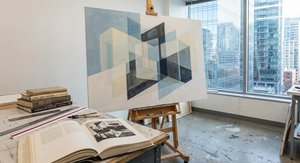
Explore the captivating world of geometric abstraction! Discover its origins, key artists like Malevich & Mondrian, and why this movement remains highly valued by art collectors today. Expert insights at Most-Famous-Paintings.

Откријте како апстрактна уметност може трансформисати ваш дом! Експертни савети за избор боја, композиције и стилова. Инвестирајте у луксузни декор који одражава вашу личност. Most-Famous-Paintings.
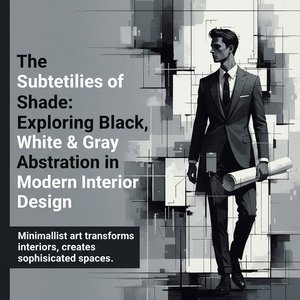
Explore the power of black, white & gray abstraction in modern interior design. Discover how minimalist art impacts spatial perception & creates sophisticated hotel spaces. Expert insights for designers.

Explore the revolutionary world of Victor Vasarely, father of Op Art. Discover his geometric masterpieces, artistic system, & lasting impact on modern design. A guide for discerning art collectors.

Explore the profound impact of illumination on contemporary abstract painting. Expert insights into perceptual psychology, key artists & collecting valuable art. Most-Famous-Paintings.


Budite u toku sa najnovijim vestima o umetnosti, ekskluzivnim ponudama i idejama za dekoraciju.
Recite nam o vašem projektu i naši stručnjaci za umetnost će vam pružiti 3 personalizovana predloga umetničkih dela.
Dozvolite nam da odaberemo 3 opcije specijalno za Vas - Besplatno!


 Pregledaj u prostoru
 Pošalji
 Podeli
 Detalji o delu

 Преузми
 Slični predmeti
 Rendgenski snimak
 Slajdovi


 Pročitaj više







 Opcija sa staklom dostupna je samo za dimenzije manje od 110 cm


![Untitled [study For 'paean'] — Bridžet Rajli, Op Art](/media/artworks/images/thumbnails/17/04/17042d9bb8d6450985bf7513923e3e94.jpg)

