x

Giclée štampa ili print na platnu muzejskog kvaliteta uz brzu proizvodnju i fleksibilne opcije završne obrade. ( Kupi ručno naslikanu sliku Kupi digitalnu sliku)





























Izaberite jednu od naših unapred definisanih veličina koje odgovaraju originalnim proporcijama umetničkog dela.

Možete uneti sopstvene dimenzije kako biste umetničko delo prilagodili specifičnom okviru ili prostoru. Ako odabrani format ne odgovara proporcijama originalne slike, mi ćemo ili iscrtati deo dela ili proširiti sliku pomoću ogledane ivice ili jednobojnog popunjavanja. Digitalni prikaz će vam biti poslat na odobrenje pre početka proizvodnje.
Imajte na umu da pregled na ekranu ne odražava stvarno iscrtavanje ili proširivanje. Samo će prikaz (mockup) precizno pokazati finalnu kompoziciju.
Iako su prilagođene dimenzije dostupne, preporučujemo da odaberete dimenziju sa unapred definisane liste kako biste očuvali originalne proporcije.
Dostava širom sveta () za 2 nedelje umesto uobičajenih 4/5 nedelja. (18 август)


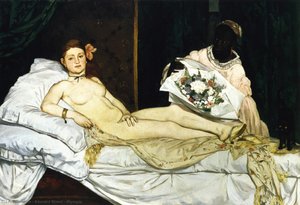
Olympia
Dimenzije reprodukcije
Édouard Manet's Olympia (1863) isn't merely a painting; it’s an audacious declaration, a seismic shift in the landscape of 19th-century art. Initially met with outrage and derision by Parisian society, this seemingly simple depiction of a nude woman has become one of the most iconic and endlessly debated works in Western art history. The canvas immediately confronts the viewer with a stark realism, devoid of the idealized beauty favored by academic painters of the time. Olympia, a courtesan, lies on her bed, attended by her black servant, Laure, who presents her with flowers – an act laden with complex social and economic implications. Manet deliberately avoids romanticizing the scene; there’s no idyllic pastoral setting, no mythological narrative to soften the blow of Olympia's nakedness. Instead, he offers a brutally honest portrayal of modern life, one that challenged the prevailing artistic conventions and sparked a furious debate about taste, morality, and representation.
Beyond the immediate depiction of a nude woman, Olympia is saturated with symbolic meaning. The inclusion of Laure, a black servant, was particularly controversial. It challenged the racial stereotypes prevalent in French society at the time and implicitly addressed issues of colonialism and slavery. The flowers presented by Laure are not a gesture of romantic affection but rather a transaction – a payment for services rendered. The gaze of Olympia, direct and unflinching, confronts the viewer with an uncomfortable awareness of her power and agency. The inclusion of the clock in the background subtly references time and mortality, adding another layer to the painting’s complex narrative.
Olympia debuted at the 1863 Salon, Paris's most prestigious art exhibition. The reaction was immediate and overwhelmingly negative. Critics condemned Manet for his unflinching realism, his lack of classical training, and his perceived vulgarity. They accused him of copying Delacroix’s *Saturn* and of depicting a prostitute in a manner that was both shocking and morally reprehensible. However, despite the initial outrage, Olympia ultimately played a crucial role in paving the way for Impressionism and other modern art movements. Manet's refusal to conform to academic standards forced the art world to confront new possibilities in representation and subject matter. His work demonstrated that beauty could be found not just in idealized forms but also in the complexities of everyday life, forever changing the course of art history.


1832 - 1883 , Француска
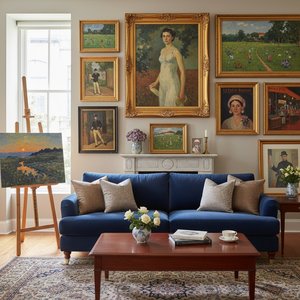
Istražite 25 remek-dela Édouarda Maneta, revolucionarnog francuskog slikara impresionizma. Otkrijte priče iza 'Le Déjeuner sur l'herbe', 'Olympie' i drugih ikoničnih dela. Kvalitetne reprodukcije slika za luksuzni enterijer – Most-Famous-Paintings.

Explore the life & art of Édouard Manet, a pivotal figure bridging Realism and Impressionism. Discover his revolutionary techniques, controversial masterpieces like 'Olympia,' and lasting impact on modern art history.
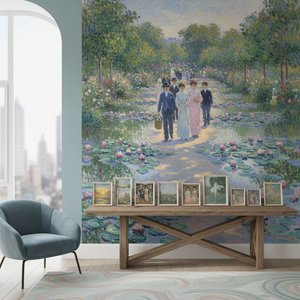
Otkrijte 10 remek dela impresionizma koji su revolucionisali umetnost! Monet, Renoir i drugi majstori – saznajte priče iza ikoničnih slika. Inspiracija za enterijer i vrhunske reprodukcije na Most-Famous-Paintings.com. Istražite kolekciju online!

Journey through Impressionism's heart with 10 iconic paintings by Monet, Renoir & Degas. Explore light, color & the stories behind these masterpieces. Find museum-quality art reproductions and elevate your home decor on Most-Famous-Paintings.com.

Journey through Impressionistic Realism with 10 iconic masterpieces by Monet, Renoir & Van Gogh. Explore art history, techniques & find museum-quality reproductions for your home at Most-Famous-Paintings.com. Discover all masterpieces online!


Budite u toku sa najnovijim vestima o umetnosti, ekskluzivnim ponudama i idejama za dekoraciju.
Recite nam o vašem projektu i naši stručnjaci za umetnost će vam pružiti 3 personalizovana predloga umetničkih dela.
Dozvolite nam da odaberemo 3 opcije specijalno za Vas - Besplatno!


 Pregledaj u prostoru
 Pošalji
 Podeli
 Detalji o delu

 Преузми
 Slični predmeti
 Rendgenski snimak
 Slajdovi

 Pročitaj više







 Opcija sa staklom dostupna je samo za dimenzije manje od 110 cm